Blanchardstown, a large outer suburb of Dublin in the modern county of Fingal, until today best known for the sprawling Blanchardstown Shopping Centre housing over 180 big brand stores, restaurants and cafes, along with a cinema and a bowling alley. Walkers, joggers and cyclists are drawn to the woodland trails of Tolka Valley Park spanning the Tolka River. The Aquazone water park at the National Aquatic Centre attracts families, and Castleknock Golf Club features an 18-hole course.
But now the area has briefly found itself at the intersection of energy systems and digital infrastructure, as a hydrogen-backed data centre trial moves from pilot phase into post-analysis, marking one of the more concrete tests of fuel cell technology in critical power applications.
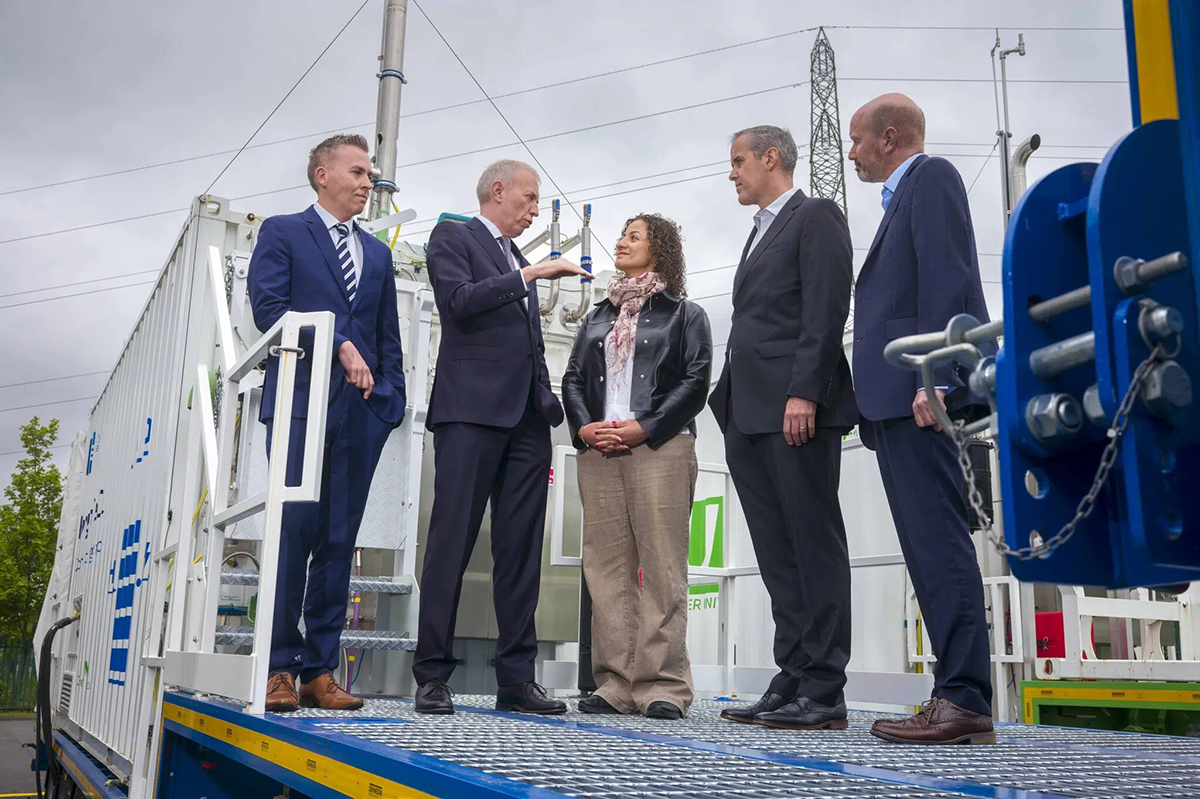
US-based data centre operator Equinix has completed a 12-week trial of hydrogen-fuelled backup power at its Blanchardstown facility in Dublin 15, in collaboration with Ireland’s Electricity Supply Board (ESB) and UK-based GeoPura. The project replaced conventional diesel generators used to support cooling systems with two 250kW hydrogen fuel cell power units, including one owned by ESB.
The hydrogen power units (HPUs) were fuelled by GeoPura’s green hydrogen, produced in the UK, and deployed under real operating conditions where continuous reliability and rapid response capability are essential. While the specific production pathway for the hydrogen was not fully detailed, GeoPura operates a limited number of UK production sites, including its flagship 15MW HyMarnham facility, which is backed by UK government support and is expected to be among the country’s key early-scale hydrogen production projects.
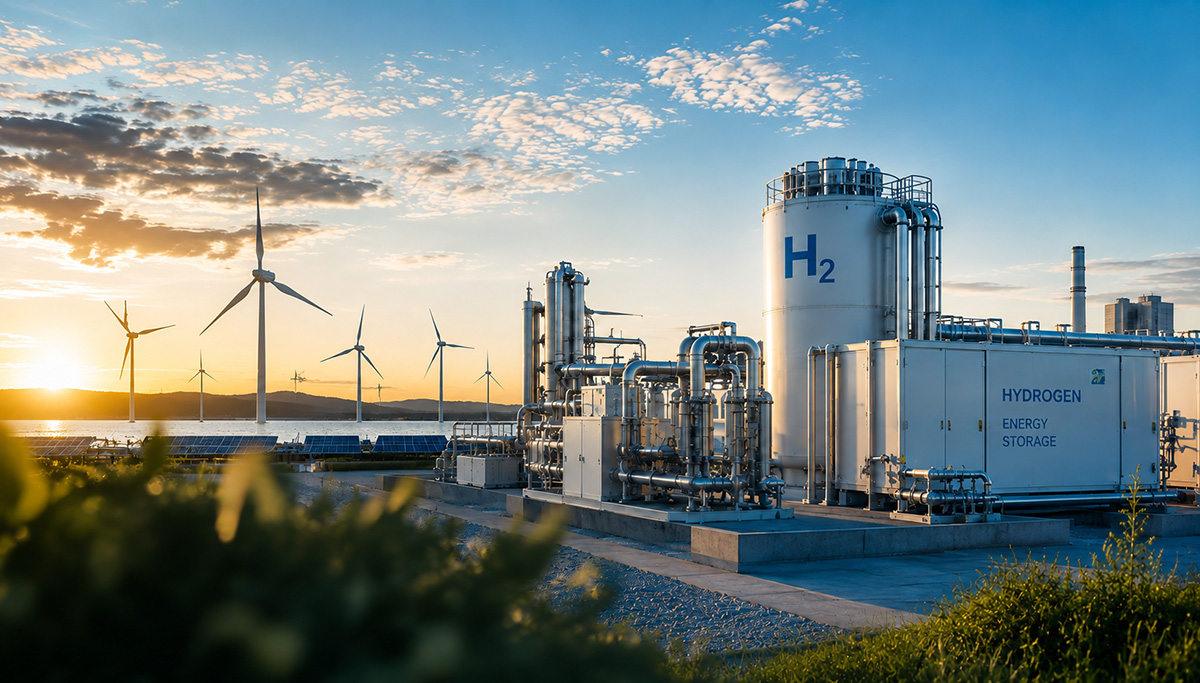
At the point of use, the system produces no direct emissions. The proton exchange membrane (PEM) fuel cell technology converts hydrogen into electricity silently, with water and heat as the only by-products.
Equinix Ireland Managing Director Peter Lantry said the pilot advances a potential solution to Ireland’s grid constraints while demonstrating hydrogen’s viability as a diesel replacement in real-world operational environments. The trial is intended to inform whether hydrogen can move from niche deployment into a mainstream role in backup and potentially prime power applications for energy-intensive digital infrastructure.
The test comes at a time when hydrogen generators are gaining traction as a zero-emission alternative to diesel across multiple sectors, including construction, mining, events, industrial operations and increasingly data centres. Their appeal lies in their ability to deliver high-reliability power without onsite combustion, while maintaining compatibility with existing backup power architectures.
Interest in hydrogen-based backup systems is also growing internationally. In Singapore, developers are exploring barge-based hydrogen generation to support AI data centre expansion, while US infrastructure start-ups such as Endeavour are developing alternative hydrogen pathways, including turquoise hydrogen systems targeted at digital infrastructure loads.
Technology developers argue that cost competitiveness is already emerging in specific use cases. Jules Billiet, CEO of French fuel cell manufacturer Inocel, has suggested that hydrogen generator systems can compete with diesel where delivered hydrogen costs fall within a range of €9 to €11 per kilogramme, depending on operational profile and system configuration.
In Ireland, the Blanchardstown trial is part of a broader effort to test how hydrogen could support grid-constrained regions while maintaining the reliability standards required by hyperscale data centres. While it does not resolve questions around hydrogen production scale, infrastructure build-out or lifecycle emissions accounting, it does provide one of the clearest demonstrations to date of fuel cell systems operating in a live digital infrastructure environment.
What remains is less about technical feasibility and more about system economics and scalability. But the direction of travel is becoming clearer: hydrogen is no longer confined to pilot rhetoric, but is now being actively tested inside the operational core of Europe’s digital infrastructure build-out.