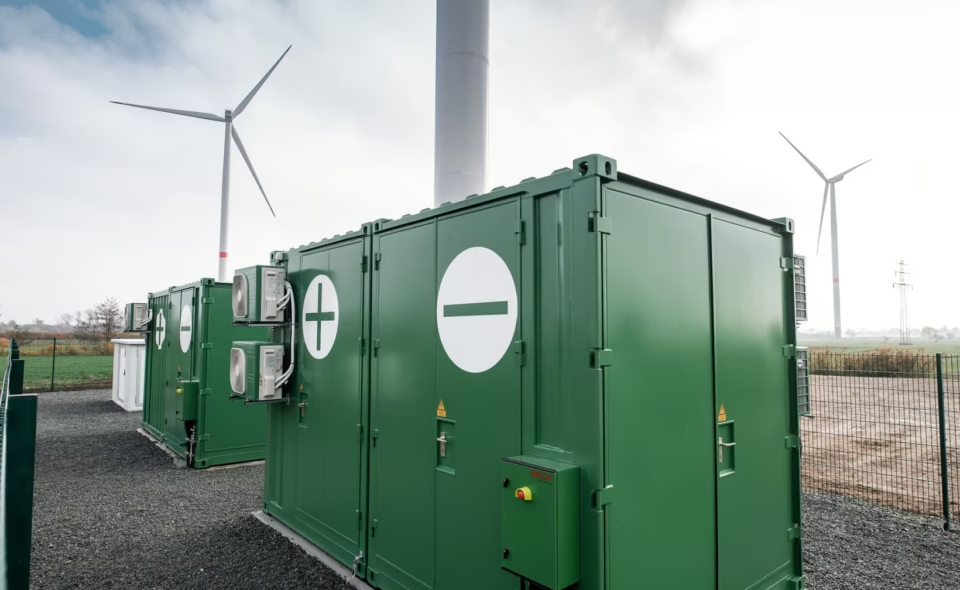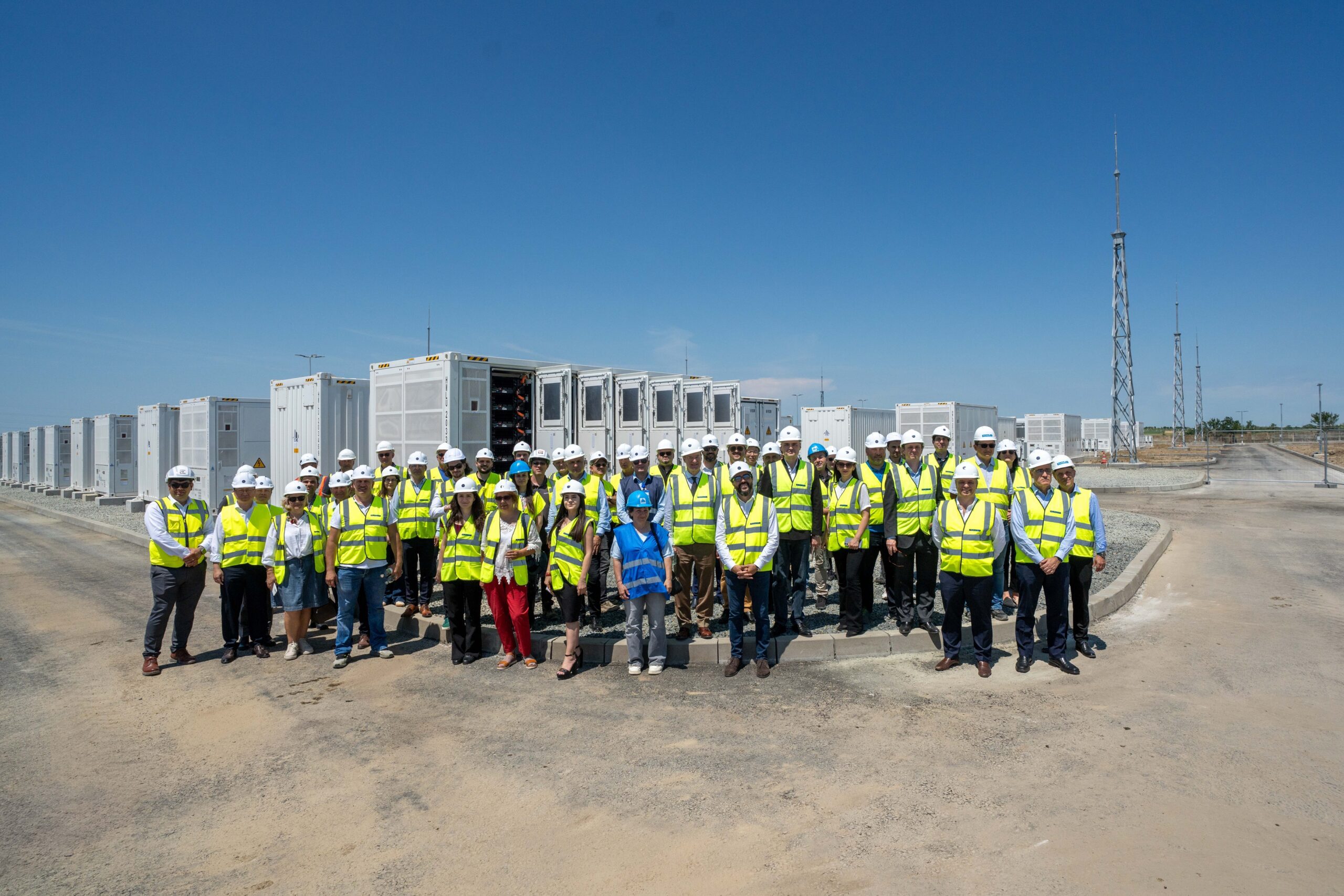
Romania’s battery storage market has moved beyond the development phase. Financing is flowing, projects are reaching financial close, and construction has started on a growing number of utility-scale assets. The question is no longer whether Romania will build battery energy storage systems (BESS), but how they will be integrated into a power system that is changing faster than the network designed to support it.
The latest example is Aukera Energy’s financial close on the second phase of its 250 MW / 500 MWh Gura Ialomiței BESS, backed by €48.5 million from the IFC. Alongside projects from R.Power, Repono, Electrica, Enery, Kraftfeld Energy and others, it confirms that Romania is becoming one of the most active storage markets in CEE. The more important question, however, is what this growing pipeline means for the electricity system over the next decade.
The bottleneck is shifting from generation to the grid
Romania has one of the strongest renewable development pipelines in the region. Solar deployment has accelerated rapidly and wind development is returning following regulatory changes. The limiting factor is increasingly transmission capacity rather than generation investment.
Large volumes of new capacity continue to be proposed in regions with good renewable resources, while the transmission network requires reinforcement to accommodate higher power flows and changing generation patterns. Transmission expansion is underway, but new high-voltage infrastructure typically takes many years to permit and construct.
This is where battery storage becomes strategically important. It does not remove the need for grid investment, but it can improve utilisation of existing network assets while reinforcement projects are delivered.
Storage is becoming a grid asset
The commercial case for batteries is often presented in terms of arbitrage and ancillary services. Those revenue streams are important, but they are only part of the picture.
As renewable penetration increases, storage provides operational flexibility that transmission operators increasingly require:
- absorbing excess solar generation during periods of low demand;
- reducing renewable curtailment;
- providing fast frequency response and reserve;
- relieving local congestion;
- supporting voltage management in areas with high inverter-based generation.
In practical terms, storage allows more renewable generation to connect before major transmission upgrades are completed. It effectively increases the operational capacity of the existing network, even if it does not increase its physical transfer capability.
Merchant revenues will not remain today’s market
Romania currently offers an attractive environment for standalone storage. Price volatility remains significant, balancing markets are developing, and renewable penetration is increasing.
That environment will change.
Publicly announced projects already represent several gigawatt-hours of storage capacity. As more assets enter operation, competition for balancing services and energy arbitrage will increase. Revenue compression should therefore be expected, as seen in more mature storage markets.
Future project economics will depend less on asset ownership and more on optimisation capability. The developers that consistently outperform are likely to be those able to stack revenues across wholesale markets, balancing services, ancillary products and increasingly sophisticated trading strategies.
Grid connection will become the scarce asset
Over the next five years, grid connection rights are likely to become more valuable than battery technology itself.
Lithium-ion technology is increasingly standardised and equipment costs continue to decline. Access to strategically located transmission capacity is becoming the differentiator.
This is already reflected in developer behaviour. Large portfolios are being assembled around secured grid connection agreements rather than individual projects. Hybrid developments combining solar and storage are also becoming more common because they maximise the value of existing connection capacity while improving dispatch flexibility.
The next phase is system integration
Romania’s first wave of battery projects has demonstrated that financing is available and that utility-scale storage is commercially viable.
The next phase will be defined by integration rather than deployment.
Three issues will determine market development:
- how Transelectrica incorporates storage into system operation and congestion management;
- how balancing and ancillary service markets evolve as storage penetration increases;
- whether regulatory frameworks continue to reward flexibility rather than simply installed capacity.
If these elements develop in parallel, storage will become a core component of Romania’s power system rather than a niche renewable technology.
Outlook
Romania is moving towards an electricity system in which flexibility becomes as important as generation capacity. The growth of battery storage should therefore be viewed less as a standalone investment trend and more as a prerequisite for the next phase of renewable deployment.
Projects such as Aukera’s Gura Ialomiței, R.Power’s Scornicești and Electrica’s storage portfolio are significant not because of their individual size, but because they mark the beginning of a structural shift. The next challenge for the Romanian market is no longer proving that batteries work. It is demonstrating that they can be integrated into system operation, market design and network planning in a way that supports continued renewable expansion without compromising grid reliability.