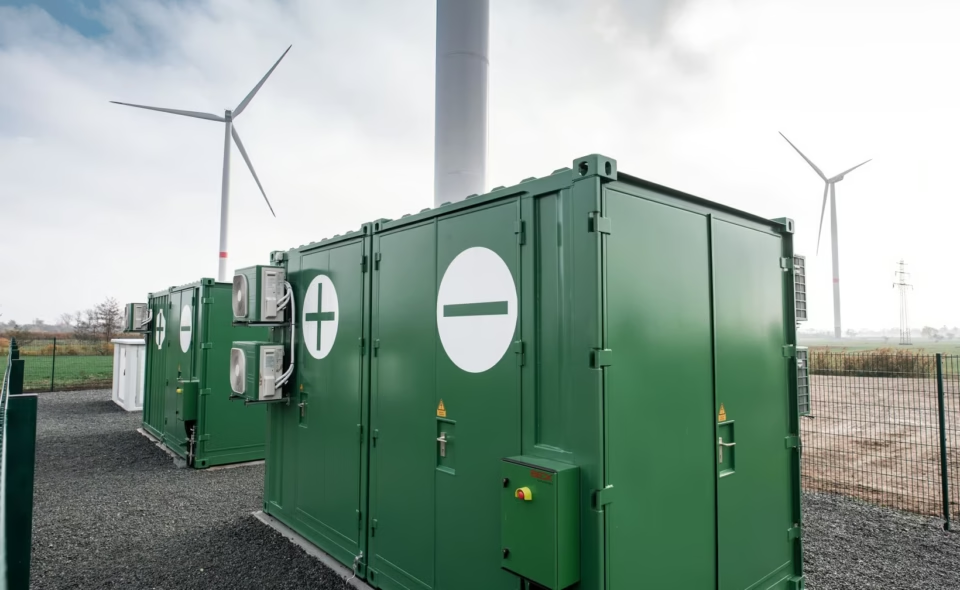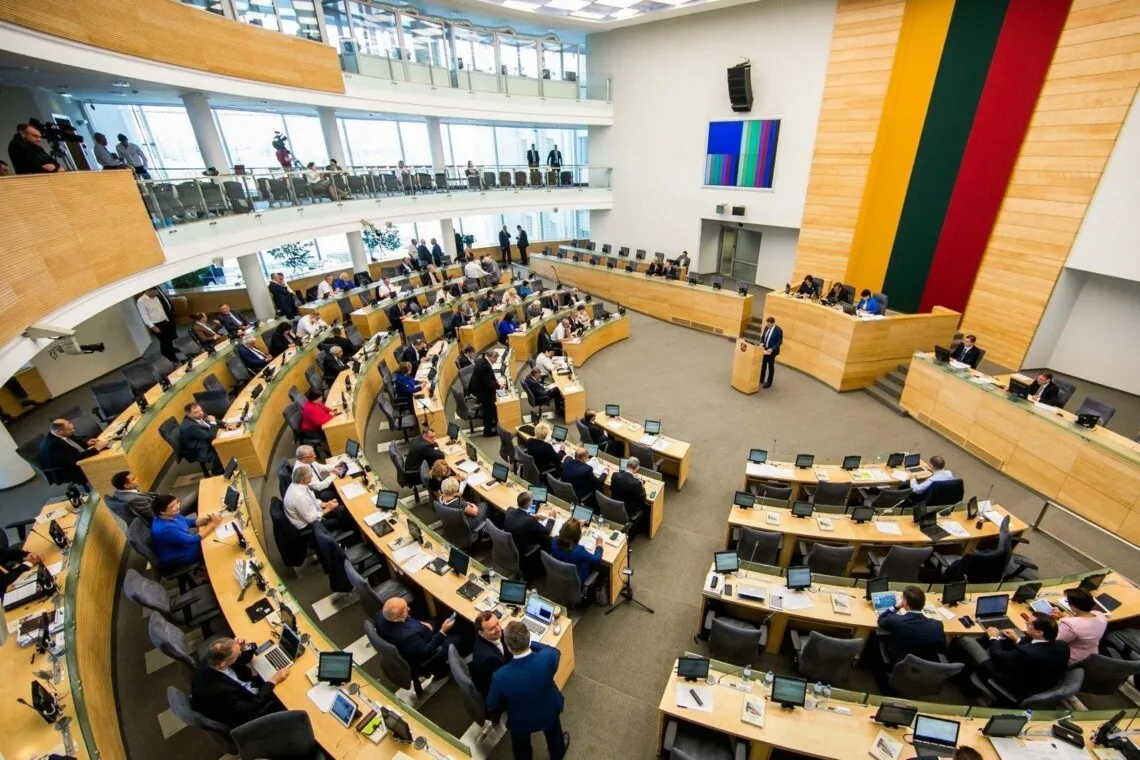
Lithuania has built more renewable capacity than its market can comfortably absorb. Lithuanian Ministry of Energy put installed renewables at 6.5 GW in June 2026, and prices now drop in the sunniest and windiest hours. New projects have become harder to finance. On 24 September, the Seimas voted 84 to 1, with 16 abstentions, to change three laws: the Law on Energy, the Law on Electricity and the Law on Renewable Energy Sources. Much of the package is aimed at the buyers of that power, not only at the people generating it.
The package was drafted under former minister Žygimantas Vaičiūnas and passed under his successor, Lukas Savickas, who took over in July. Savickas said after the vote that Lithuania “must not only ensure greater green energy generation but also turn it into Lithuania’s competitive advantage”. That fits the agenda he set on arrival: using cheap renewable power to drive industry and growth.
Breathing room for stalled projects
The relief for developers comes first. Anyone holding a valid permit to develop generation capacity can extend it once, by up to 48 months. The alternative is to use a one-year window to switch technology, or to turn the project into a storage facility or an electricity consumption project. Either route requires an additional bank guarantee.
The performance guarantee paid to grid operators is being halved, from €50 to €25 per kilowatt, and amounts already paid will be recalculated. For a 100 MW wind farm, that frees €2.5 million of capital. The government puts the package’s total administrative savings at around €16 million.
Spare parts as an investment tool
The most interesting change is also the least glamorous one. From 1 November 2026, electricity and gas network operators must hold reserves of critical equipment, materials and spare parts. These are there to restore supply quickly after accidents, breakdowns or sabotage. Large investors, including data centres and industrial plants, will be able to use those same reserves to get connected sooner. Transformer lead times can stretch well beyond a year, so this matters more than it sounds.
It builds on an earlier reform. Amendments passed in December 2025 let large consumers connecting to the transmission grid pay only 10% of connection costs upfront. In return, they commit to maintaining their power use for ten years, and the operator covers the rest. Revised rules on direct lines, which run privately from a generator to a large consumer, point the same way.
Smaller changes, sharper teeth
From 1 November, energy communities building installations of up to 100 kW will no longer need permits to develop capacity or to generate. The levy that power plants pay to local residents will now go to individuals living within 1.5 km, not to households. The package also splits responsibility for the EU cybersecurity network code between the regulator VERT, the Lithuanian Energy Agency and the National Cyber Security Centre.
It also sets penalties for breaches of EU methane rules and of the ban on russian gas imports. Savickas wants to go further. At a G7+ meeting in Paris on 18 September, he called for a complete phase-out of Russian oil and said Lithuania is ready to start discussing a Commission proposal during its EU presidency.
None of this makes a struggling solar farm profitable. Whether the package works will depend on who turns up to use the power. If data centres and factories take the faster connections, Lithuania’s surplus becomes a selling point. If they don’t, the extended permits have only delayed the problem.