


Author: Derek Michalski, Editor, The Voice of Renewables
Germany has spent the better part of five years positioning itself as Europe’s future hydrogen powerhouse. It published strategies, announced import alliances, backed electrolysis projects and promised industrial transformation at scale. Yet despite the rhetoric, many in the sector privately acknowledged a fundamental weakness at the heart of the market: there was still insufficient guaranteed demand.
That may now have changed.
On 23 April 2026, the German Bundestag adopted the country’s national implementation of the revised EU Renewable Energy Directive (RED III), introducing binding RFNBO mandates in transport while simultaneously accelerating permitting procedures for hydrogen and renewable energy infrastructure. Taken together with the Hydrogen Acceleration Act passed earlier this year, the legislative package represents the most comprehensive hydrogen market-shaping framework yet seen in Europe.
For the first time, Germany is not merely subsidising hydrogen supply. It is creating legally enforceable demand.
That distinction matters enormously.
From strategy papers to market architecture
The German hydrogen sector has long suffered from a familiar problem. While billions of euros were allocated to electrolyser deployment and import infrastructure, developers still struggled to secure bankable long-term offtake agreements. Investors repeatedly warned that without mandatory consumption obligations, many projects remained commercially speculative.
The Bundestag’s RED III implementation changes the equation.
Germany has now introduced a binding RFNBO quota trajectory for the transport sector, beginning at 0.1 per cent in 2026 and rising sharply over the coming decade before reaching 10 per cent by 2040. The quotas apply to renewable fuels of non-biological origin, including green hydrogen and hydrogen-derived e-fuels such as e-methanol and e-kerosene.
For the hydrogen industry, this is more than a compliance mechanism. It is a state-backed demand guarantee.
Hydrogenious LOHC Technologies described the legislation as providing “long-term planning certainty” and “a clear signal to industry and investors”. The company added that the reforms would allow stakeholders to “invest with confidence across the value chain”.
That confidence has been missing from much of the European hydrogen sector to date.
Across the continent, hydrogen developers have faced a recurring paradox: governments subsidised production capacity while downstream consumption remained uncertain. Germany’s latest intervention is one of the first serious attempts to solve both sides of the equation simultaneously.
Why transport matters
The transport sector was not chosen accidentally.
Heavy transport, aviation and shipping are among the most difficult sectors to decarbonise through direct electrification alone. Berlin increasingly views hydrogen-derived fuels as indispensable to meeting long-term climate targets while preserving industrial competitiveness.
The RFNBO quotas therefore create a guaranteed future market for:
- green hydrogen,
- synthetic aviation fuels,
- e-methanol,
- hydrogen-based marine fuels,
- and renewable industrial feedstocks.
This is particularly important for the emerging e-fuels industry, where project developers have repeatedly argued that supply-side subsidies alone cannot support investment decisions without mandatory consumption requirements.
Germany’s approach now mirrors the logic used historically in renewable power markets: create legally binding deployment obligations and private capital will follow.
The permitting bottleneck
Demand creation, however, is only one part of the story.
The second pillar of Germany’s hydrogen push is the Hydrogen Acceleration Act — the Wasserstoffbeschleunigungsgesetz — which may ultimately prove just as important as the RFNBO quotas themselves.
For years, Germany’s infrastructure sector has been plagued by slow permitting procedures, administrative fragmentation and lengthy legal appeals. Hydrogen developers feared that even commercially viable projects would become trapped in multi-year approval processes.
The new legislation is intended to prevent precisely that.
The law classifies hydrogen infrastructure as being in the “overriding public interest” until 2045, a highly significant designation under German administrative law. The same mechanism was previously used to accelerate LNG terminals during the energy crisis and to prioritise electricity grid expansion and renewable energy deployment.
In practical terms, the designation strengthens hydrogen projects during environmental balancing procedures, planning disputes and judicial reviews.
It also sends a powerful political message.
Germany is effectively declaring hydrogen infrastructure to be strategically essential to the national interest.
What infrastructure qualifies?
Importantly, the legislation does not focus narrowly on electrolysis alone.
The acceleration framework applies across almost the entire hydrogen value chain, including:
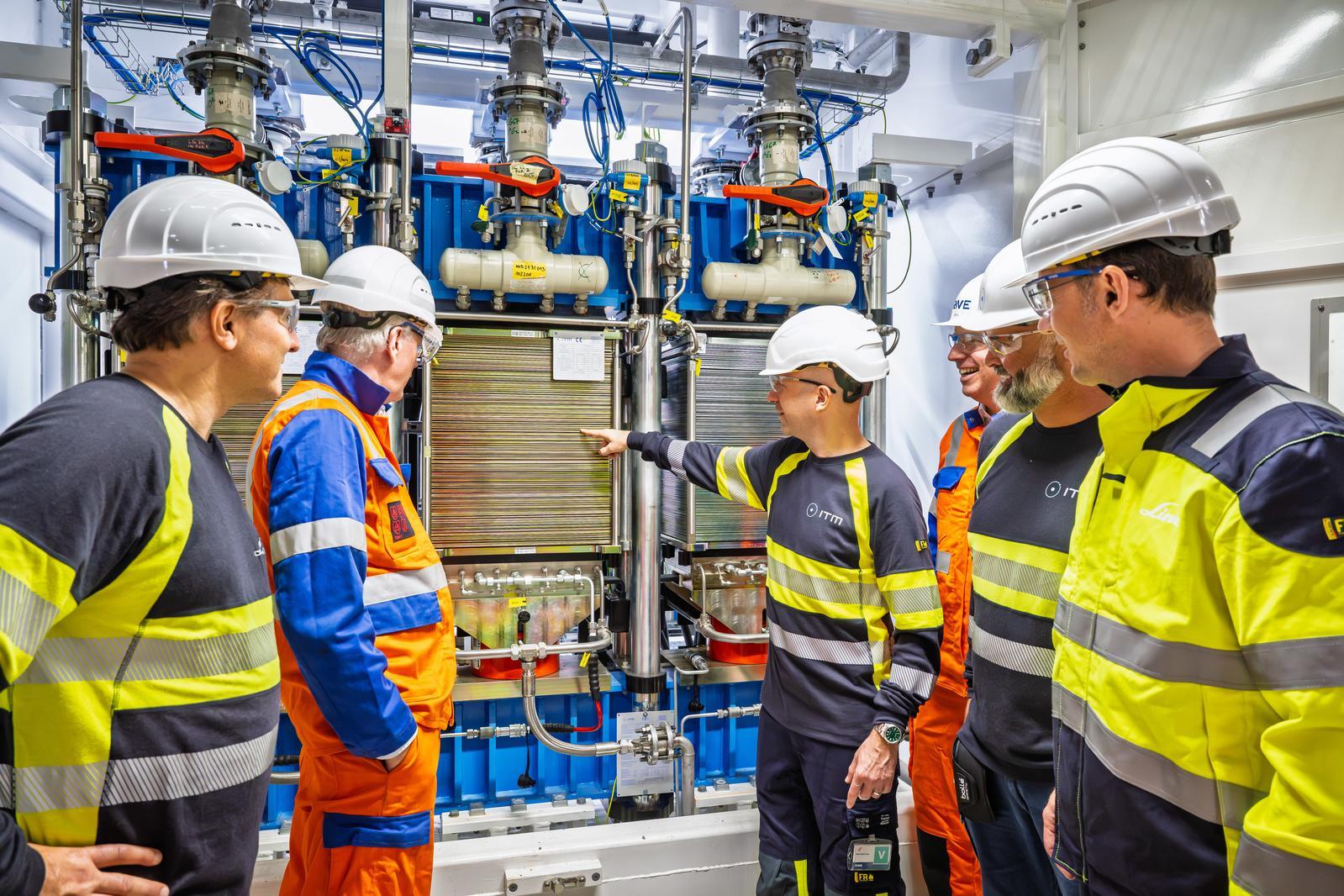
- large-scale electrolysers,
- hydrogen pipelines,
- compressor stations,
- storage caverns,
- ammonia terminals,
- methanol infrastructure,
- port facilities,
- and LOHC systems.
That breadth is notable because it reflects Germany’s growing acceptance that its future hydrogen economy will depend heavily on imports.
Berlin increasingly acknowledges that domestic renewable electricity generation alone will not satisfy future hydrogen demand. Current government planning assumes Germany will become one of the world’s largest hydrogen importers over the next two decades.
As a result, import infrastructure is no longer treated as peripheral. It is central to national energy strategy.
LOHC gains regulatory recognition
One particularly significant aspect of the legislation concerns liquid organic hydrogen carrier technologies.
Hydrogenious LOHC Technologies welcomed the Bundestag’s decision to explicitly classify LOHC facilities as projects of overriding public interest. The company also noted that the legislation clarifies the status of LOHCs as hydrogen carrier media rather than hydrogen derivatives — an important regulatory distinction with implications for infrastructure permitting and market treatment.
That clarification may appear technical, but it matters greatly for developers pursuing large-scale hydrogen logistics solutions.
Germany is increasingly signalling that it does not expect a single dominant hydrogen transport pathway to emerge. Instead, the government appears willing to support a portfolio of transport vectors including ammonia, LOHCs, pipelines and synthetic fuels.
Pipeline developers gain confidence
Germany’s gas transmission sector also reacted positively.
FNB Gas, representing the country’s transmission system operators involved in the hydrogen core network, described the law as “an important regulation for the realisation of the hydrogen core network”.
Managing Director Barbara Fischer said the legislation “strengthens planning security”, although the organisation also warned that further reforms would still be required to remove procurement and implementation bottlenecks.
The comments reflect a wider industry consensus: Germany has made substantial progress, but execution risk remains considerable.
Building a national hydrogen backbone within the proposed timeframe will require not only accelerated permitting but also unprecedented coordination between TSOs, industrial consumers, regulators and renewable electricity developers.
Renewable energy and hydrogen become inseparable
The reforms also reinforce the increasingly tight relationship between renewable electricity deployment and hydrogen production.
Under EU RFNBO rules, green hydrogen producers must satisfy strict criteria relating to:
- additionality,
- temporal correlation,
- geographic correlation,
- and carbon intensity.
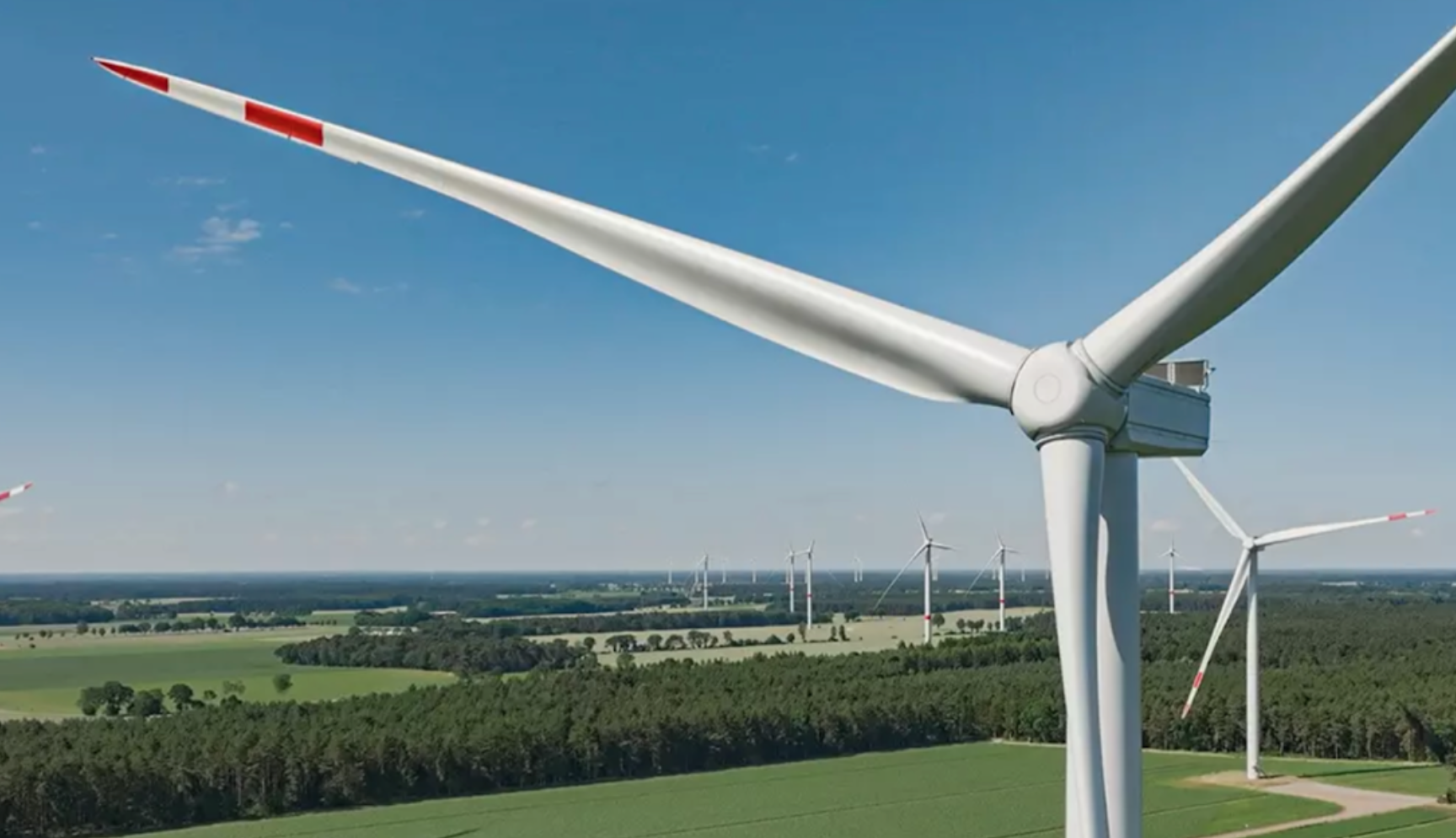
As a result, every new electrolyser project effectively drives additional renewable generation demand.
This creates a reinforcing feedback loop between hydrogen and renewable power investment.
Reuters reported that Germany’s acceleration framework particularly benefits electrolysis projects capable of demonstrating at least 80 per cent renewable electricity use through 2029. That linkage is crucial because it ensures the hydrogen buildout does not become detached from renewable generation expansion.
In reality, Germany’s hydrogen strategy is also a renewable energy acceleration strategy.
Political tensions remain
Despite broad industrial support, the legislation was politically contentious.
The Bundestag ultimately approved the measures with support from the CDU/CSU and SPD, while opposition came from the Greens, the Left Party and AfD.
The Greens’ opposition was especially noteworthy given the party’s longstanding support for hydrogen deployment. However, concerns reportedly centred on biofuel provisions, the treatment of low-carbon hydrogen and broader transport policy disagreements.
That political divide highlights an increasingly important debate within Europe’s hydrogen sector: how technologically inclusive future hydrogen markets should become.
While Germany continues to prioritise renewable hydrogen, the acceleration framework also extends to certain forms of low-carbon hydrogen infrastructure, including some CCS-linked projects. Environmental groups have criticised that approach, whereas industrial stakeholders argue it is necessary to accelerate scale-up.
Europe’s hydrogen benchmark
Germany’s latest reforms are likely to reverberate far beyond its borders.
As Europe’s largest industrial economy and expected future hydrogen importer, Germany is now establishing practical precedents for RED III implementation, RFNBO compliance and hydrogen market regulation.
Other EU member states will face growing pressure to adopt similarly robust frameworks.
The significance of the April 2026 reforms therefore lies not merely in the quotas themselves, but in the broader philosophy underpinning them.
Germany is no longer treating hydrogen as an experimental decarbonisation option. It is treating it as foundational industrial infrastructure. That shift may ultimately prove to be the moment Europe’s hydrogen economy moved from political ambition to commercial reality.
EVENT ALERT: