
Author: Derek Michalski, Editor, The Voice of Renewables
The immediate market reaction to the war involving Iran has been predictable. Analysts have focused on oil prices, LNG flows, shipping insurance premiums and the possibility of disruption in the Strait of Hormuz. Within the hydrogen sector, the debate has followed familiar lines. Some have argued that higher fossil fuel prices improve the competitiveness of renewable hydrogen. Others contend that geopolitical instability merely adds another layer of uncertainty to an industry already struggling to reach commercial maturity.
Both arguments have merit. Yet they miss what may ultimately prove to be the most significant consequence of the conflict. The Iran war is forcing Europe to confront a question that has remained largely implicit throughout the development of its hydrogen strategy: what is the geopolitical cost of a hydrogen molecule?
For much of the past decade, European hydrogen policy has been built on a straightforward economic premise. Hydrogen should be produced where renewable resources are cheapest, converted into transportable carriers such as ammonia, shipped to Europe and distributed to industrial consumers through a new network of terminals, pipelines and storage facilities. The model appeared elegant. It reconciled decarbonisation with economic efficiency by leveraging abundant solar and wind resources in regions such as the Gulf, North Africa and Australia. Europe would gain access to low-cost clean molecules without requiring complete energy self-sufficiency.
The underlying assumption was that hydrogen could become a globally traded commodity in much the same way as LNG. Cost would determine competitiveness. Markets would optimise allocation. Trade would reduce overall system costs. Yet recent events suggest that this framework may be incomplete.
The problem is not that the import model is unworkable. The problem is that it increasingly carries a geopolitical risk premium that many early hydrogen strategies either underestimated or ignored altogether.
The significance of this shift can perhaps be best understood through the changing language of the industry’s own leadership. Speaking on behalf of Europe’s hydrogen sector, Hydrogen Europe chief executive Jorgo Chatzimarkakis argued that “Hydrogen is not just a climate instrument – it is a resilience instrument.” His organisation has gone further still, describing hydrogen as “Europe’s path to resilience.”
These are revealing statements. Five years ago, the dominant rationale for hydrogen deployment was decarbonisation. Today, resilience, sovereignty and security of supply have become equally prominent themes. The sector is increasingly being asked to solve not only a climate problem, but also a geopolitical one.
The same shift is visible among policymakers. Speaking at Enagás’ Hydrogen Day, European Commission Executive Vice-President Teresa Ribera warned against “increasing dependence” on imported LNG and argued that Europe should make greater use of “local resources, such as renewables and renewable hydrogen”. Her remarks reflect a broader evolution in European energy thinking. Following the shock of Russian gas dependence and amid renewed instability in the Middle East, policymakers are beginning to treat strategic autonomy as an economic variable rather than a purely political objective.
This distinction is crucial. Traditional hydrogen economics focuses on production costs, transport costs and conversion efficiencies. Increasingly, however, investors and governments are attempting to place a value on resilience itself. A hydrogen molecule delivered at €3/kg may not necessarily be preferable to one delivered at €4/kg if the cheaper molecule introduces additional exposure to geopolitical disruption, maritime bottlenecks or strategic dependence.
In effect, Europe is beginning to monetise sovereignty.
The Iran war has accelerated this process by exposing vulnerabilities embedded within future hydrogen trade routes. Much of the anticipated growth in global hydrogen trade is expected to occur through ammonia. While hydrogen itself is difficult to transport economically over long distances, ammonia provides a practical carrier for international markets. Yet many of the world’s most ambitious ammonia export projects remain dependent upon maritime corridors that converge around a small number of strategic chokepoints.
The Strait of Hormuz is the most obvious example.
According to Rystad Energy, approximately 15% of global ammonia trade and 21% of global urea trade are exposed to exporters whose shipments could be affected by disruption around Hormuz. While these figures are typically discussed in the context of fertiliser markets, their significance for hydrogen should not be overlooked. If ammonia becomes one of the principal carriers of international hydrogen trade, then the geopolitical exposure of ammonia markets becomes, by extension, the geopolitical exposure of hydrogen markets.
This does not imply that Gulf hydrogen projects are unviable. Nor does it suggest that Europe should abandon imports. Rather, it forces a reassessment of assumptions that have underpinned much of the sector’s strategic planning.
EVENT ALERT:
Investors, Developers and the Commercial Reality
The implications become even more apparent when viewed through the lens of infrastructure investment.
The Port of Rotterdam, Europe’s most important prospective hydrogen import hub, provides a useful case study. Rotterdam’s long-term vision assumes substantial imports of hydrogen derivatives into Europe. Yet consultations with developers and investors reveal a more cautious reality. Following discussions with market participants, the Port reported that “investment decisions are not forthcoming” and identified “demand uncertainty” as one of the principal obstacles facing the sector.
These observations deserve careful attention. They do not come from critics of hydrogen. They come from organisations actively considering investments worth hundreds of millions of euros. Their concern is not whether hydrogen can be produced. Their concern is whether sufficient demand exists to justify large-scale infrastructure commitments.
This highlights a point that is often misunderstood in public debate. The European hydrogen sector does not suffer from a shortage of projects. It suffers from a shortage of confidence.
There is no shortage of announced electrolyser capacity. There is no shortage of infrastructure concepts. There is no shortage of policy ambition. What remains scarce are long-term offtake agreements, predictable revenue streams and confidence in future market development.
The Iran war did not create these challenges. It merely exposed them.
Indeed, some of the most important signals emerged before the current conflict. One of the clearest examples was the decision by Equinor to abandon plans for a major blue hydrogen export corridor to Germany due to “high costs and lack of sufficient demand”. The significance of this decision extends far beyond a single project. If one of Europe’s largest energy companies struggles to establish a sufficiently attractive business case for hydrogen exports, questions inevitably arise regarding the scalability of similar import-dependent models.
The result is an increasingly visible divergence between strategic logic and commercial reality.
From a strategic perspective, the case for hydrogen has arguably never been stronger. Europe seeks to reduce exposure to volatile fossil fuel markets, strengthen industrial competitiveness and improve energy security. Hydrogen appears capable of contributing to all three objectives.
From a commercial perspective, however, uncertainty remains pervasive. Investors continue to question future demand. Industrial consumers continue to evaluate cost competitiveness. Infrastructure developers continue to wait for bankable market signals.
This tension is becoming one of the defining characteristics of the sector.
Hydrogen Europe speaks the language of resilience. Policymakers speak the language of sovereignty. Investors continue to speak the language of risk-adjusted returns.
What is emerging is not a debate about hydrogen itself. It is a debate about how Europe should value security.
For years, hydrogen strategies attempted to optimise three objectives simultaneously: lowest cost, strategic autonomy and rapid scale-up. Increasingly, it appears that achieving all three may not be possible. A system optimised for lowest cost will favour global sourcing and imported molecules. A system optimised for strategic autonomy will require greater reliance on domestic production and regional supply chains. A system optimised for speed may prioritise whichever pathway can be deployed most quickly. Policymakers and investors are discovering that these objectives do not always align.
The International Energy Agency’s Executive Director, Fatih Birol, recently argued that the hydrogen sector requires “clear regulations, cost reduction, and demand creation support”. His observation captures the central challenge facing the industry. Geopolitical instability may strengthen the strategic rationale for hydrogen, but it does not automatically improve project economics, create industrial demand or reduce production costs.
Indeed, the sector’s central paradox may be that the same geopolitical instability which strengthens the case for hydrogen can simultaneously make investment decisions more difficult.
This is why the debate is gradually moving beyond the levelised cost of hydrogen. The industry is beginning to price something that traditional models often treat as an externality: strategic exposure.
A hydrogen molecule produced in Oman, transported through Hormuz, converted into ammonia, shipped to Rotterdam and cracked for industrial use may well remain cheaper on paper than a molecule produced within Europe. Yet recent events have demonstrated that cost and value are not necessarily the same thing.
How Europe’s Major Hydrogen Markets Are Reassessing Risk
While the geopolitical implications of the Iran conflict are being felt across Europe, they are not being experienced uniformly. The structure of national hydrogen strategies varies considerably from one country to another, as do the risks now being reassessed by policymakers, infrastructure operators and industrial consumers. Yet despite these differences, a common theme is emerging: the hydrogen economy is increasingly being viewed through the lens of resilience rather than simply cost.
Germany has perhaps been forced to reassess its hydrogen strategy more profoundly than any other European country. Unlike Spain or France, Germany’s industrial decarbonisation pathway has always depended heavily on imported hydrogen and hydrogen derivatives, reflecting both limited domestic renewable resources and the sheer scale of future demand expected from its steel, chemicals and manufacturing sectors. The war involving Iran has therefore struck at a particularly sensitive point in Germany’s hydrogen architecture. While the conflict has not directly disrupted hydrogen supplies, it has reinforced concerns about the geopolitical exposure of the import model upon which much of Germany’s strategy depends. These concerns come at a time when confidence in large-scale hydrogen imports was already being tested. Equinor’s decision to abandon plans for a blue hydrogen export corridor to Germany due to high costs and insufficient demand highlighted the commercial challenges facing cross-border hydrogen projects even before the latest geopolitical tensions emerged.
For German industry, the issue extends far beyond energy policy. Hydrogen is increasingly viewed as a strategic industrial feedstock whose availability will determine the success of decarbonisation efforts in sectors such as steel, chemicals and heavy manufacturing. Dr Arnd Köfler of Thyssenkrupp Steel has described hydrogen as “the key to turning the big lever we have in reducing CO2 emissions in the steel industry”, while RWE Generation chief executive Roger Miesen has argued that “hydrogen is of central importance for greenhouse gas abatement in Germany”. Yet the challenge is not simply producing hydrogen; it is ensuring that sufficient volumes can be delivered through reliable and economically viable supply chains. As Miesen has also noted, “investment decisions for green hydrogen projects need planning certainty”, a requirement that becomes more difficult to satisfy in an increasingly volatile geopolitical environment.
What is now emerging in Germany is a broader debate about dependency itself. Frank Merten of the Wuppertal Institute perhaps captured the dilemma most succinctly when he argued that “the task here is to weigh up various dependencies against one another and balance them out as well as possible”, adding that this “doesn’t automatically mean we have to live with high levels of dependency”. That sentiment increasingly resonates across Germany’s hydrogen sector. Infrastructure operators such as OGE now describe hydrogen networks not only as instruments of decarbonisation but also as tools for the diversification of energy supply, while GASCADE has explicitly linked hydrogen development to “future supply security”.
Italy’s reassessment is taking a different form. Whereas Germany worries about securing sufficient hydrogen imports, Italy increasingly sees itself as a future gateway for them. Its hydrogen strategy is built around geography as much as decarbonisation. Through infrastructure developed by Snam and its partners, Italy hopes to connect North African production centres with industrial demand across Europe. Yet the Iran conflict has reinforced an uncomfortable reality: acting as an energy bridge also means inheriting exposure to geopolitical instability. Snam chief executive Stefano Venier has repeatedly described hydrogen as an “essential element of the energy transition”, but increasingly the discussion within Italy extends beyond decarbonisation to questions of corridor security, diversification and strategic resilience. Rather than undermining Italy’s ambitions, the conflict may strengthen the case for Mediterranean hydrogen routes that reduce dependence on supply chains passing through the Gulf.
In Spain, the geopolitical repricing of hydrogen risk has arguably strengthened the country’s position more than any other major European market. Spain possesses some of Europe’s best renewable resources and has consistently argued that Europe should maximise domestic production before creating new external dependencies. This philosophy is reflected in the views of Enagás chief executive Arturo Gonzalo, who has described hydrogen as “the only vector that can decarbonise all modes of transport” while championing the development of the H2Med corridor linking the Iberian Peninsula with industrial centres further north. The same logic is visible at the policy level. Teresa Ribera has warned against “increasing dependence” on imported LNG and advocated greater use of “local resources, such as renewables and renewable hydrogen”. In a geopolitical environment increasingly defined by concerns over strategic exposure, Spain’s combination of renewable abundance and export potential appears increasingly aligned with broader European priorities.
The United Kingdom presents a different case altogether. Rather than relying heavily on imports, British policy has focused on developing both green and blue hydrogen production domestically while leveraging expertise from the North Sea energy sector. The challenge facing the UK is therefore less about import dependency and more about maintaining investor confidence. Industry groups have warned that policy uncertainty could “risk losing billions in investment” if long-term market support mechanisms are not strengthened. The implications of the Iran conflict are consequently more indirect. Britain is less exposed to future hydrogen import disruptions than Germany, yet it remains vulnerable to higher energy prices, supply-chain volatility and rising financing costs associated with geopolitical instability. For British developers, resilience increasingly means creating stable domestic investment conditions capable of supporting large-scale hydrogen deployment regardless of external events.
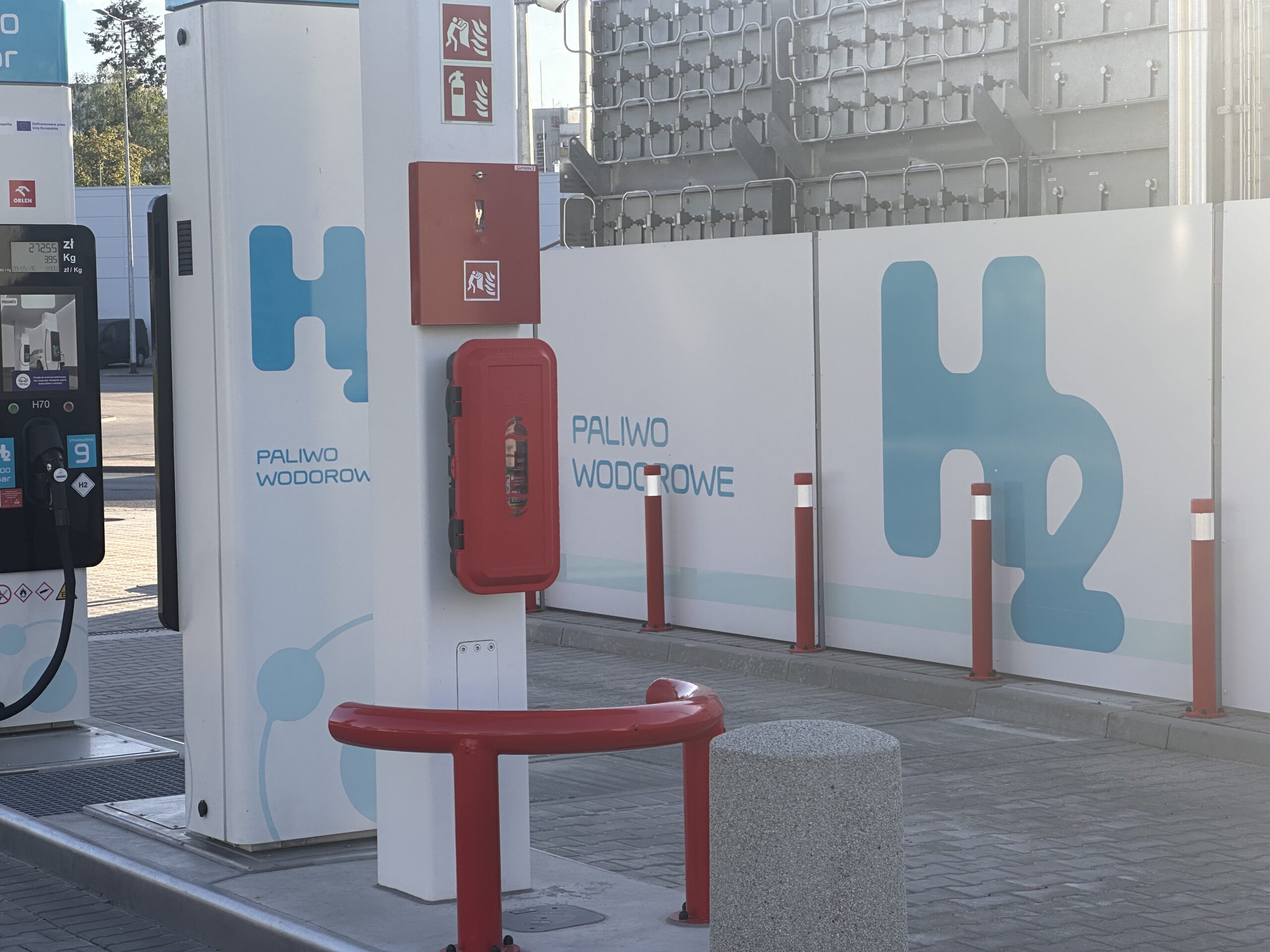
Poland’s perspective is perhaps the most distinctive of all because energy security has long occupied a central place in national strategy. Long before the current tensions involving Iran, Warsaw viewed dependence on external suppliers as a strategic vulnerability. Hydrogen is therefore increasingly framed not only as a decarbonisation tool but also as a means of strengthening industrial sovereignty. Companies such as ORLEN have incorporated hydrogen into broader plans for industrial transformation and energy diversification, while policymakers continue to emphasise domestic capability and infrastructure development. The significance of the Iran conflict for Poland lies less in any immediate impact on hydrogen markets and more in the validation of a worldview that prioritises resilience alongside efficiency. As western European countries begin to place greater emphasis on supply security and strategic autonomy, Poland finds itself moving from the periphery of the debate towards its centre.
Taken together, these national perspectives reveal a broader transformation underway across Europe. The continent is not abandoning hydrogen imports, nor is it embracing energy autarky. Rather, governments, utilities, infrastructure operators and industrial consumers are reassessing the balance between efficiency and resilience. The Iran war has accelerated this process by exposing vulnerabilities that were always present but often overlooked. The result is a European hydrogen economy that increasingly values not only the cost of a molecule, but also the risks embedded within its journey from producer to consumer.
Beyond Cost
The future European hydrogen market is therefore unlikely to be defined by a choice between imports and domestic production. Instead, it is likely to evolve into a hybrid system in which cost, resilience and strategic optionality are explicitly balanced against one another. Domestic production, regional pipeline imports, strategic storage and global maritime trade will all play important roles. The difference is that resilience is no longer being treated as a secondary consideration.
For a sector that has spent years pursuing the cheapest possible molecule, this represents a profound shift in thinking.
The true legacy of the Iran war may not be measured in hydrogen prices, project delays or import volumes. It may be measured in something less visible but potentially far more consequential: a recognition that hydrogen molecules are not economically identical simply because they contain the same amount of energy. Some carry additional costs that arise from geography, politics, security and strategic dependence.
The European hydrogen industry is only beginning to understand how much those costs matter.
EVENT ALERT: