


Author: Derek Michalski, Editor.
Europe’s renewable leaders are no longer competing to build more generation – they are competing to build flexibility. Portugal’s first large-scale energy storage auction reflects a fundamental shift in electricity market design, with implications reaching far beyond the Iberian Peninsula.
For more than a decade, the success of a country’s energy transition could largely be measured in megawatts of new wind and solar capacity. Governments competed to attract renewable investment through increasingly competitive auctions, developers raced to secure grid connections, and each new project pushed fossil fuel generation further into decline.
Today, that equation has changed.
Across Europe, the central challenge is no longer producing enough renewable electricity. It is ensuring that electricity is available when consumers need it, regardless of whether the wind is blowing or the sun is shining.
Portugal’s forthcoming 1.05 GW energy storage auction, scheduled for 14 September 2026, illustrates this transformation better than almost any other procurement exercise currently planned in Europe. Rather than seeking additional renewable generation alone, Lisbon is investing in the flexibility required to make a high-renewable electricity system reliable, resilient and economically sustainable.
The auction will allocate 750 MW of standalone battery energy storage systems (BESS) and 300 MW of hybrid renewable-plus-storage projects, making it Portugal’s largest dedicated storage procurement to date. More importantly, it signals a broader policy shift: electricity markets are beginning to value flexibility as highly as generation.
For renewable developers, battery manufacturers, investors and grid operators, the implications extend well beyond Portugal’s borders.
From Renewable Champion to Flexibility Pioneer
Portugal has long been regarded as one of Europe’s renewable energy success stories.
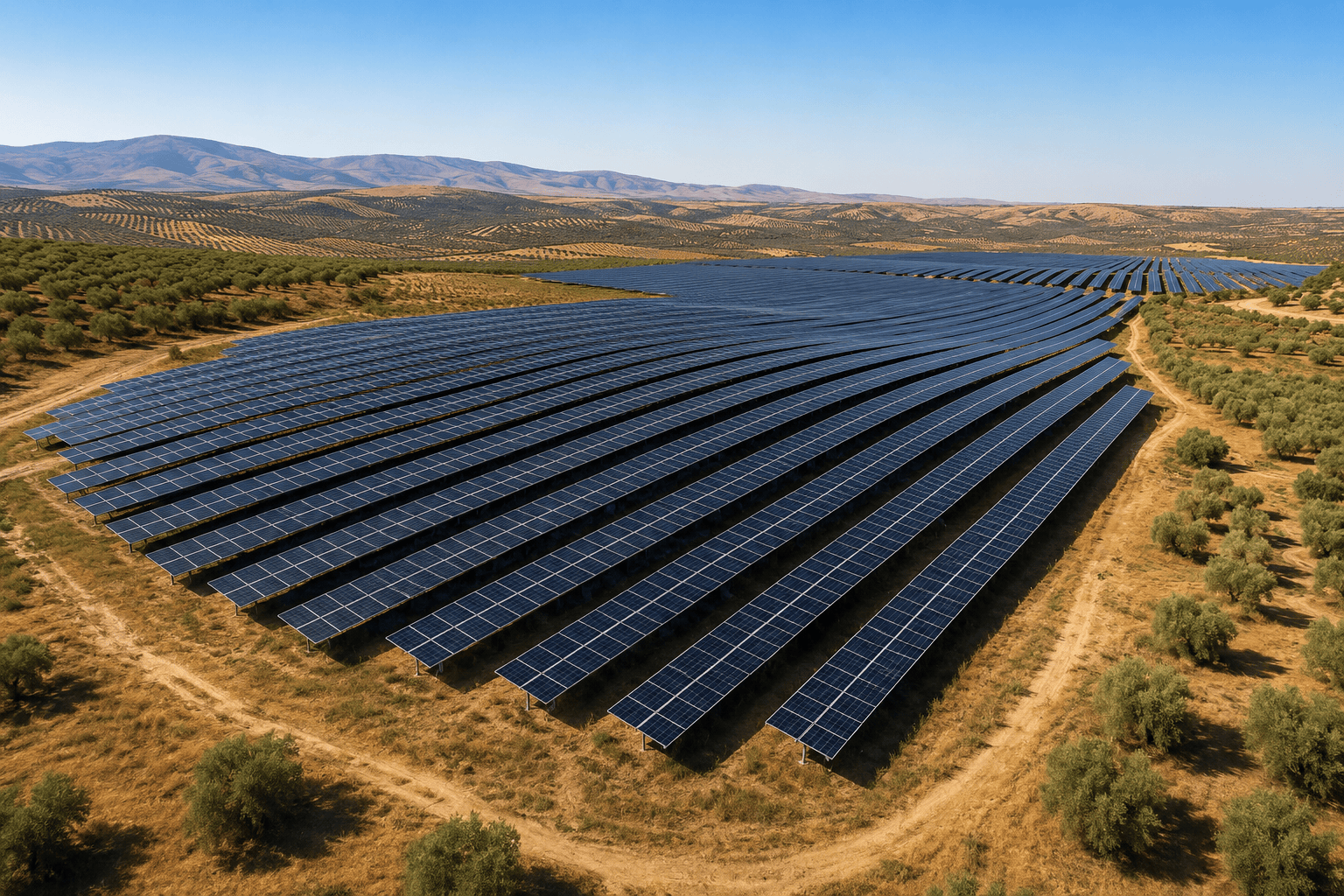
With exceptional solar irradiation, favourable wind resources and strong political support, the country has steadily increased the contribution of renewable energy to its electricity mix. Wind power became established as a backbone of the Portuguese system during the 2000s, while utility-scale solar expanded rapidly following a series of highly competitive auctions held between 2019 and 2020.
Those landmark tenders attracted global attention. Developers bid record-low electricity prices, with several projects offering tariffs that ranked among the cheapest solar power contracts ever awarded in Europe. The auctions demonstrated both investor confidence and Portugal’s outstanding renewable resource.
The consequences of that success are now becoming apparent.
On sunny spring afternoons, photovoltaic generation can satisfy a substantial proportion of domestic electricity demand. Combined with strong wind output, Portugal increasingly experiences periods when renewable generation exceeds instantaneous consumption. Wholesale electricity prices fall sharply and, on occasion, become negative.
These are not signs of failure. They are symptoms of a mature renewable electricity system.
Yet they create operational challenges that traditional power systems were never designed to manage.
Transmission infrastructure becomes congested. Renewable plants face curtailment. Conventional generators must remain available despite operating fewer hours each year. Grid operators require additional reserves to maintain frequency and voltage stability, while electricity markets must adapt to much greater variability in supply.
In short, Portugal’s next challenge is no longer building renewable generation. It is integrating it efficiently.
Why Storage Has Become the Missing Piece
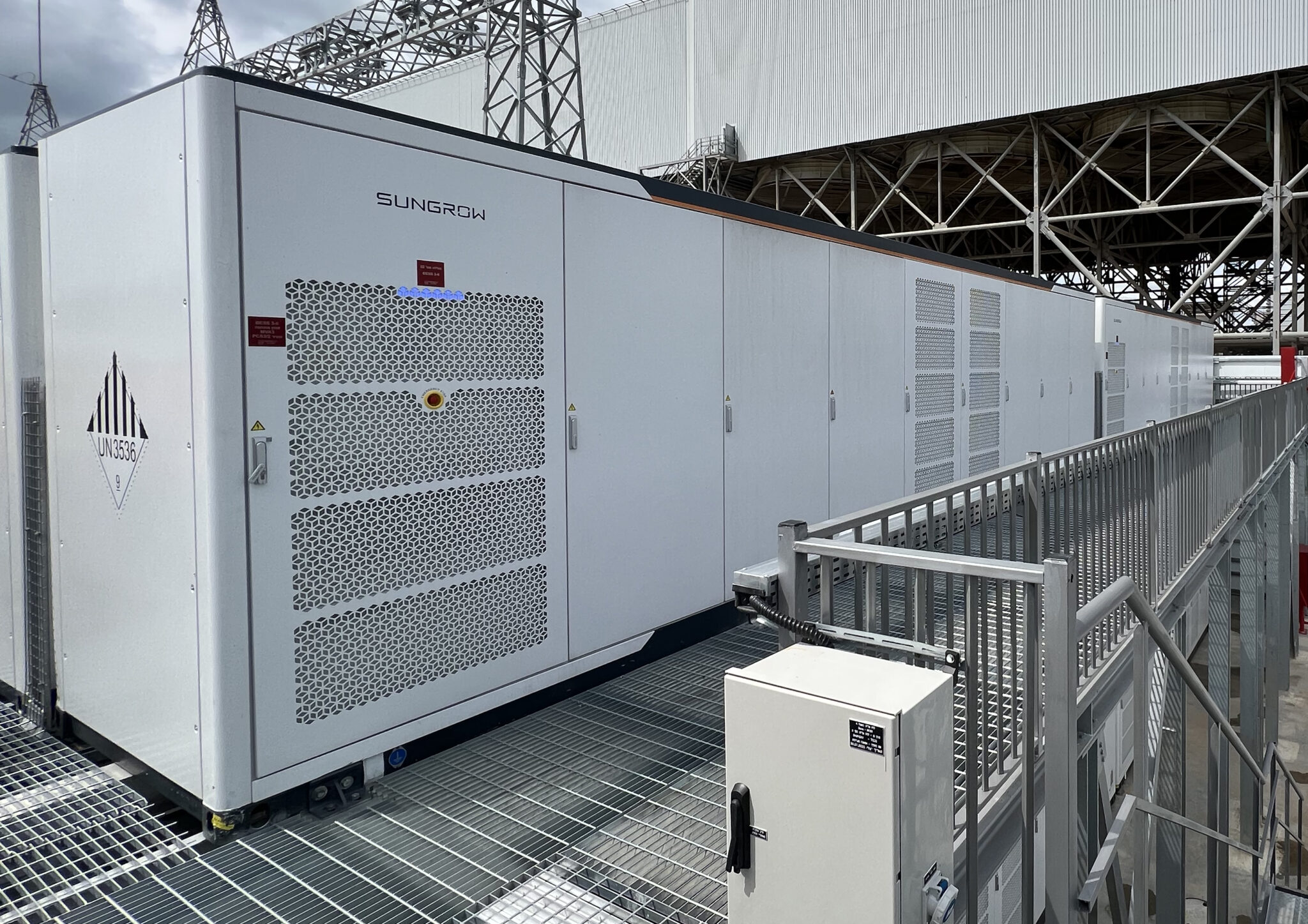
Battery energy storage systems have emerged as one of the most effective tools for addressing these challenges.
Unlike conventional generation, batteries neither produce nor consume primary energy. Their value lies in flexibility.
During periods of abundant renewable production, batteries absorb surplus electricity that might otherwise be curtailed or sold at very low market prices. When demand increases after sunset or during periods of reduced renewable output, stored electricity can be discharged back into the network within milliseconds.
This capability provides benefits across multiple dimensions of power system operation.
Storage reduces renewable curtailment, improves utilisation of transmission infrastructure, moderates price volatility and enables greater penetration of intermittent generation without compromising reliability.
Equally important, modern battery systems can deliver a growing range of ancillary services traditionally supplied by thermal power stations. These include frequency containment, frequency restoration, voltage support, reserve capacity, congestion management and increasingly sophisticated balancing services.
As coal-fired generation has disappeared from Portugal and gas-fired plants operate less frequently, maintaining these essential system services has become a strategic priority.
The forthcoming auction therefore represents considerably more than another procurement exercise. It reflects an evolving understanding that future electricity systems require flexibility infrastructure alongside renewable generation.
The Auction at a Glance
Portugal’s Ministry of Environment and Energy has confirmed that the auction will allocate a total of 1.05 GW of storage capacity through two principal categories.
| Category | Capacity |
|---|---|
| Standalone battery energy storage | 750 MW |
| Renewable projects paired with storage | 300 MW |
| Total | 1,050 MW |
The hybrid allocation is particularly noteworthy.
Rather than treating renewable generation and storage as separate technologies, hybrid projects integrate both behind a shared grid connection. Solar or wind installations charge co-located batteries during periods of surplus production, allowing electricity to be exported later when market conditions are more favourable.
This model improves utilisation of existing grid infrastructure while reducing the need for additional transmission investment.
It also reflects a wider European trend towards hybrid renewable developments that combine generation, storage and increasingly digital energy management systems.
Where the Capacity Will Be Connected
Grid connection remains one of the principal constraints on renewable development across Europe.
Portugal has therefore chosen to allocate storage capacity at strategically selected connection nodes where additional flexibility can provide the greatest benefit to system operation.
Indicative locations include:
- Sines
- Rio Maior
- Abrantes
- Alcochete–Palmela
- Pegões–Divor
- Estremoz
- Tavira
These locations have been identified because they combine available transmission infrastructure with growing concentrations of renewable generation.
Rather than allowing developers to compete indiscriminately for scarce grid capacity, the auction seeks to direct investment towards areas where storage can alleviate congestion and improve network performance.
This represents a more strategic approach to grid planning than earlier renewable procurement rounds, which often prioritised generation capacity without fully considering long-term system integration.
A Shift in Procurement Philosophy
The forthcoming auction is also significant because it forms the first practical implementation of Portugal’s National Electricity Storage Strategy.
The strategy establishes ambitious deployment targets:
| Target Year | Battery Storage |
|---|---|
| 2030 | 3 GW |
| 2040 | 4.5 GW |
These objectives complement existing pumped hydro storage rather than replacing it.
Portugal already benefits from several large pumped-storage facilities, which remain well suited to long-duration energy shifting. Battery systems, by contrast, excel at rapid response, frequency regulation and shorter-duration balancing.
Together they provide complementary forms of flexibility capable of supporting a much larger share of renewable generation.
The strategy therefore recognises that no single storage technology will satisfy every operational requirement of the future electricity system.
How the Auction Is Expected to Work
Although the detailed auction documentation is still being finalised, the broad structure has become increasingly clear through government announcements and consultation documents.
The process is expected to follow several sequential stages.
1. Prequalification
Developers will first need to demonstrate that proposed projects satisfy minimum technical, financial and legal requirements.
Typical prequalification criteria are expected to include:
- evidence of financial capability;
- proof of site control or land rights;
- environmental compliance;
- preliminary grid connection feasibility;
- technical specifications for storage systems;
- project delivery timetable.
The objective is to discourage speculative bidding and ensure that awarded capacity can be delivered within the required timeframe.
2. Bid Submission
Qualified participants will submit competitive bids for the allocated storage capacity.
Although the final remuneration structure remains subject to confirmation, bids are expected to balance several considerations:
- requested support level;
- project economics;
- technical capability;
- delivery schedule;
- compliance with auction requirements.
Competition is expected to be intense, reflecting strong investor interest in Iberian battery storage.
3. Evaluation
Government authorities will assess bids against predefined criteria.
Unlike earlier renewable auctions focused almost exclusively on electricity price, storage procurement inevitably involves broader technical considerations.
Authorities must evaluate not only project cost but also operational characteristics that contribute to grid stability and system reliability.
4. Contract Award
Successful bidders will receive rights to develop storage projects under the auction framework.
Contracts are expected to include clearly defined milestones covering:
- financial close;
- permitting;
- construction;
- commissioning;
- commercial operation.
Failure to meet these milestones may result in penalties or loss of awarded capacity.
Such provisions are increasingly common across European renewable auctions and are intended to minimise project delays and speculative behaviour.
More Than Economics
One of the most interesting aspects of Portugal’s approach is its effort to link renewable investment with broader regional development.
The auction framework incorporates measures intended to increase local acceptance of energy infrastructure.
Among the proposed features are:
- revenue sharing with municipalities;
- community benefit mechanisms;
- incentives for agrivoltaic projects where renewable generation coexists with agricultural activity.
These provisions acknowledge an increasingly important reality.
As renewable deployment accelerates across Europe, technical excellence alone is no longer sufficient. Projects must also demonstrate social value and secure long-term support from host communities.
Portugal’s auction therefore reflects a broader evolution in energy policy: renewable infrastructure is becoming part of regional economic development rather than simply electricity generation.
Why Europe Is Watching
Portugal is not the only country investing in storage.
The United Kingdom has developed one of Europe’s largest merchant battery markets. Italy is implementing its MACSE storage procurement mechanism. Germany continues to expand battery deployment alongside its renewable build-out, while Spain is strengthening incentives for flexibility as curtailment increases.
What distinguishes Portugal is the timing.
The country has reached a stage where renewable generation is sufficiently abundant that the principal bottleneck is no longer clean electricity production but the ability to integrate that production efficiently into the power system.
In that sense, Portugal may offer a preview of challenges that many European markets will encounter during the next decade.
The lessons learned from this auction—its design, investor response and operational outcomes—could therefore influence future procurement strategies well beyond the Iberian Peninsula.
For policymakers across Europe, the message is becoming increasingly clear: the next phase of the energy transition will not be defined solely by how many renewable megawatts are installed, but by how intelligently those megawatts are managed.
Coming in Part 2
The second instalment of this feature will examine the commercial and strategic implications of Portugal’s storage auction. It will explore how the April 2025 Iberian blackout accelerated the policy shift towards flexibility, compare Portugal’s approach with storage frameworks in Spain, Italy, Germany and the UK, assess which developers and technology providers are best positioned to compete, and analyse what the auction reveals about the future direction of renewable energy procurement across Europe.