


Austria is accelerating efforts to address one of the most difficult challenges of a renewable energy system: how to store clean energy when generation is abundant and deliver it when renewable output falls.
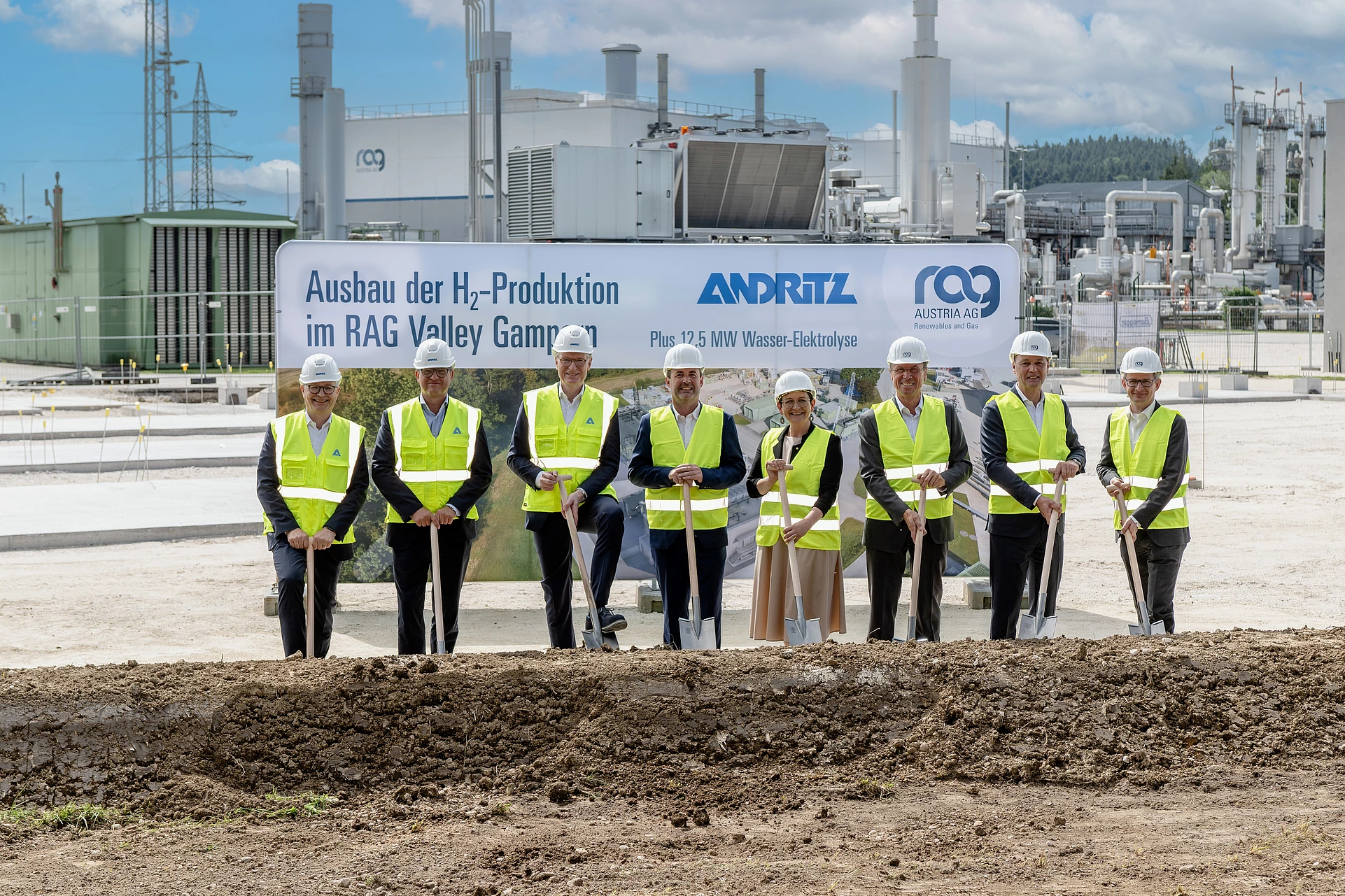
RAG Austria has begun expanding its green hydrogen production facility in Gampern, Upper Austria, increasing electrolysis capacity from 2.5 MW to 15 MW. The project is expected to become Austria’s largest green hydrogen production plant when commissioned at the end of 2026, producing around 17 million cubic metres — more than 1,500 tonnes — of renewable hydrogen annually.
The expansion is being delivered together with Austrian engineering company ANDRITZ, which has been awarded the engineering, procurement and construction (EPC) contract for the facility. The company will supply the complete electrolysis system, including hydrogen purification and compression equipment, and will oversee project implementation and commissioning.
While the increase in electrolyser capacity represents a significant step for Austria’s hydrogen sector, the wider ambition behind Gampern is broader: creating an integrated energy system capable of shifting renewable energy across seasons.
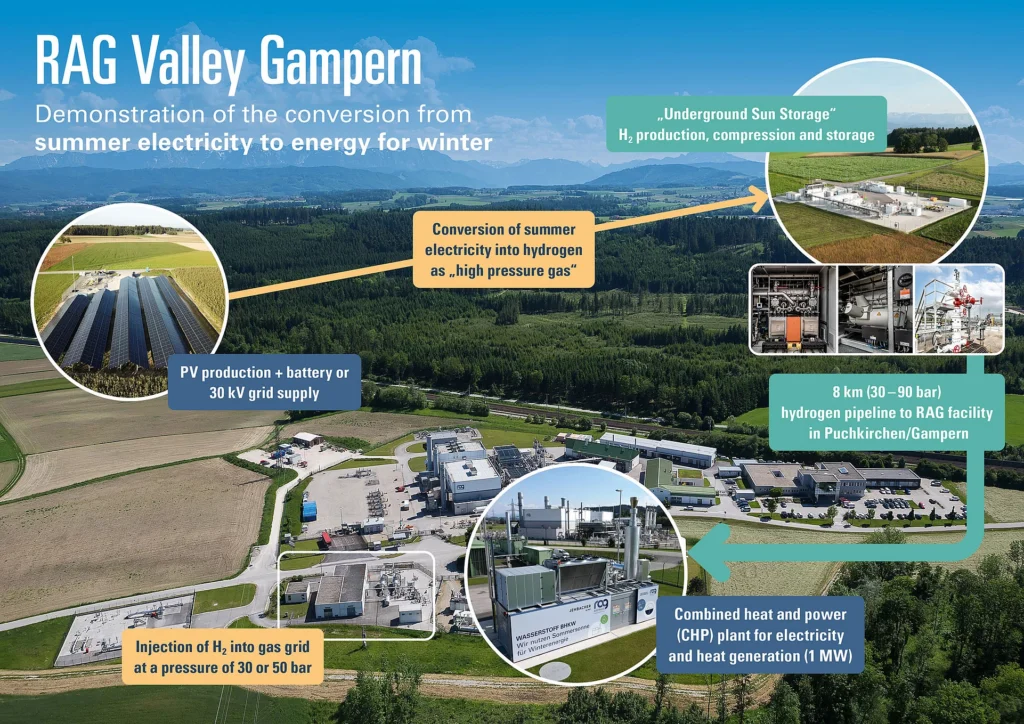
Demonstration of the conversion of summer electricity to energy for winter
At RAG Valley Gampern, RAG Austria represents the entire cycle of a renewable and supply secure energy system:
- from the generation of solar summer electricity
- through conversion and storage as hydrogen
- to flexible reconversion in a controllable combined heat and power (CHP) plant
- and injection into the existing natural gas grid (blending).
The hydrogen ramp-up requires real-world solutions for an affordable and feasible step-by-step energy transition.
From summer solar to winter energy supply
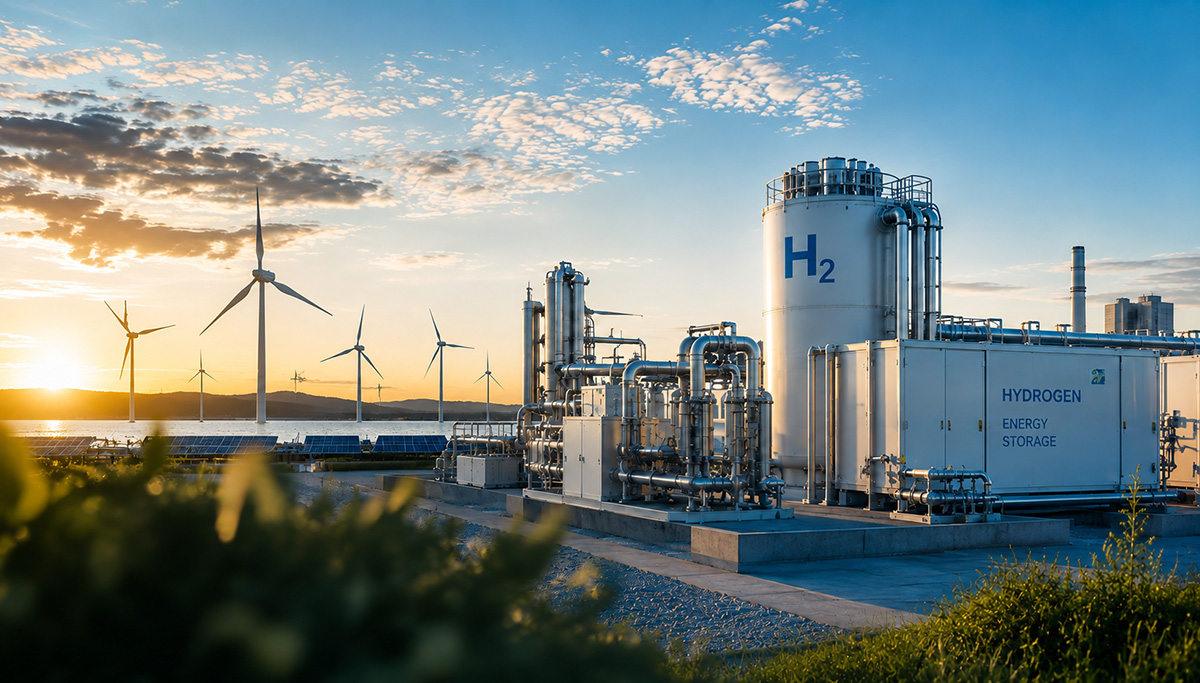
The Gampern concept is built around converting renewable electricity into hydrogen during periods of high generation and storing that energy for later use.
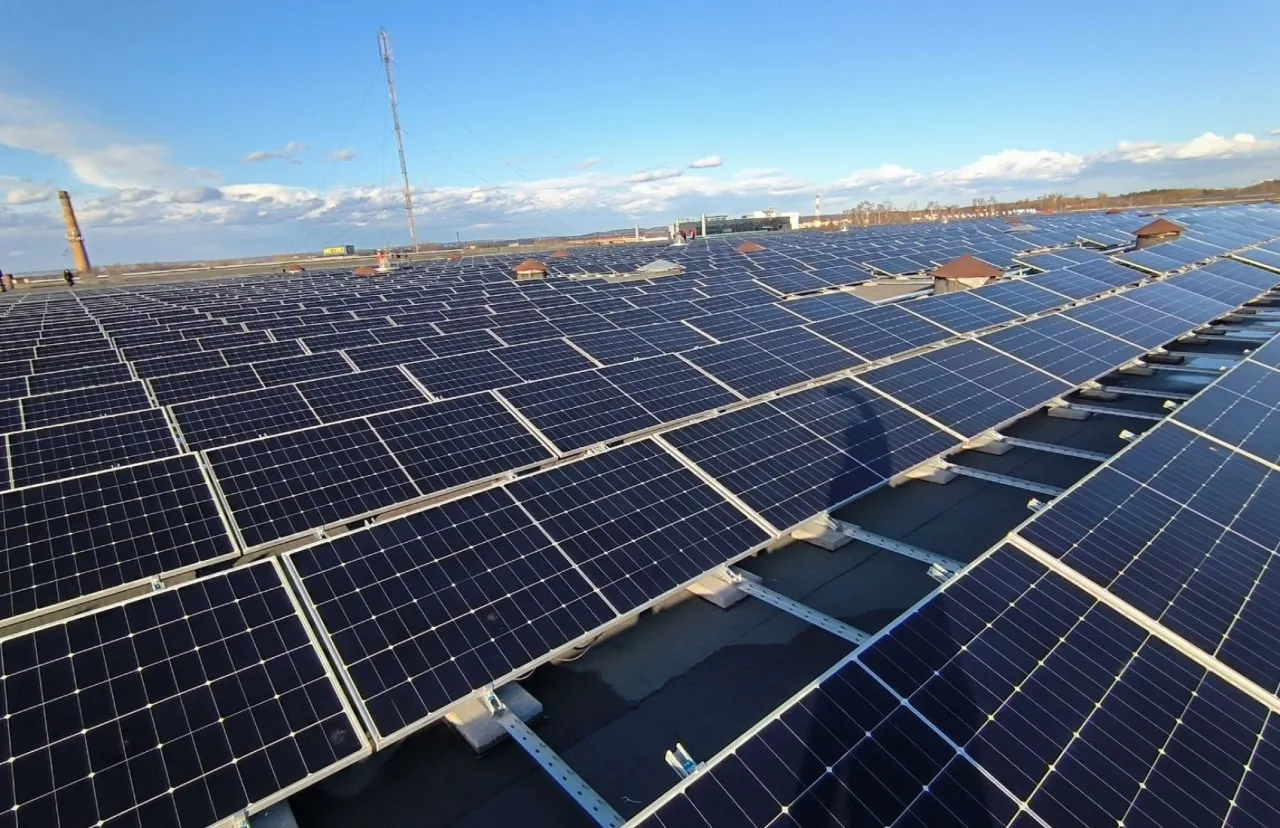
Solar power produced during summer months is converted into hydrogen through water electrolysis. The hydrogen is then stored underground and made available during periods of low renewable generation, particularly in winter when electricity demand for heating and power increases.
This approach addresses a growing challenge across Europe. As countries expand solar and wind capacity, periods of renewable oversupply are becoming more frequent, while prolonged periods of low wind and solar generation can create pressure on electricity systems.
Short-duration storage technologies, including batteries, are increasingly important for managing hourly fluctuations and grid balancing. However, they are not designed to provide energy over weeks or months. Long-duration storage solutions, including hydrogen stored underground, are increasingly being considered as a way to provide seasonal flexibility.
Gampern moves beyond hydrogen production
The RAG Valley Gampern project is designed as an integrated renewable energy system rather than a standalone hydrogen production facility.
The site combines renewable electricity generation, electrolysis, underground hydrogen storage, hydrogen transport infrastructure and flexible power generation.
RAG Austria has already demonstrated the technical feasibility of storing renewable hydrogen underground through its Underground Sun Storage projects. The company has investigated how existing geological gas storage formations can be repurposed to store hydrogen at large scale.
The objective is to use existing energy infrastructure to support the transition from fossil fuels to renewable gases. Former natural gas storage facilities could become strategic assets in future energy systems by providing large-scale storage capacity that cannot easily be replicated through surface-based technologies.
At Gampern, stored hydrogen can be converted back into electricity and heat through a hydrogen-capable combined heat and power plant supplied by INNIO Group. The facility demonstrates how renewable electricity can be converted, stored and delivered when required.
RAG’s hydrogen strategy targets year-round renewable energy supply
The Gampern expansion is part of RAG Austria’s broader strategy to develop hydrogen as a long-duration energy storage solution.
The company has positioned underground hydrogen storage as a key technology for managing the seasonal mismatch between renewable generation and energy demand.
During summer, solar generation can exceed immediate electricity demand. During winter, however, electricity consumption rises while renewable output from solar and hydropower can decline significantly. Hydrogen storage provides a mechanism to transfer renewable energy between these periods.
RAG Austria argues that future energy systems will require more than additional renewable generation capacity. They will also need technologies capable of maintaining reliability during extended periods of low renewable production.
“100 per cent renewable electricity on an annual basis does not guarantee a single week in winter,” said Markus Mitteregger, CEO of RAG Austria.
“Last winter has shown who actually keeps the system running: our large-capacity gas storage facilities, into which the gas was stored a year earlier, and the adjustable, flexible gas-fired power stations.”
The company believes that seasonal storage will become increasingly important as electrification expands across sectors such as heating and industry.
Domestic industry secures hydrogen capacity
The expanded Gampern facility is also expected to support Austria’s industrial decarbonisation efforts.
Several Austrian energy companies, including EVN, Energie AG, KELAG, LINZ AG and Salzburg AG, have already secured electrolysis capacity at the plant.
Green hydrogen is expected to play a role in sectors where direct electrification remains difficult, including parts of heavy industry and high-temperature processes.
By increasing domestic hydrogen production capacity, Austria aims to reduce future dependence on imported fossil fuels while developing local renewable energy value chains.
ANDRITZ expands role in green hydrogen infrastructure
For ANDRITZ, the Gampern project strengthens its position as a technology provider and EPC partner for green hydrogen facilities.
The Austrian engineering group has been expanding its hydrogen activities as demand grows for large-scale electrolysis solutions. Its capabilities cover the wider hydrogen production chain, including electrolysis systems, water treatment, purification, compression and plant integration.
The company is targeting industrial applications where renewable hydrogen can support emissions reductions and replace fossil-based processes.
The Gampern project reflects a broader shift in the hydrogen market. Early projects often focused primarily on producing hydrogen, but developers are increasingly looking at integrated systems that connect renewable generation, hydrogen production, storage and flexible energy use.
Seasonal storage becomes the next challenge for renewable grids
The expansion of Gampern highlights a wider issue facing Europe’s energy transition.
Building more renewable generation is essential, but the next phase of the transition will depend increasingly on flexibility technologies capable of managing variability over longer periods.
A future electricity system dominated by solar and wind will require a combination of solutions. Batteries will support short-term balancing, grid technologies will improve flexibility, and long-duration storage technologies will help manage seasonal differences between renewable supply and demand.
Hydrogen will not replace every form of energy storage, but projects such as Gampern demonstrate how it could provide a missing piece of the renewable energy puzzle: storing clean electricity for periods when the sun is not shining and the wind is not blowing.
With its 15 MW expansion, RAG Austria is moving the concept from demonstration towards commercial-scale infrastructure, positioning Gampern as one of Europe’s most advanced examples of integrated green hydrogen production and seasonal energy storage.
EVENT ALERT: