Author: Derek Michalski, Chief Editor.
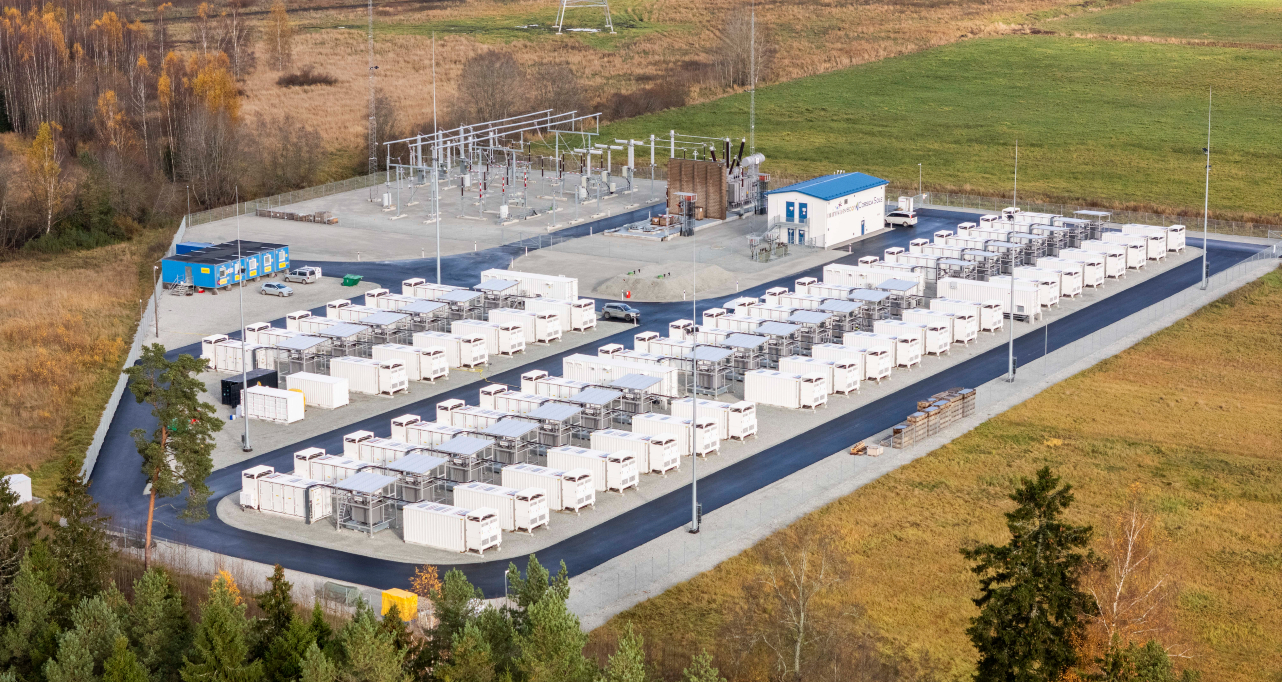
Only a few days ago a new piece of news made waves across the Romanian and CEE energy space: EBRD announced that it would provide up to €120 million to finance Econergy’s Părău 2 project, a 342 MW solar PV plant paired with a 150 MW/300 MWh battery energy storage system in Brașov.
The €229 million debt package is significant in its own right. But the more important story is what the financing says about the changing nature of renewable investment in Central and Eastern Europe.
Părău 2 is not the first large solar-plus-storage project to reach financing in the region. In April, EBRD committed €70 million as part of a €210 million financing package for Renalfa IPP’s 450 MW solar portfolio with a co-located 250 MW/1 GWh BESS in northeastern Hungary. EBRD described the transaction as one of the first instances of project financing for a utility-scale hybrid renewable asset in CEE.
Romania is therefore not creating a new financing model. It is joining an emerging regional market in which hybrid renewable assets are becoming sufficiently bankable to attract substantial debt, including against merchant revenues.
From solar generation to flexible generation
Romania’s renewable market has developed rapidly around utility-scale solar and wind. The next challenge is increasingly what happens to that generation once it enters the system.
As solar penetration increases, the hours of highest PV production are also the hours in which additional solar generation can put downward pressure on wholesale prices. At the same time, the system needs resources capable of shifting energy and providing balancing and ancillary services.
Părău 2 is structured around precisely that requirement. The 342 MW solar plant is being developed alongside a 150 MW/300 MWh BESS. The battery can shift solar output towards periods of higher demand and participate in Romania’s flexibility markets.
For lenders, however, this creates a more complicated underwriting exercise. Debt has to be supported by the economics of both generation and storage, including revenues dependent on power prices, capture rates and the development of balancing markets.
The fact that six lenders have participated in the wider financing package is therefore significant.
Hungary provides the clearest CEE comparison
The Renalfa transaction in Hungary is particularly relevant because the 450 MW solar portfolio and 250 MW/1 GWh BESS are being financed without a government support scheme or corporate PPA for the solar output. The €210 million package combines EBRD financing with commercial-bank debt.
Părău 2 has a different risk profile. The project has secured a 125 MWac allocation under Romania’s CfD scheme at €49.4/MWh for 15 years, while the remaining solar capacity will operate on a merchant basis.
The two projects demonstrate different routes towards the same destination: financing large-scale hybrid renewable assets without requiring every megawatt-hour of generation to be covered by a conventional long-term contract.
That is a significant development for CEE project finance.
Poland is building another financing track
Poland provides a useful additional comparison, although its recent transactions should not be confused with direct PV+BESS project finance.
In 2024, EBRD invested up to PLN 127.8 million (€30 million) in R.Power’s PLN 530 million (€125 million) green bond. The proceeds are being used for solar PV, wind and battery-storage projects on both standalone and hybrid bases. R.Power also committed to invest an amount equivalent to EBRD’s financing in BESS projects in EBRD countries of operation.
This was a corporate financing rather than project finance for one identified hybrid asset, but it shows that storage has become part of the financing strategy of a major Polish renewable developer.
The market has since moved further. In June 2026, R.Power secured approximately €64 million of project finance for its 150 MW/300 MWh Jedwabno BESS, described as the largest utility-scale BESS project-finance transaction completed in Poland.
Jedwabno is standalone storage, not PV+BESS. Its relevance is therefore different: it demonstrates that commercial lenders are becoming increasingly comfortable financing the flexibility component that is now being integrated into renewable projects.
The regional market is consequently developing through several related structures — hybrid PV+BESS, standalone BESS and renewable portfolios incorporating both. Părău 2 is important because it brings generation and storage together within a single large project-finance structure.
The first-loss guarantee tells us where the market still has limits
Perhaps the most revealing element of Părău 2 is the €115 million InvestEU first-loss guarantee supporting the EBRD’s A/B loan.
This is not primarily about technology risk. Solar PV and battery storage are established technologies. The more difficult question for lenders is the future value of merchant revenues.
Only part of Părău 2’s solar capacity benefits from the CfD. The remainder is exposed to wholesale prices, while the BESS will depend on market optimisation, balancing and ancillary-service revenues.
The EU guarantee therefore says something important about Romania’s market: merchant exposure is financeable, but lenders still value risk-sharing where future revenues are difficult to price.
The presence of a first-loss guarantee should not be interpreted as evidence that Romania is considered an unbankable renewables market. Recent financing activity points in the opposite direction: lenders are willing to commit substantial capital, but risk-sharing remains valuable where merchant exposure is difficult to model.
This fits EBRD’s wider RenewEU De-Risking Framework, which uses InvestEU guarantees to make more difficult renewable, storage and grid transactions bankable and mobilise additional private finance.
There is already a relevant Romanian precedent. EBRD is financing R.Power’s 127 MW/254 MWh Scornicești BESS, a large partially merchant storage project, through a non-recourse senior loan. The transaction is also expected to benefit from an EU first-loss guarantee.
Taken together, these transactions suggest that public risk-sharing is currently being used as a bridge between established renewable technology and less-established merchant revenue models.
The lender group is itself a market signal
The composition of the Părău 2 financing is equally important.
The €229 million debt package brings together EBRD, Black Sea Trade and Development Bank, OTP Bank and Exim Banca Românească, with Privredna banka Zagreb and NLB participating through the debt service reserve facility. Intesa Sanpaolo and Exim Banca Românească are providing additional VAT and letter-of-credit facilities.
This is more than a development bank financing a project. Multiple international and domestic lenders are taking exposure to an asset combining contracted and merchant revenues with storage.
That matters because Romania will need far more capital than development institutions can provide if it is to build out generation, storage and grid infrastructure at scale.
The same process is visible elsewhere in CEE. Hungary’s €210 million hybrid financing involves commercial banks alongside EBRD, while Poland is developing a commercial project-finance market for large BESS assets.
Părău 2 therefore provides another indication that lenders are becoming more comfortable with the underlying asset class and with the contractual structures required to finance it.
CfD is becoming one layer of a broader model
Părău 2 also illustrates how Romania’s CfD mechanism can interact with merchant financing rather than simply replacing it.
The 125 MWac allocation provides a contracted revenue component, while the remaining solar capacity remains exposed to the market. The battery introduces another source of potential revenue through energy shifting and system services.
The resulting structure is therefore neither fully contracted nor fully merchant. It combines predictable income, market exposure and flexibility revenues.
That may become increasingly relevant as Romania’s renewable fleet expands. The CfD programme can provide sufficient revenue visibility to support financing while leaving developers exposed to market opportunities and giving storage a role in capturing value from the system.
What Părău 2 says about Romania
The transaction should be interpreted carefully.
It does not demonstrate that every Romanian solar-plus-storage project can now obtain conventional project finance without public support. The €115 million first-loss guarantee shows that merchant exposure remains a financing challenge.
But neither is Romania an outlier. Hungary has demonstrated that a large PV+BESS project can be financed with fully merchant solar revenues, while Poland is establishing a financing track record for large-scale storage and renewable portfolios incorporating hybrid BESS.
Romania is therefore joining an emerging CEE financing market rather than creating one from scratch.
The important question now is how quickly the region can move from de-risked first transactions to conventional commercial financing.
That will depend on the depth of balancing and ancillary-service markets, the ability of BESS operators to capture multiple revenue streams, credible merchant-price assumptions and the operating track record of large hybrid projects.
Părău 2 brings those questions into one financing structure.
The €229 million package shows that lenders are willing to engage. The CfD provides a partial revenue anchor. The battery adds flexibility and another source of market value. The participation of multiple lenders demonstrates growing confidence in the asset class. And the InvestEU guarantee shows where the market’s risk boundary still lies.
CEE renewable finance is moving from financing megawatts of generation towards financing integrated power assets — generation, storage and flexibility combined. Romania is now firmly part of that transition.
The next milestone will be when projects with comparable merchant exposure can close without first-loss support. That will be the stronger indication that hybrid renewable finance in Romania has moved from an emerging structure to a mature market product.