On a sunny weekday in April 2026, a solar farm in France could produce at full output for hours and earn almost nothing. Analysis by Pexapark found that the French solar capture factor (the price solar actually earns, as a share of the average market price) fell to around 0.10 that month, down from roughly 0.42 a year earlier. France recorded 139 hours of negative prices. Germany had 123, and one continuous run of negative prices lasted 17 hours.
Numbers like these explain why so many arguments in renewables now hinge on the contract rather than the technology. Panels, turbines and batteries are cheap and reliable. What is harder is deciding who gets paid when, and who absorbs the pain when the market turns against the asset. Four words now dominate that conversation: merchant, toll, swap and PPA.
The question every project has to answer
A wind farm or battery has mostly fixed costs. The debt, the land lease and the maintenance contract all arrive on schedule. Its revenue does not. It depends on wholesale prices, on how much the asset produces or trades, and, crucially, on when it produces. That last point is the one investors have learned to fear.
Lenders want predictable cash flows, because predictable cash flows support more debt at lower cost. Owners often want the opposite: exposure to the price spikes and volatility that can make an asset far more valuable than a fixed contract would suggest. Every revenue model sits somewhere on a line between those two instincts. At one end, the owner keeps all the risk and all the upside. At the other, someone else takes the risk and keeps most of the reward.
Merchant: all the upside, all the exposure
A merchant asset sells straight into the market. A solar farm takes the day-ahead or intraday price for each hour it generates. A battery buys low, sells high and bids into balancing and ancillary services markets. No one guarantees a floor.
The appeal is obvious when prices are volatile. Batteries in particular earn money from the gap between cheap and expensive hours, so a market full of negative midday prices and tight evening peaks is, for them, an opportunity.
For wind and solar, though, the merchant case has weakened sharply. The problem is cannibalisation. Solar farms in the same market all generate at the same time, so the more of them there are, the lower the price they collectively depress at midday. Pexapark’s April data showed this happening across Europe: Germany’s solar capture factor fell to about 0.26 and Spain’s to about 0.28. Italy held up near 0.71, although zero-price hours appeared in its southern zones of Calabria and Sicily.
Greece shows what happens when solar grows faster than the flexibility needed to absorb it. The country curtailed about 2 TWh of renewable output in 2025, around 7.5% of renewable generation and more than double the 900 GWh curtailed in 2024. Industry forecasts put 2026 curtailment at 3.3–3.7 TWh, or roughly 12% of renewable output, mostly between 9am and 4pm. Thalia Valkouma, president of Faria Renewables S.A., has said curtailment cost Greek PV producers around 20% of their revenue last year. About 900 MW of storage has been awarded in three tenders, but by early 2026 none of it was yet operating. For a merchant solar asset, the result is a double hit: low prices when it can sell, and no sales at all when it is curtailed.
A fully merchant solar project in those conditions is a difficult thing to finance. Banks size debt against a conservative price case, and conservative cases now look grim. Merchant exposure tends to suit large utilities and investors with their own trading desks and balance sheets strong enough to ride out bad years.
PPAs: the long-standing default
The power purchase agreement is the most familiar alternative. A buyer, often a corporate such as a data-centre operator or manufacturer, or a utility, agrees to pay a fixed price per megawatt-hour for a set period, commonly ten years or more.
PPAs come in two main forms. In a physical PPA, the electricity is delivered to the buyer through the grid. In a virtual or financial PPA, the generator sells its power into the market as normal, and the two parties settle the difference between the market price and the agreed strike price. Either way, the generator swaps uncertain prices for a known one.
The shape of the contract matters as much as the price. Under a “pay-as-produced” PPA, the buyer takes whatever the project generates, whenever it generates it. That leaves the buyer holding the cannibalisation risk. Under a baseload or shaped PPA, the generator promises a steady or predictable profile and has to buy power from the market to fill the gaps, which shifts that risk back to the seller.
Buyers have become much more alert to this. LevelTen Energy’s index put the average European solar PPA price at €56.59/MWh in the second quarter of 2026, up 2.8% on the previous quarter. That average hides a split. “Although the European average price for solar rose this quarter, individual market trends diverge significantly,” said Placido Ostos, director of European analytics at LevelTen Energy. In the worst-hit markets, he explained, oversupply means “solar PPAs face limited captured prices on the market, forcing developers to offer very low PPA strike prices to appeal to buyers.”
Wind, with a less concentrated output profile, traded at a clear premium in Europe. In North America, solar PPA prices moved the other way, down 4.8% to $61.40/MWh.
The obvious response is to add storage. LevelTen tracked European hybrid solar-plus-battery PPAs at $81.68/MWh in the same quarter, a noticeable step above standalone solar. The extra cost reflects a product that can deliver power into the evening, when it is worth more.
Tolling: renting out the battery
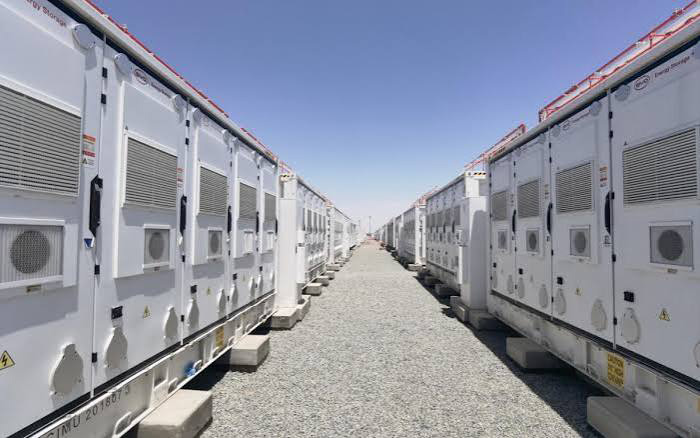
Tolling has become the headline structure for battery storage. The asset owner hands control of the battery’s charging and discharging to an offtaker, usually a utility or trading house. In return, the offtaker pays a fixed fee, typically per megawatt per year, regardless of how much money it makes trading the asset.
For the owner, a toll turns a volatile trading business into something that looks like infrastructure. The fixed payment is the kind of income lenders like. The trade-off is that the owner gives up the upside. If the market proves more volatile than expected, the trader keeps the difference. The owner also takes on obligations around availability and performance. If the battery is offline or degrades faster than promised, payments can be cut.
Europe’s toll market is getting bigger. On 29 September 2026, Statkraft and Greenvolt Power announced a ten-year tolling agreement covering two battery projects in north-eastern Poland, at Ełk (Nowa Wieś Ełcka) and Turośń Kościelna. Each project is 200 MW / 800 MWh, giving a combined 400 MW and 1.6 GWh. Under the deal, Statkraft decides when the batteries charge and discharge across energy and flexibility markets, while Greenvolt receives long-term predictable revenue alongside payments from Poland’s capacity market. Kornel Koronowski, head of origination Poland at Statkraft, described it as “the largest BESS transaction signed in the country to date.”
Łukasz Zagórski, business origination and market regulation director at Greenvolt Power, said the agreement allows “the flexibility of the batteries to be monetised across different power markets and unlocking additional revenues.”
There are variations. In a physical toll, the offtaker takes over operations, market registration and financial flows. In a virtual or financial toll, the owner keeps operating the battery but the offtaker nominates its charge and discharge positions and receives the resulting arbitrage value, settled financially. The financial version lets owners keep more operational control while still offering lenders a fixed income.
Spain shows how tolls can sit on top of PPAs. In April 2026, Grenergy signed a 12-year financial tolling agreement for the battery at its Escuderos hybrid project in Castilla-La Mancha, which pairs 200 MW of solar with 680 MWh of storage. The counterparty is an unnamed international utility rated investment grade by Moody’s and S&P, and the contract starts in July 2028. The solar output already has a buyer: a 12-year daytime PPA with Galp signed in 2020. Grenergy keeps running and trading the batteries, while the utility gets the economic value of their flexibility. The deal followed Grenergy’s first Spanish financial toll, for a standalone battery in Oviedo, in February 2026. “Escuderos marks the beginning of a new stage for Grenergy in Spain,” said David Ruiz de Andrés, the company’s CEO. “It is our first major hybrid project in the country and more will follow.”
Italy is running two models side by side. The first is a state-run toll. Terna’s first MACSE auction, held on 30 September 2025, awarded 10 GWh of storage under 15-year contracts at a weighted average price of €12,959 per MWh per year, against a cap of €37,000. Bids exceeded the capacity on offer more than four times over. Winning batteries give up their exposure to wholesale prices in exchange for fixed monthly payments from the grid operator plus a share of ancillary-service revenue. In effect it is a toll, with the grid operator as the counterparty. “The auction results show strong competition and robust market interest,” said Giuseppina Di Foggia, CEO and general manager of Terna. Enel won more than half the capacity.
The second is a private toll. In July 2026, EnBW agreed a long-term toll for 300 MW / 1.2 GWh of Zelestra’s four-hour battery project in Emilia-Romagna. That completed the contracting for the whole 2 GWh site, with construction due in 2027 and operation in 2028. Eliano Russo, CEO of Zelestra, called it “exactly the kind of long-term partnership that makes large storage assets possible.” Olivia Barnes, head of energy transition at EnBW, said that “Italy’s rapidly growing renewables sector offers attractive opportunities for innovative flexibility solutions.”
Revenue swaps and floors: the middle ground
Between a pure toll and full merchant exposure sits the revenue swap, sometimes described as a floor or revenue share. The owner keeps control of the asset and trades it in the market, but signs a contract that guarantees a minimum payment. In exchange, the counterparty receives a share of any revenue above an agreed level.
Australia’s National Electricity Market (NEM) has been the testing ground. According to research from Modo Energy, physical tolls dominated battery offtakes there until 2023, when Tesla signed a revenue share deal for the Bouldercombe battery in Queensland. Since then, alternative structures have spread quickly. Modo estimates that virtual tolls, revenue shares or swaps, and firmed PPAs now make up about half of the offtake contracts across live and pipeline projects. Every publicly announced battery offtake contract in the NEM since 2023 has run for ten years or longer.
The UK offers a clean example of an owner moving from a toll to a floor. Gresham House Energy Storage Fund had placed 568 MW of its batteries under two-year tolling agreements with Octopus Energy. In July 2025 it signed ten-year floor agreements with Statkraft and Markel Bermuda (an affiliate of Nephila) covering 789 MW, about 74% of its 1,072 MW portfolio. The floors guarantee a minimum of £35 million a year in contracted revenue, and the fund keeps the merchant upside above that level. Ben Guest, fund manager at Gresham House, said the deals “fundamentally reposition GRID as a business with significant minimum contracted revenue while retaining merchant upside exposure.”
The attraction is balance. A floor protects the owner from the worst outcomes and gives lenders a downside case they can bank against, while the owner still gets some of the upside. The main risk is basis risk. If a swap is benchmarked against a market index, and the specific asset earns less than that index because of where it is connected, its technical limits or its trading strategy, the owner can end up worse off than the contract seemed to promise.
Side by side
| Model | Who controls dispatch | Price risk sits with | Upside kept by owner | Bankability | Typical asset |
|---|---|---|---|---|---|
| Merchant | Owner | Owner | All | Low to moderate | Batteries, assets of large utilities |
| PPA (pay-as-produced) | Owner | Buyer (incl. shape risk) | Little | High | Solar, wind |
| PPA (baseload/shaped) | Owner | Owner carries shape risk | Little | High | Wind, hybrids |
| Toll (physical or financial) | Offtaker | Offtaker | Almost none | High | Batteries |
| Revenue swap / floor | Owner | Shared | Partial | Moderate to high | Batteries, hybrids |
When one contract is not enough
In practice, the neat categories are breaking down. More and more projects combine structures.
Enertrag’s Brüssow project in Brandenburg shows how this works. It pairs 44.5 MW of solar with a 5 MW / 10 MWh battery. EDF Trading will buy and market the solar output under a seven-year PPA, while flexibility trader e2m runs the battery under a separate seven-year tolling arrangement. The battery operates as a green-power co-location asset for five years before switching to a grey-power co-location model for the final two. The project also shares an existing grid connection with wind turbines and batteries already on site. Julien Demoustier, originator at e2m, said that combining different technologies at a shared grid connection point, while taking account of subsidy rules, was “particularly challenging” (translated from German). He described the project as showing how “renewable generation, storage flexibility and intelligent marketing” can come together into an economically viable whole.
Romania is building hybrids on the back of state contracts. In August 2026, Econergy closed up to €229 million of debt for Părău 2 in Brașov, which pairs 342 MW of solar with a 150 MW / 300 MWh battery. Part of the solar, 125 MW, holds a contract for difference from Romania’s first CfD round in 2024. That gave lenders a predictable revenue base on which to finance the rest, including the battery. Lenders include the EBRD, which provided up to €120 million, along with the Black Sea Trade and Development Bank, OTP Bank and Exim Banca Românească. Georgios Gkiaouris, the EBRD’s head of energy for Europe, said that by “financing one of the country’s pioneering solar and battery storage investments, the EBRD is helping to increase renewable energy generation.”
Policy shapes which combinations make sense. In the UK, the government’s Contracts for Difference scheme is effectively a state-backed, two-sided price contract. Allocation Round 7, announced on 14 January 2026, awarded a record 8.4 GW of offshore wind at a strike price of about £91/MWh in 2024 prices, with contracts of up to 20 years. In the EU, the reformed electricity market design rules require that, from July 2027, direct price support for new wind and solar investment takes the form of two-way CfDs, while also pushing member states to make it easier to sign PPAs. In the United States, the One Big Beautiful Bill Act’s accelerated phase-out of wind and solar tax credits is changing the maths behind both renewable PPAs and battery tolls, particularly in ERCOT.
The general rule is that the more a government underwrites prices, the less pressure there is to find private contracts that do the same thing. Where public support is thin, tolls, swaps and PPAs fill the gap.
Choosing which risk to keep
It is tempting to treat this as a race to remove risk entirely. That is a misreading. Every one of these contracts moves risk to someone who is paid to carry it. A trader signs a toll because it believes it can earn more than the fixed fee. A corporate signs a PPA because it values price certainty and green credentials more than the possibility of cheaper power. A swap provider offers a floor because it has priced the odds of having to pay out.
That is the true cost of surviving cannibalisation: there is no free protection. The owner pays for it, whether as upside handed to a trader, a discount for shape risk or a margin baked into a floor. The irony is that the same oversupply eating into merchant solar revenue is what makes batteries worth tolling, because the negative-price afternoons that scare solar lenders are exactly what trading desks want to buy access to. The developers that do best in the next build cycle may not be the ones with the cheapest equipment, but the ones that know what that protection costs and decide most carefully which slice of risk to keep and which to sell.