Author: Gary Bills
Watch Europe’s grid build itself and one thing jumps out. Solar goes from almost nothing in 2000 to the largest single source of capacity on the continent by 2023, and by 2025 it stands at roughly 400 GW against 90 GW of coal. Run the same film for Germany, Spain or Poland and the shape is the same. Coal fades, gas holds, and a wave of amber dots covers the map in barely fifteen years. France is still hanging in with nuclear but that too is changing fast.

Then look at what happened last year. European solar additions fell for the first time since 2016. In Poland, tenders were barely a fifth subscribed. In Spain, solar power purchase agreements are the cheapest in Europe and merchant projects have stopped clearing investors know why. In the Nordics and Baltics, developers cannot find anyone to sign for fixed price solar at all. Utility scale solar in mature markets has not slowed because panels got expensive. Panels have never been cheaper, the price is still dropping and I suspect that if they had not we would ahve seen this stall two years earlier. It has slowed because the electricity it produces has stopped being worth anything at the hour it produces it.
The numbers are stark. Sweden’s SE2 zone saw 679 negative-price hours last year, Spain 569, Germany and France well over 100 in April 2026 alone. Solar capture factors, the share of the average price a solar plant actually receives, sat at about 0.26 in Germany and 0.28 in Spain this spring, and 0.10 in France. A generator earning a quarter of the market price does not service debt.
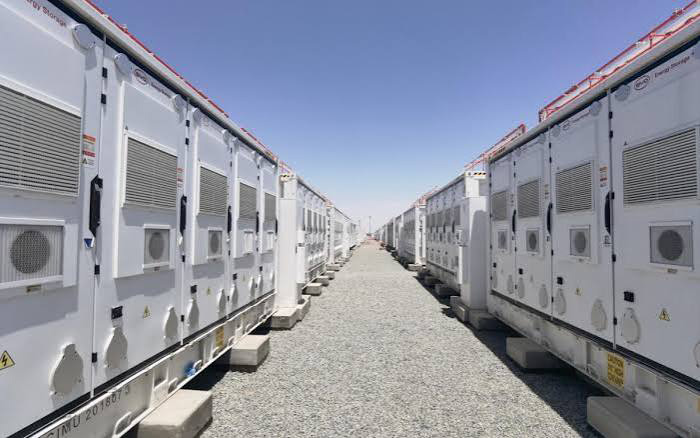
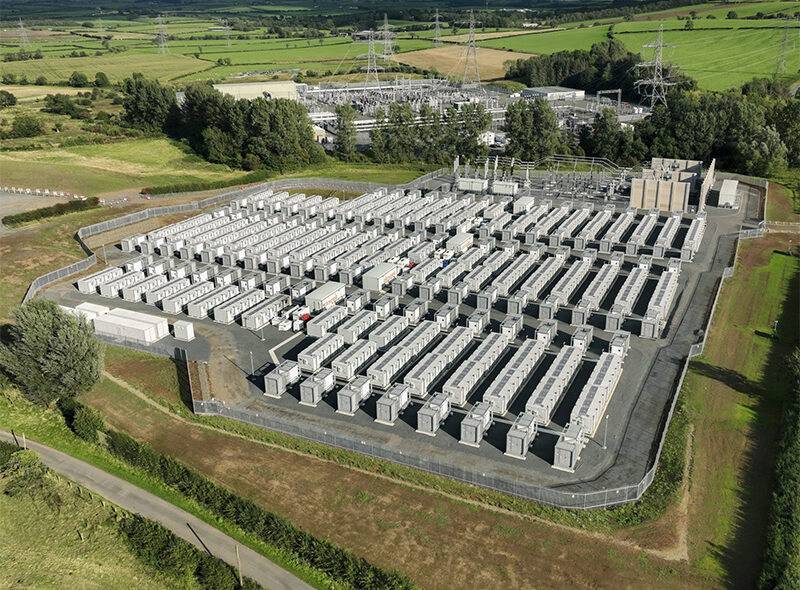
The rather obvious answer is storage of course, catch the midday surplus and sell it at seven in the evening and, up to a point that is exactly right. Europe is nowhere near that point yet but the yet is not far off. Batteries sized for the daily cycle pay for themselves in most of these markets, and the fact that we have built so few of them is a scandal of grid queues and permitting rather than economics. But storage has a ceiling. The evening bucket is only so big. A bigger battery costs more and cycles less, and once the daily cycle is served the next battery is chasing surplus that only exists on a few dozen days a year. It will not pay, and the market already knows it, which is why standalone battery projects have stalled in the very markets with the most surplus and again, falling BESS prices have and are masking this problem.
So if cheap panels and cheap batteries are not the constraint, what is? Two things, and both were built for a world that no longer exists.
The first is how we pay for generation adn I am talking right down to a household level. Nearly every scheme that built the projects in the animation pays per megawatt hour produced. Feed in tariffs, as produced or as forecast PPAs, contracts for difference on metered output.
A generator paid per MWh is indifferent to price. It keeps producing into an oversold market, the glut gets deeper, and then the costs land on consumers and the understandable caution next project’s business case. That was harmless when clean electricity was scarce.
A useful measure here is the capture factor. What a solar plant actually earns per megawatt hour, divided by the average market price. It falls as solar grows, because every plant sells at the same hour and drives the price down together, and it is lowest in spring, when the sun is strong, demand is soft and the reservoirs are full. This April it was about 0.26 in Germany, 0.28 in Spain and 0.10 in France. Below roughly 0.4, two things happen at once. Even the cheapest solar built do not typically service debt on market revenue alone, and any support scheme that pays per megawatt hour ends up paying mostly for the hours when the price is zero or negative, which is to say it pays plants to deepen the glut. That is the point at which as produced support stops being a hedge and becomes part of the problem.
Support has to shift to paying for what the system is short of: capacity that is available in the evening and in winter, storage attached to generation, firmness and shape. Poland’s capacity market and Italy’s storage auctions are early versions and, not coincidentally, those are the two markets where batteries earn best.
The second is how we charge for consumption, right down to the household. Most Europeans still pay a flat price for a product whose cost swings from negative at noon to very high at dusk. Smart meters are barely deployed in Germany. Where time of use exists it is a blunt hammer shaped tool in the form of a three band shape rather than a price. This matters less for the kettle after Corrie or at half time in the football than for what is coming, which is millions of electric cars and heat pumps that will either arrive flexible by default, charging and heating when power is free, or arrive as fixed load that makes the evening peak worse. Which of those we get is decided by the tariff structure in place before they connect, including network charges and an end to storage being taxed twice as both consumer and generator.
There is a third condition, and it is not optional. Germany has over 200 GW of connection requests against no capacity until nearly 2029. Spain approved 4.5 GW of 40 GW requested. Sweden’s surplus is trapped in the north while the south pays four times the price. Perfect support design and perfect tariffs produce a queue of well-financed projects that cannot connect. Grid has to be built ahead of generation and the queue has to reward projects that bring their own flexibility.
Do those three things and solar and wind keep growing in mature markets. But it will be a different product from the one that filled the map between 2010 and 2023: solar with a battery, solar with a west-facing share, solar sold under a contract that pays for shape, and wind where it complements it. The residual surplus on the sunniest afternoons will be curtailed, and that is not waste, it is the cheapest thing on the site being thrown away in favour of not building a battery that would sit idle for 300 days a year.
The green revolution is not over. It has simply run into the price system that was designed to start it, and that system now has to be rebuilt to finish it and people like me need to educate governments on how to move faster to allow this to happen.
Data: Global Energy Monitor plant trackers; Ember; Eurostat; pv magazine and Pexapark capture-price analyses, spring 2026.