Author: Derek Michalski, Chief Editor.
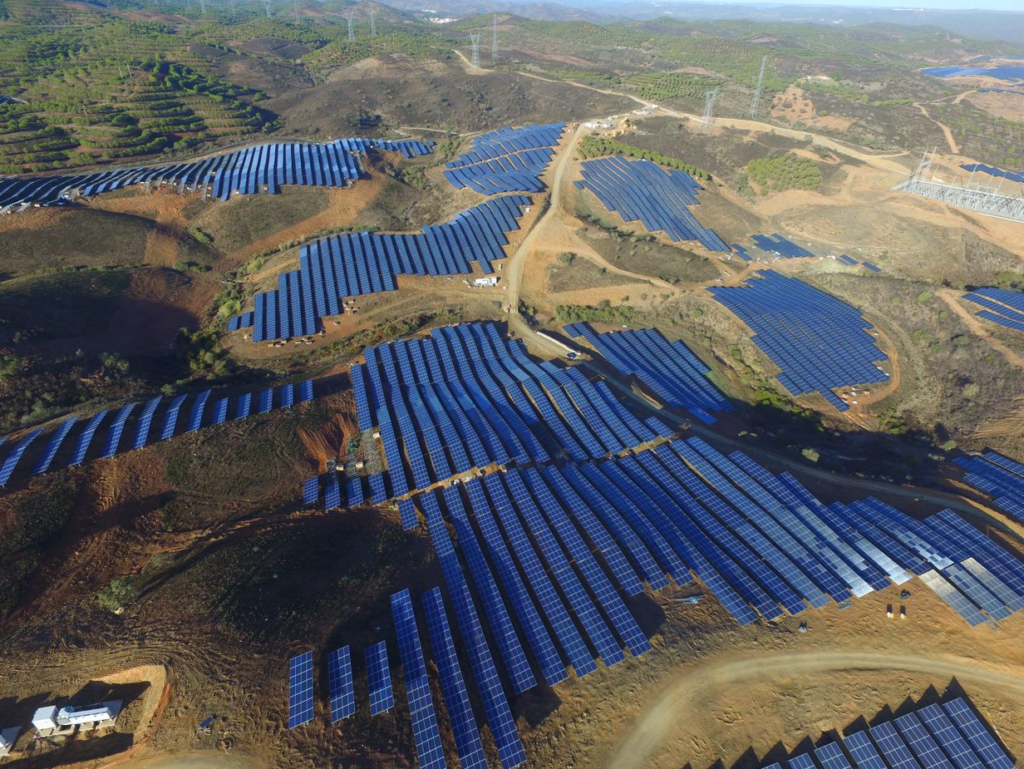
On paper, Solara4 should have been a triumph. When the 220-megawatt plant near the village of Vaqueiros, in Portugal’s sun-baked Alcoutim municipality, switched on in September 2021, it was hailed as Europe’s largest unsubsidised solar farm — proof that solar power had finally grown up enough to compete in the open market without a government cheque propping it up. Five years later, that same absence of a government cheque is precisely what brought it down.
WElink Energy Portugal 2 UK Limited, the British-registered company that owns Solara4, filed for administration on 11 June 2026. For more than two months, the process unfolded almost entirely out of public view; it was not until 24–26 August 2026 that Portuguese and international press picked up the story, by which point joint administrators Kirsty McMahon and Danny Dartnaill were already well into a process now expected to run until June 2027. That ten-week gap between the filing and the headlines is itself telling — a reminder that a company can quietly pass into insolvency long before the market, or the public, notices anything is wrong. By the time it did make news, the story had already become a cautionary tale circulating in trade press from Lisbon to Berlin.
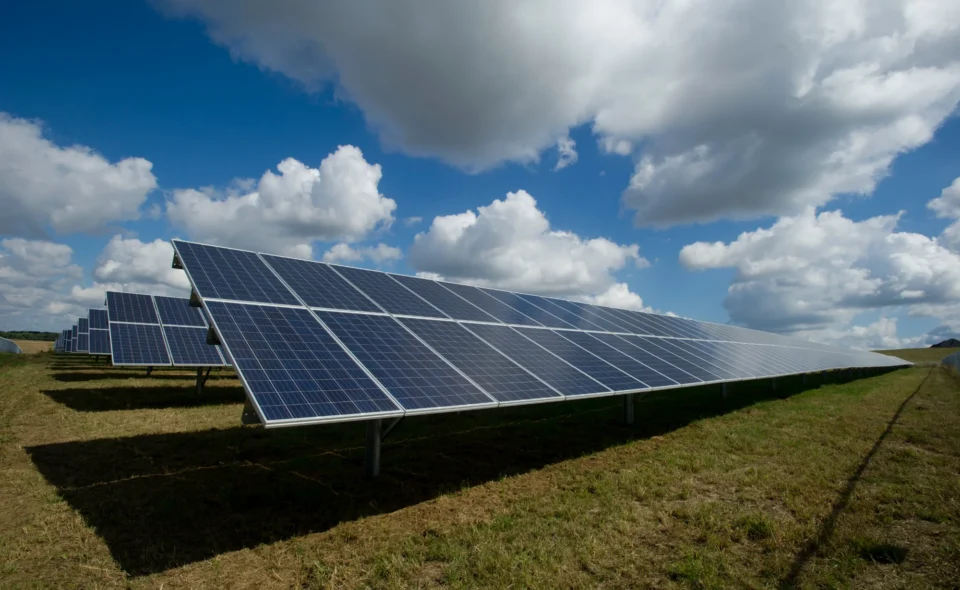
Solara4 was never a marginal project. Spread across 320 hectares and carrying some 660,000 solar modules and 125 inverters, it was designed to produce roughly 380 gigawatt-hours a year — enough for about 200,000 homes — and to sell that power to the Spanish retailer Audax Renovables under a 20-year contract. It offset an estimated 177,000 tonnes of carbon dioxide annually. It was, by any measure that mattered a decade ago, exactly the kind of asset the energy transition needed. That it has instead become Europe’s most closely watched example of a solar plant undone by its own market is the real story here — and it is a story with company.
The market did what merchant plants are built to survive, and it didn’t survive it
The single word that recurs in every serious account of Solara4’s collapse is “merchant.” Unlike most solar farms built during Europe’s subsidy era, Solara4 was never given a guaranteed feed-in tariff or a government-backed floor price. It was built to sell electricity directly into the wholesale market, on the bet that Iberian power prices would stay high enough, and long enough, to repay roughly $204 million in private financing, including $116.7 million in senior secured debt from Investec and the Austrian lender Kommunalkredit.
That bet has not paid off.
Spain and Portugal have spent the past several years adding solar capacity at a pace that has outrun the grid’s ability to absorb it, and the result — widely described in the industry as “cannibalisation” — is that huge volumes of solar power now arrive on the market at exactly the same sunny midday hours, driving wholesale prices toward zero and, increasingly often, below it. Reporting on Solara4 put its 2026 realised prices anywhere between $12.8 and $81.7 per megawatt-hour, a swing that makes a project’s debt-service calendar close to impossible to plan around.
Hugo Paz, WElink’s director for the Iberian Peninsula, effectively conceded the point when he told Portuguese press that a solar-only asset “não seria economicamente sustentável por si só” — would not be economically sustainable on its own. That is a striking admission from the company itself: the plant’s technology worked, its output was real, and it still could not clear its bills, because the price it was paid for every megawatt-hour it generated had collapsed under the weight of everyone else’s solar panels doing the same thing at the same time.
Bad luck did its part too. The plant suffered several fires in the twelve months before the filing, including one in late May 2026 that damaged roughly a tenth of the facility and needed an estimated eight to fourteen weeks of repair, on top of inverter failures that caused extended outages. None of that was catastrophic on its own, but layered on top of an already thin margin, it ate further into cash flow at the worst possible moment. So did the company’s falling-out with its original engineering, procurement and construction contractor, China Triumph International Engineering (CTIEC), whose contract was terminated back in May 2023 and which is now pursuing an arbitration claim against WElink reported at roughly €143 million — a contingent liability large enough by itself to unsettle any lender’s confidence in the project’s balance sheet.
WElink had a plan to fix the economics: a proposed €400 million hybridisation of the site, adding 264 megawatts of wind power across 40 turbines and 100 megawatts of battery storage, which would have pushed total capacity past 600 megawatts and, crucially, let the company sell power around the clock rather than only when the sun shone. Portugal’s environment agency was not convinced, citing concerns for Bonelli’s eagles and other protected species in the area, and a scaled-back version of the project remains stuck in consultation. The expansion that might have rescued Solara4’s finances by mid-2026, as management had hoped, simply did not arrive in time. What is left is a plant that still runs — production has not stopped — but whose ownership has effectively been handed to its creditors, with day-to-day management passed from WElink Investments to the renewables specialist Exus Renewables, working alongside the consultancy Enertis, while administrators search for a buyer.
Spain got there first, and got there worse
None of this happened in a vacuum. If Solara4 is the case that made international headlines, Spain is the market that has been quietly living this exact story for two years. A June 2026 analysis of distressed mergers and acquisitions in Spain’s renewable sector, published by the law firm DLA Piper and authored by partners Pablo Echenique, Juan Verdugo, José María Barrios, and José Marco, lays out the arithmetic bluntly: Spain set out to install around 18 gigawatts of solar capacity between 2020 and 2026 and ended up with more than 40 gigawatts, a level of overbuild that pushed the country past 600 hours of negative electricity pricing by 2026 and dragged solar “capture ratios” — the actual value a solar plant realises compared with the average market price — below 10% in some months. The report notes that many of these projects were financed on revenue assumptions “that current prices cannot sustain,” which is a polite way of saying the business plans were written for a market that no longer exists.
The casualty list is not short. Soltec, the Spanish solar-tracker manufacturer and developer, filed a restructuring plan with the Commercial Court in Murcia in July 2025 after its debt swelled to roughly €385 million; it survived by selling an 80% stake to the investment firm DVC Partners and cutting its debt load to about €255 million, while retreating from construction and asset-management work to focus on its core tracker business.
Univergy restructured around €50 million of its own debt in 2026. Prodiel, an Andalusian renewables group, has spent 2026 renegotiating roughly €110 million in obligations and selling off solar projects specifically to pay its creditors. Further down the size scale, the Barcelona self-consumption installer Solarmente — a company that once counted Leonardo DiCaprio among its investors — filed for bankruptcy protection after posting a €1.7 million loss on just €1.5 million of revenue, a halving of sales in a single year, while fellow installer Sunhero entered its own insolvency proceedings after a prolonged sales slump.
An Italian commentary on the Spanish situation, published as Rome watches nervously from across the border, put some of the operational numbers in even starker terms: Spanish solar plants now running at 650 to 700 hours of production a year against an original projection of 1,500, at average prices of €17 to 19 per megawatt-hour instead of the €40-plus once assumed — with loan repayments due in mid-2026 threatening what the piece called a coming wave of defaults. Whether Solara4 counts as the first domino of that wave to fall outside Spain, or simply the most visible one so far, is really a matter of timing rather than substance: the underlying mechanism is identical.
Germany’s version of the same problem looks a little different but rhymes closely. Rather than one headline-grabbing utility-scale collapse, the German market has seen strain concentrated at both ends of the value chain: the module manufacturer Soluxtec filed for insolvency in April 2026, and the project developer SoWiTec — sitting on a pipeline of roughly 32 gigawatts of wind and solar projects across five countries — cited “excessive debt” and outright illiquidity when it filed for insolvency, later selling off its project rights through the advisory firm Capcora.
Beneath those two headline cases sits a quieter, more structural problem that Germany’s own solar park operators are grappling with daily. Since 2025, the country’s so-called Solarspitzengesetz (“solar peak law”) has withheld compensation from newer solar operators during periods of negative pricing, and combined with billing errors from the intermediaries who market operators’ power on their behalf, it is squeezing cash flow across the sector. “Die Liquidität ist stark gefährdet” — “liquidity is strongly endangered” — is how Holger Roswandowicz, founder and managing director of the energy consultancy HR Energiemanagement, put it in trade press coverage of the issue, pointing to individual operators who have absorbed tens of thousands of euros in losses from billing mistakes alone in 2026, on top of sector-wide revenue that fell an estimated 20% in 2025 and is projected to fall a further 30% this year.
Zoom out further and the same warning has been coming from the industry’s own trade body for years, if for a related but distinct reason. SolarPower Europe, in a submission to the European Commission, warned that the collapse of solar module and equipment prices — driven by Chinese oversupply rather than the wholesale power prices hitting plants like Solara4 — put Europe’s entire manufacturing base at risk. “If we don’t respond rapidly and appropriately to this price crisis, we’re looking at another wave of bankruptcies, and a false start for EU’s open strategic autonomy agenda,” said Walburga Hemetsberger, the association’s CEO, citing the bankruptcy of the Norwegian silicon-ingot producer Norwegian Crystals as an early casualty. That warning was about the supply side of the industry rather than plant operators, but it points to the same underlying vulnerability running through this entire story: an industry that grew explosively on the assumption that someone, somewhere, would keep paying a decent price for what it made or generated, only to discover that solar’s own success at getting cheap and getting built everywhere at once is what broke the price.
Italy, notably, has not yet produced a Solara4 or a Soltec of its own — at least not one visible in current reporting. Italian commentators have instead spent 2026 pointing across the border at Spain and Portugal as a warning of what happens next if Rome does not manage its own solar buildout more carefully, which suggests either that Italy’s market structure has so far cushioned it from the worst of the cannibalisation effect, or simply that its reckoning has not arrived yet.
The pattern underneath the headlines
Strip away the geography and the story repeats itself with almost mechanical regularity: a market adds solar capacity faster than its grid or its demand curve can absorb, wholesale prices fall toward zero and below it during sunny hours, and the projects that were financed on the assumption of a stable, decent price — usually through project-finance debt structured years before anyone anticipated today’s oversupply — start missing their covenants. What follows is either an orderly restructuring, as with Soltec and Univergy, or a harder landing into formal insolvency, as with SoWiTec, Solarmente, Sunhero, and now WElink’s Solara4. The assets themselves rarely disappear; they keep generating power, as Solara4 still does, while ownership passes to whoever is willing to take on a project priced for a market that no longer pays what it used to. Exus Renewables, DVC Partners and Capcora are all, in their own ways, that new class of buyer — the consolidators arriving to pick up merchant solar assets at a discount once the original owners’ balance sheets can no longer bear the weight.
The uncomfortable lesson for anyone still betting on unsubsidised solar is that being “Europe’s largest unsubsidised solar plant” was never really an achievement to be celebrated without qualification. It meant Solara4 was also the plant with the least protection from exactly the kind of price collapse that its own success — and the success of thousands of plants like it across Iberia — helped bring about. Portugal’s largest solar farm did not fail because solar power does not work. It failed because, for a merchant plant with no floor under its revenue, there was nothing left to catch it when the price of the thing it was built to sell fell through the floor.