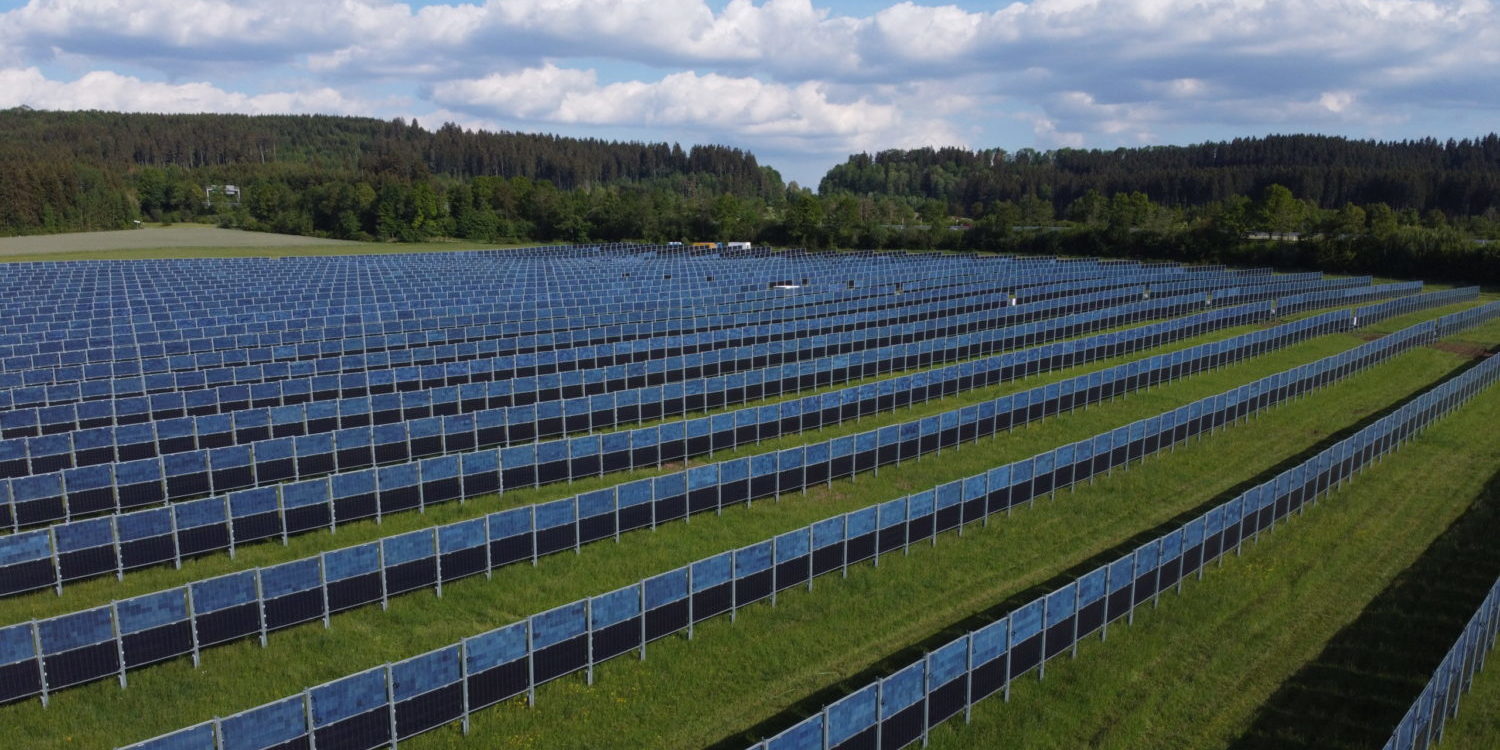
Next2Sun has secured more than €5 million in subscriptions and financing offers in an effort to avert an insolvency filing, but the future of the German vertical-photovoltaics specialist remains uncertain. The company said it had reached the funding threshold it had set after warning earlier in September that insufficient capital would force it to cancel its share issue and file for insolvency. The commitments still need to be assessed and confirmed as binding before the financing can be completed, meaning the immediate liquidity crisis has not yet been formally resolved.
The development comes barely two weeks after Next2Sun said its €5 million capital increase had attracted only a fraction of the targeted amount and appealed urgently to investors for additional funding. The company attributed its difficulties not to a shortage of customers, projects or technology, but to what it described as strong reluctance among investors, banks and other financiers to provide capital to renewable-energy businesses.
Next2Sun’s predicament is therefore more than a company-specific financing story. It is an example of a much broader change taking place in renewable-energy investment. Capital remains available for the energy transition, but investors and lenders are becoming considerably more selective about which projects they finance, how revenues are secured and how much market, regulatory and development risk they are prepared to accept.
The underlying issue is not a lack of capital seeking exposure to renewable energy. It is a change in how that capital is being allocated.
Solar provides one of the clearest examples. Financing for standalone solar fell 20% year on year in the first half of 2026 to $75.4 billion, the lowest level since the beginning of the solar investment boom in 2021. At the same time, investment in co-located solar and storage reached a record $25 billion. The divergence suggests that investors are not abandoning solar generation, but are increasingly directing capital towards projects that provide greater flexibility and more diversified revenue opportunities.
As solar penetration rises, the value of generation itself is becoming more difficult to predict. Large volumes of photovoltaic generation increasingly occur at the same time, putting downward pressure on wholesale electricity prices during periods of high solar output. The resulting decline in capture prices can materially affect project revenues even where the underlying cost of generating electricity remains competitive. Grid congestion and curtailment add another layer of uncertainty, particularly in markets where renewable deployment is advancing faster than transmission infrastructure.
This is changing the bankability test for solar projects. The levelised cost of electricity remains important, but investors increasingly need visibility over the project’s capture price, exposure to merchant revenues, expected curtailment, grid constraints and performance under prolonged periods of low or negative electricity prices. They also need to understand how much of the projected revenue is genuinely contracted and the credit quality of the counterparties providing it.
For investors, the distinction between a technically viable project and a financeable project is becoming increasingly important. A solar plant may have a competitive generation cost and an attractive resource profile, but if a significant proportion of its future revenue depends on volatile wholesale prices, its financing requirements will look very different from those of a project backed by a long-term PPA with a strong counterparty.
This helps explain the growing attractiveness of solar-plus-storage. Batteries introduce additional capital expenditure and their own operational and market risks, but they can give a project greater control over when electricity is sold. Solar generation can potentially be shifted away from periods of oversupply towards higher-value periods, while storage can access additional flexibility and balancing revenues. The investment proposition is therefore not necessarily risk-free, but it can offer greater control over revenue volatility than a standalone solar project.
The same principle is increasingly influencing renewable-energy investment more broadly. Investors are looking for assets with some protection against power-price volatility, regulatory uncertainty and grid constraints. Long-term PPAs with financially strong counterparties provide revenue visibility. Government-backed support mechanisms can offer similar certainty when their legal and regulatory basis is clear. Projects with firm grid connections, mature permitting, defined construction costs and limited development risk are generally easier to finance than projects where several of these variables remain unresolved.
This creates a significant distinction between project finance and corporate finance. A bank may be prepared to lend against a specific project once its revenues, grid connection and construction arrangements are sufficiently established, while being unwilling to provide corporate growth capital to the company developing that project. Large utilities and infrastructure investors can often absorb development risk through their balance sheets. Smaller renewable-energy companies have considerably less capacity to do so.
Next2Sun illustrates the problem. The company has an established technology, a project pipeline and a growing portfolio of applications, but is nevertheless facing a corporate liquidity constraint. It has reported more than 65 MWp of projects realised in Germany and abroad and has continued to develop new products and partnerships. In August, the company said it intended to deliver 50 MW of installations during 2026 and 70 MW in 2027.
The difficulty is therefore not necessarily whether there is a market for the company’s technology. It is whether sufficient capital is available to finance the development period between having projects in the pipeline and converting those projects into operating assets capable of generating predictable cash flow.
Regulatory uncertainty compounds the problem. Next2Sun has identified the absence of approved Agri-PV support as one factor that affected its 2025 financial year. It has also pointed to the broader reluctance of investors and banks to finance renewable-energy projects.
For developers and investors, uncertainty over the precise application and timing of support mechanisms makes financial modelling more difficult and can delay investment decisions. A project whose economics depend on a particular regulatory mechanism needs confidence that the mechanism will be implemented on a sufficiently clear and durable basis. Where that confidence is absent, the cost of capital can rise or investment can move towards projects with less regulatory exposure.
The implications extend beyond agrivoltaics. Renewable-energy investors are increasingly evaluating regulatory risk alongside conventional project risks such as construction, power prices and grid connection. The result is a more differentiated investment market in which the quality of the revenue structure can be as important as the underlying technology.
This is also affecting investment in new technologies. Investors have not stopped backing innovation, but the burden of proof has increased. A technology company increasingly needs to demonstrate not only that its technology works, but that it addresses a defined market requirement and has a credible route to recurring revenues. Technologies that address system constraints such as flexibility, storage, grid capacity and demand management can offer a clearer investment proposition because their economic value can be linked to identifiable market needs.
For renewable developers, this creates a sharper distinction between growth potential and financeability. A large project pipeline demonstrates market opportunity, but it does not necessarily demonstrate that the underlying projects can attract debt or equity on acceptable terms. Investors increasingly want evidence of progress through the development process: secured land, permits, grid access, credible construction costs, contracted revenues and financially robust counterparties.
The financing market is consequently moving towards assets where risk can be identified, priced and managed. Mature projects with contracted revenues and established grid connections can continue to attract substantial institutional and bank capital. Projects combining generation with storage or other flexibility mechanisms can offer additional routes to revenue. By contrast, early-stage projects with substantial merchant exposure, unresolved regulatory questions or uncertain grid access face a narrower pool of potential investors and potentially higher financing costs.
That does not mean that merchant projects, agrivoltaics or early-stage renewable companies cannot attract capital. It means that investors increasingly require compensation for the additional uncertainty, whether through higher expected returns, stronger contractual protections, strategic investment or greater sponsor support.
Next2Sun is therefore a useful indicator of a much larger trend. Its immediate future will depend on whether the latest financing commitments can be converted into sufficient binding capital to continue operating and developing its projects. But even if the current crisis is resolved, the underlying financing challenge will remain.
The renewable-energy sector is moving from an environment in which the scale of the energy transition itself was sufficient to attract large amounts of capital towards one in which capital is being allocated according to increasingly detailed assessments of revenue quality and risk.
For investors, the question is becoming less about how much renewable capacity a company can build and more about the quality and durability of the revenues attached to that capacity. For developers, access to capital will increasingly depend on their ability to demonstrate how projects will withstand merchant-price exposure, grid constraints, regulatory changes and periods of weaker market conditions.
Next2Sun’s experience illustrates the point. The company may have viable technology, customers and projects, but those attributes do not automatically translate into financeability in the current market.
The next phase of renewable investment will therefore be defined not simply by how much capital is available, but by how much certainty investors can obtain for the capital they deploy.
Join private and institutional investors in Amsterdam: