Copenhagen Infrastructure Partners (CIP) made two announcements on 2 October 2026. In Scottish Ayrshire, it committed more than €270 million to a battery designed to hold Scottish wind power for four hours at a time. In Oslo, Norway’s sovereign wealth fund said it would put €1.2 billion into CIP’s next flagship fund. One deal shows where CIP’s capital is going now. The other shows that one of the world’s largest investors is happy to keep providing it.
A bigger battery for a constrained grid
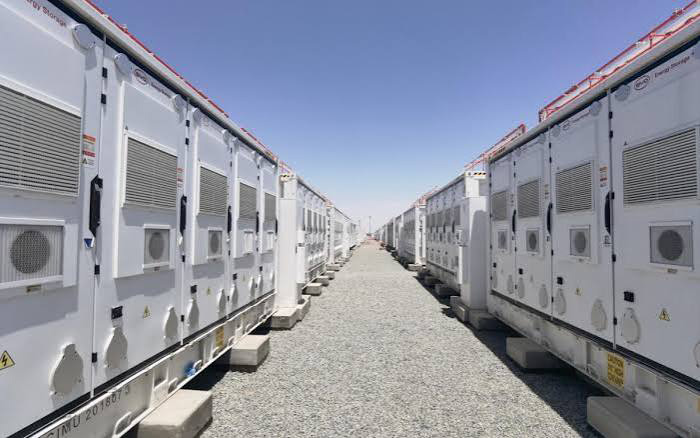
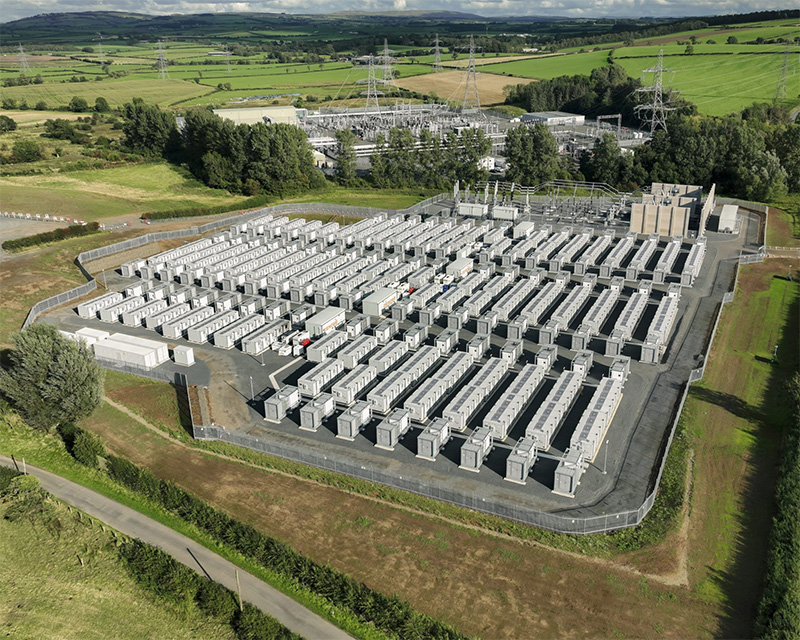
CIP has reached a final investment decision on Kilmarnock South through its fourth flagship fund, Copenhagen Infrastructure IV (CI IV). The project is a 350 MW / 1,400 MWh lithium-ion battery energy storage system (BESS) in south Ayrshire. Construction has started, and commercial operation is expected in the first quarter of 2028. In sterling the investment is about £232 million, the figure the UK government used when it welcomed the project.
The four-hour duration matters. Most of the grid-scale batteries built in Great Britain so far discharge for one or two hours, which suits fast frequency services and short price swings. Scotland’s problem is different. Its wind farms often produce more power than the transmission network can carry south, so turbines are switched off and paid to stay idle. A battery that can absorb several hours of that surplus and release it once the network has room deals with the constraint directly. When it is running, Kilmarnock South will be the longest-duration asset in CIP’s UK storage portfolio.
Nischal Agarwal, Partner at CIP, said the company was “pleased to add Kilmarnock South to our growing portfolio of UK battery projects.” He added that “well-sited battery energy storage projects provide valuable power system flexibility which enables the full benefits of low-cost renewables to be captured, strengthening security of supply and helping to both cut and stabilise energy bills for consumers.”
Four sites, one strategy
Kilmarnock South is CIP’s fourth transmission-connected battery project in Scotland. The first, Coalburn 1, began commercial operations in August 2026. Coalburn 2 and Devilla are also in the portfolio. Once all four are commissioned, they will have 1.85 GW of power capacity and 4.4 GWh of storage. CIP says that is close to a third of Great Britain’s operational battery storage today, and enough to cover the electricity demand of more than 5.5 million households for two hours.
The figures also show how the portfolio is changing. Coalburn 1, Coalburn 2 and Devilla together come to about 1.5 GW and 3 GWh, so they are two-hour assets. Kilmarnock South adds less than a fifth of the portfolio’s power capacity but almost a third of its energy capacity. This is the direction many in the industry expect Britain’s storage market to take as more renewables connect: fewer short bursts and more batteries that can carry power across a whole evening peak.
UK Energy Minister Michael Shanks linked the projects to the government’s argument about bills and energy security. “A former coal mine at Coalburn is now home to one of Europe’s largest batteries storing clean power,” he said, “while at Kilmarnock South, a new GBP 232 million battery will store even more Scottish wind power for when it’s needed most. Together, these projects mean less homegrown power going to waste, greater energy security, and lower bills over the long term.”
Norway doubles down on CIP
The second announcement came from Norges Bank Investment Management (NBIM), which manages Norway’s sovereign wealth fund. NBIM has committed €1.2 billion to CIP’s sixth flagship renewable energy fund, Copenhagen Infrastructure VI (CI VI). The agreement was signed on 1 October.
This is NBIM’s second commitment to a CIP flagship fund. In 2024 it put €900 million into CI V, which closed above its €12 billion target in March 2025. The new commitment is a third larger, which is a clear sign of how the first one has gone.
Harald von Heyden, Global Head of Energy and Infrastructure at NBIM, said: “CI VI allows us to keep investing in renewable energy projects at the development stage, and builds on a partnership that has worked well for the fund since 2024.”
The reference to the development stage stands out. Investors in unlisted infrastructure usually prefer operating assets with contracted revenue. Development-stage capital takes on more risk in exchange for the value created when a project gets through planning, grid connection and construction. Kilmarnock South, which has just moved from development into construction, is the kind of project where that value is realised.
According to NBIM, CI VI will invest mainly in renewable generation and storage across OECD countries in North America, Western Europe and Asia Pacific.