


The Vertical Gas Corridor is a regional energy infrastructure initiative in Southeast / Central Europe, aiming to connect natural gas supply and transmission routes north‑south (and potentially reverse) through Greece, Bulgaria, Romania, Hungary and further afield.
Greece, with its LNG terminals and interconnectors, is on the way to become a hub, enabling supply diversification (not just from east‑west but also south‑north), while improving its own energy security.
The Vertical Gas Corridor is more than just a pipeline project though — it’s a big step toward a smarter, cleaner, and more connected energy future for Europe. By linking natural gas networks across Southeastern and Central Europe, the corridor helps countries share resources more easily, boost their energy security, and open the door to new suppliers.
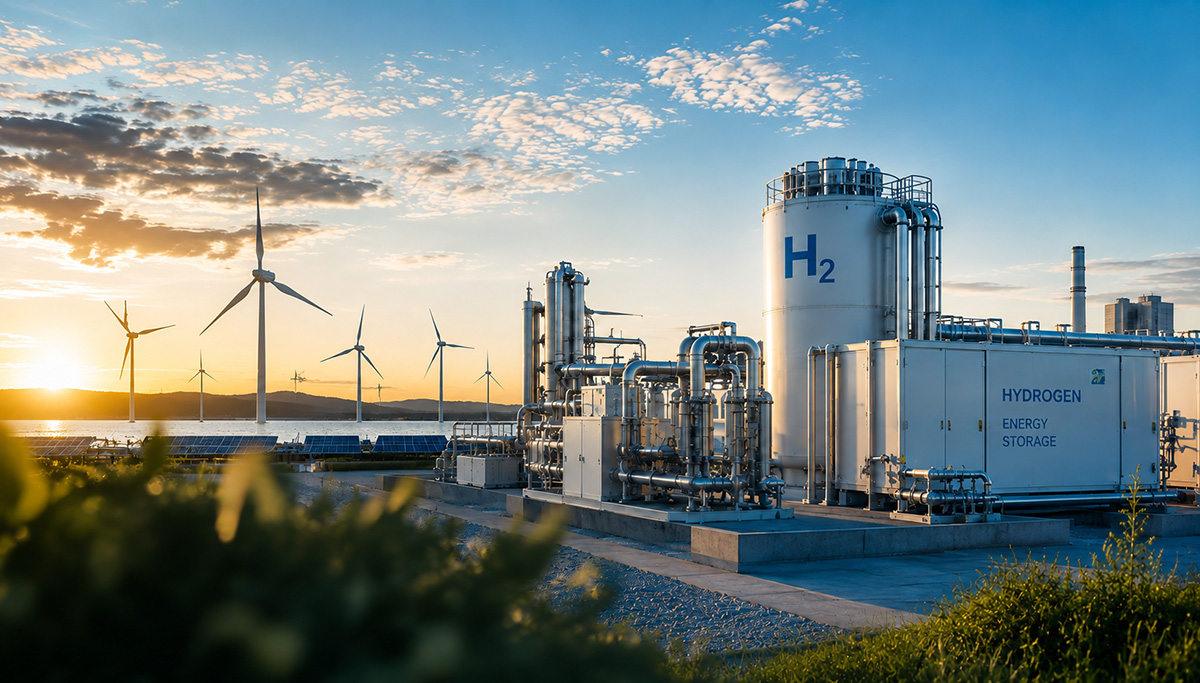
What really makes the project exciting is that it’s not just about natural gas. The same infrastructure is being prepared to carry hydrogen, a key fuel in Europe’s green transition. That means the corridor isn’t just about meeting today’s needs — it’s also about building a flexible backbone for tomorrow’s low-carbon energy system.
In Greece, the Vertical Gas Corridor takes on a particularly important role. Thanks to its strategic location at the crossroads of Europe, Asia, and the Eastern Mediterranean, Greece serves as a natural gateway for energy flows into the wider region. Through existing and planned infrastructure — such as the Revithoussa LNG terminal, the Alexandroupolis FSRU, and interconnections with neighbouring countries — Greece is positioning itself as a key entry point for both natural gas and, in the near future, hydrogen.
By feeding these supplies into the Vertical Corridor, Greece not only strengthens its own energy security but also helps stabilise and diversify the energy mix for partners further north. This dual role as both consumer and supplier makes Greece a cornerstone of the project’s long-term vision.

Hydrogen in the mix
As Europe pivots towards decarbonisation, hydrogen (especially green hydrogen) is being integrated into planning. Greece is exploring how to embed hydrogen into its gas infrastructure in several ways:
- Pipelines that are hydrogen‑ready: Some pipelines under construction or planned are being certified or designed to carry 100% hydrogen (not just blends). For example, the Natural Gas Interconnector between Greece and North Macedonia (IGNM) is being built with hydrogen‑certified pipes.
- Hydrogen pipelines between Greece and Bulgaria: A project is underway to build a pure hydrogen pipeline from Agia Theodori in Greece to Bulgaria (to their border). The project envisages compressor stations and is intended to be part of a wider “Southeast Hydrogen Corridor” through which hydrogen could flow towards or from Central Europe.
- Electrolyser investment: To produce hydrogen, Greece is investing in electrolysers. For example, Motor Oil Hellas is expanding its hydrogen production in Corinth with a 20 MW electrolyser (in addition to a prior 30 MW) so the site will reach ~50 MW capacity.
- Hydrogen refuelling stations: To support mobility (vehicles etc.), Greece is also developing hydrogen refuelling infrastructure. The first commercial station (AVIN) near Agioi Theodoroi is now in operation for hydrogen vehicles.
- Planning and design: There are tenders for design studies etc., for hydrogen pipelines. DESFA (Greece’s gas transmission operator) has issued a tender for a hydrogen pipeline to Bulgaria.
Key Hydrogen Projects in Greece
White Dragon & Green HiPo:
- These are two linked projects under the Greek IPCEI (“Important Projects of Common European Interest”) Hydrogen scheme.
- White Dragon aims to produce large amounts of green hydrogen in Western Macedonia via electrolysis using renewable electricity. That hydrogen would be stored, injected or blended into existing gas pipelines (incorporating DESFA and TAP), and used with high-temperature fuel cells to generate clean electricity and heat.
- Green HiPo complements White Dragon by focusing on the design, manufacture and deployment of fuel cells (HT-PEM type) and supporting technologies needed to use hydrogen for heat, power, and blending. It will help build the industrial and technological capacity needed within Greece.
- Together, these are part of a strategy to phase out coal/lignite power plants, especially in Western Macedonia, by 2028, replacing them with renewables + hydrogen + fuel cell systems.
Blue Med / Other IPCEI Hydrogen Projects
- Another project is Blue Med, led by Motor Oil, which envisions a cluster combining blue hydrogen (hydrogen produced from fossil fuels + capture) and green hydrogen, intended for uses in transport (buses, ships) and industry.
- There’s also H2CAT TANKS, focused on developing high-pressure storage tanks for hydrogen (useful for transport, etc.).
- And H2CEM – TITAN, which aims to decarbonize cement production by using green hydrogen in the combustion processes of furnaces.
North_1 by Hellenic Hydrogen
- This is a more recent / specific project. It’s to build a renewable hydrogen production plant in Western Macedonia (on a former lignite plant site in Amyntaion – Filota). Starting with about 50 MW capacity, with scope to scale to 200 MW.
- It includes using a hydrogen-natural gas (H₂-NG) blend (e.g. 80% natural gas, 20% hydrogen) in a combined heat and power (CHP) unit in the former Kardia power plant.
- The project also plans 100% hydrogen-ready pipelines for transport of the blend and renewable hydrogen, and potential export. So this ties in not just to local decarbonisation but to broader hydrogen infrastructure.
CHP Fuel Cell Pilot in Western Macedonia
- An open call (budget ~ €7.87 million) has been launched for a pilot project to install and operate a high-efficiency CHP (combined heat & power) unit powered by green hydrogen (via fuel cells) in Northern Greece (Western Macedonia).
- It would also include associated infrastructure (electrolysers, renewable electricity generation) and serve as a demonstration of distributed power + heating, helping to decarbonize smaller communities and public services (hospital, research institute, etc.).
How These Projects Connect to the Vertical Gas Corridor Concept
- Infrastructure reuse and pipeline blending: Projects like White Dragon and North_1 explicitly plan to use existing natural gas pipelines (after suitable upgrades) to carry hydrogen or hydrogen-gas blends. That helps reduce costs and leverages established transmission infrastructures. This is very much in line with the idea of a vertical connection allowing different energy carriers (natural gas, hydrogen) and cross-border flow.
- Regional decarbonisation + energy security: Many of these projects are located in regions formerly dependent on coal/lignite (Western Macedonia in particular). Replacing coal with renewables + hydrogen helps Greece meet its climate goals, while also reducing dependence on external fossil gas supplies. That strengthens both environmental and energy security dimensions.
- Industrial & technological capacity building: Green HiPo (fuel cell production), H2CAT (storage), etc. help build up domestic supply chain around hydrogen technologies — which matters if Greece (or neighbouring countries) want to import/export hydrogen, manufacture components, etc. It’s not just about having hydrogen, but being part of the value chain.
- Cross-border potential and export: The White Dragon project mentions using pipelines like TAP, and possibly exporting hydrogen or influencing regional hubs. So Greece isn’t just a consumer but potentially a provider in the broader European hydrogen network.
Planned / Hydrogen‑Certified or Hydrogen‑Ready Pipelines in Greece
| Pipeline / Segment | Status / Certification | Key Specs & Features | Notes & Challenges |
| West Macedonia Pipeline(High‑pressure pipeline in northern Greece) | Hydrogen‑certified pipes; designed to be “ready for up to 100% hydrogen transport.” | ~163 km of hydrogen‑certified pipe; parts: 97 km of LSAW 30″ + 66 km of ERW 14″ & 10″. | Will be hydrogen‑ready when hydrogen supply starts; but actual hydrogen flow depends on other infrastructure (electrolysers, demand, legal / regulatory readiness). |
| Greece–North Macedonia Interconnector (IGNM) | Pipe sections are hydrogen certified (ASME B31.12 – Option B). | Cross‑border interconnector; expected operational 1H 2027. | Even though hydrogen‑certified, will likely carry mostly natural gas initially; hydrogen flow (if any) will depend on retrofits or blending, demand, safety / regulatory permissions. |
| Karpéri–Serres–Komotini pipeline doubling | “Hydrogen‑compatible natural gas pipeline” planned/doubled section; high‑pressure; designed with hydrogen compatibility. | ~215 km (30‑inch), budget ~€310.6 million; tender early 2025; environmental studies finishing; expected operational by December 2026; fully integrated by March 2027. | Even though it’s hydrogen‑compatible, may not be used for hydrogen at first, but “ready” means certified or built to standards allowing future hydrogen or blend. |
| H2DRIA (“pure hydrogen pipeline” / Greece‑Bulgaria) | In planning / study phase; selected as Project of Common Interest (PCI); acquiring design/study tenders. | Approx. 570 km new hydrogen pipeline (parallel to existing high‑pressure gas route); initial capacity ~ 80 GWh/day; significant CAPEX (~€1 billion) anticipated. Planned commissioning ~ 2029. | As of 2025, still early: design/study tenders, environmental / permitting, cross‑border alignment, supply/demand are key dependencies. |
| Patras / Western Greece pipeline | Part of DESFA’s plan: pipeline to Patras (Industrial Area) designed to transport up to 100% hydrogen / hydrogen‑ready. | Planned operation by March 2027per the 2024‑2033 DESFA plan. | Implementation depends on funding, regulatory authorizations, and hydrogen supply. |
| Amyntaio‑Karperi hydrogen pipeline (pilot / injection) | Pilot injection project / small transmission; part of plan to connect 100% hydrogen supply to entry station at Komnina. | Budget modest (~€13 million) per plan; small scale relative to bigger dedicated lines. | Useful for testing, learning; hydrogen flow likely small initially; scaling needed. |
Timeline of When Hydrogen Flow Might Realistically Start
Below is a projected timeline, based on public sources, for when hydrogen (pure or blended) flowing might begin in these pipelines or network segments. These are approximate and assume regulatory, supply, demand, and technical readiness.
| Year | Key Pipeline / Segment | Expected Hydrogen Use / Flow Capability |
| 2025 | West Macedonia pipeline (hydrogen‑certified pipes) — construction or procurement stages. | No hydrogen flow yet; system will be ready (“hydrogen‑ready”) when hydrogen supply and regulatory approvals are in place. |
| 2026 | Karpéri‑Serres‑Komotini doubling pipeline — expected operational by Dec 2026. | Likely natural gas flow initially; possibility of hydrogen blending or switching depends on readiness of hydrogen supply and network legal framework. Also possibly small hydrogen pilot injections in some sections. |
| 2027 | IGNM (Greece‑North Macedonia Interconnector) scheduled 1H 2027. Also Patras hydrogen‑ready pipeline by March 2027. | Hydrogen‑certified infrastructure in place; potentially ability to begin hydrogen flow or blends in these pipelines if the upstream and downstream systems are ready, and demand exists. |
| 2028‑2029 | H2DRIA project (Greece‑Bulgaria), tentatively commissioned by end of 2029. | More substantial hydrogen (pure) flow possible, especially in southern portions nearer production zones; cross‑border export capacity might begin. But full operation will depend on resolving permitting, compressor stations, supply of hydrogen, certification of cross‑border segments. |
| Beyond 2029 / 2030 | Wider “hydrogen backbone” network, including blending in gas pipelines, maybe more dedicated pure‑hydrogen routes. Regulatory law 5215/2025 (new hydrogen law) in place to enable projects. | By 2030, expect some pipelines to be carrying hydrogen (pure or blends), particularly near industrial clusters (Athens, Thessaloniki, Corinth), and export links to Bulgaria maybe operational in part. But full scale export / full hydrogen use might still be ramping up. |
Key Enabling Elements and Uncertainties
To have actual hydrogen flow (pure or blended), several parallel pieces must be in place. In case of Greece some are already underway; some are still uncertain.
- Legal / Regulatory framework: Law 5215/2025 now provides hydrogen law, certification, licensing etc.
- Standards / Certification: Pipes built to ASME B31.12 Option B or equivalent hydrogen‑safe standards (already in e.g. IGNM, West Macedonia).
- Hydrogen production capacity (electrolysers + renewables): Must scale up; without enough green hydrogen or low‑carbon hydrogen supply, pipelines may stay idle or be used for blending.
- Demand / off‑take: Industrial clusters, transport, heavy industry, or export must show demand. Contracts, PPAs etc will help.
- Financing, environmental permitting, land use, cross‑border agreements: These often cause delays.
Challenges, Considerations and Outlook
While vertical gas connection concept and Greece hydrogen infrastructure are ambitious and promising undertakings, several challenges remain:
- Investment & cost: Hydrogen‑ready pipelines, compressor stations, electrolysers are expensive. Funding, financing, and cost recovery are key issues.
- Regulation & certification: Piping hydrogen (especially 100%) has different technical, safety, material, hydrogen embrittlement etc. requirements. Norms like ASME B31.12, pipeline material standards etc., need to be met. Some Greece projects already use such standards.
- Production of green hydrogen: To get truly clean hydrogen, production must come from renewable electricity + water electrolysis. Greece has good potential for solar / wind, but scale and grid integration matter.
- Cross‑border coordination: Because many corridors cross national borders (e.g. into Bulgaria, North Macedonia, further into Central Europe), harmonizing regulation, tariffs, infrastructures is needed.
- Demand & end‑uses: Transport, industry, heating – demand has to develop so pipelines are used. Without demand, these investments risk under‑utilisation.
- Transition from natural gas to hydrogen or blending: Managing the mix, ensuring safety, adapting existing infrastructure (or building new), ensuring compatibility.
Greece is positioning itself to be a key hub for hydrogen in the wider Southeast / Central Europe region. With multiple hydrogen‑ready pipelines, cross‑border hydrogen pipeline planning, production facilities, and refuelling stations, things are moving from theory to implementation. The vertical gas corridor is evolving also to anticipate a shift beyond traditional natural gas. If successful, vertical gas connection could help Greece not only hydrogen or act as transit country and strengthen its energy security and supply diversification but also leverage its own renewable energy potential for hydrogen production.
EVENT ALERT: