Greece has entered 2025 with a renewable energy sector that is simultaneously thriving and troubled. Installed capacity has climbed to record levels, with solar photovoltaics and wind power providing a growing share of the country’s electricity. The government’s ambition to make Greece a clean-energy hub for south-eastern Europe appears more credible than ever. Yet behind the headlines, the very success of renewables has exposed a tangle of bottlenecks — curtailments, grid congestion, delayed permitting, and underdeveloped storage — that threaten to undermine both investor confidence and the country’s climate commitments.
At the centre of the debate is curtailment, the technical term for renewable electricity generated but not absorbed into the grid. In past years the issue was minor; in 2024 it became noticeable; and in 2025 it has become headline news. Industry analysts warn that curtailed output could reach high single-digit percentages of total renewable generation — a staggering loss for developers whose business models depend on stable feed-in revenues. For the broader economy, curtailment represents wasted investment and higher costs for consumers, since clean electricity is forced offline while more expensive and polluting sources are called upon to balance the system.

The government has responded with measures designed to soften the blow. A compensation mechanism was announced in early 2025, with retroactive effect from January, so that curtailed volumes can be financially offset through the renewable energy account (ELAPE). While welcome to project owners, the scheme is a band-aid rather than a cure. It transfers costs within the system without addressing the structural reasons why the grid cannot accept the electricity in the first place. Market commentators note that a country cannot indefinitely pay investors for energy it does not consume.
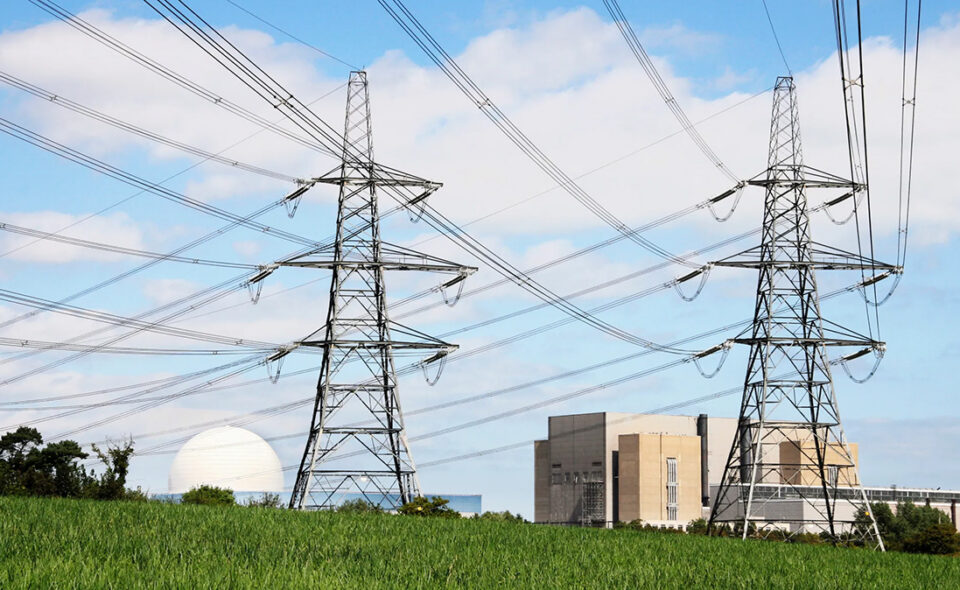
Those structural reasons are primarily found in the electricity grid. Transmission and distribution infrastructure has struggled to keep pace with the surge of new solar parks and wind farms. Certain mainland corridors are now saturated, while island networks remain fragile despite years of planned interconnection projects. Delays to major reinforcement works — including the long-awaited expansion of Cyclades and Ionian interconnections — mean that renewable developers queue for scarce connection capacity, often for years. For smaller self-consumption projects the problem is no less acute: households and businesses eager to install rooftop PVs face local grid operators who cannot always process or approve connections quickly.
Permitting presents a second major choke point. The European Union has pressed all member states to accelerate licensing for renewable projects, introducing rules that designate renewables as projects of overriding public interest. Yet Greece has been slow to transpose the relevant directives, and repeated admonishments from Brussels. Industry insiders complain of a fragmented process involving multiple agencies, complex spatial restrictions and lengthy appeals. Wind power has been particularly affected: in the first half of 2025 the number of new wind permits issued plunged compared with the previous year, raising fears that Greece’s onshore wind pipeline could wither just when it is most needed.
Energy storage is widely seen as the missing piece in the puzzle.
Without batteries or pumped hydro plants capable of absorbing excess solar output at midday and releasing it during evening peaks, curtailments will only grow. Policymakers have recognised this: some 4.7 GW of storage connection capacity has been announced. But The Voice of Renewables reporting suggests the pipeline is still inadequate relative to the speed of new solar construction, and licensing remains slow. Investors in hybrid projects — pairing renewables with batteries — complain that rules are still evolving, creating uncertainty about revenues. Market operators argue that unless Greece doubles its storage ambitions, the renewable expansion will continue to be hobbled.
Beyond the technical fixes, the social dimension of the energy transition is an equally pressing theme. Greece is still in the process of phasing out lignite, the domestically mined brown coal that for decades underpinned its electricity supply. Entire regions, particularly Western Macedonia, are dependent on lignite mining and generation. The challenge is to repurpose infrastructure, retrain workers and attract renewable investment in a way that prevents economic decline. News coverage has repeatedly underscored the importance of “just transition” funds and regional development plans, warning that without them, political backlash could slow the clean-energy agenda.
Islands offer another lens on the social challenge. While many are blessed with wind and sun, their grids are weak and their local communities often sceptical of large-scale developments. Interconnection with the mainland promises cleaner, cheaper electricity, but progress has been uneven. Residents worry about environmental impacts and the visual footprint of turbines or large solar parks. At the same time, islands face some of the highest electricity costs in Europe due to reliance on oil-fired generators. Bridging this divide — delivering reliable interconnections, fostering local ownership of small renewable projects, and ensuring community benefit schemes — will be crucial to maintaining social acceptance.
Taken together, these challenges paint a picture of a sector at a crossroads. Greece’s renewable build-out has been among the fastest in Europe, and investor interest remains strong. Yet curtailments, bottlenecks and regulatory uncertainty risk squandering that momentum. The government’s willingness to compensate investors is a short-term stabiliser, but the long-term test will be whether it can modernise the grid, accelerate permitting, and create a regulatory environment where storage and hybrid projects can flourish.
For ordinary Greeks, the stakes are high: not just meeting climate targets, but ensuring that clean energy translates into lower bills, new jobs, and a fair transition away from fossil fuels.The coming two years may prove decisive. If Greece can resolve its bottlenecks, it could, as it has the ambition to do so, become a regional leader in clean power exports, leveraging its abundant sun and wind to supply neighbours and attract green hydrogen projects. If it cannot, the country risks a paradoxical outcome: abundant renewable potential but chronic underutilisation.
Our reporting makes clear that 2025 and 2026 are the years when the promise and the problems of Greece’s renewable energy transition have collided in full view. The direction taken next will shape not only the power system, but also Greece’s economic and political trajectory in the decades to come.
EVENT ALERT: