Ignitis Renewables has confirmed that it will fully implement the recommendations issued by the National Audit Office following its assessment of Curonian Nord, Lithuania’s flagship commercial offshore wind project. The company has already initiated all required actions, reinforcing its commitment to transparency, good governance, and international best practice in the development of the country’s first large-scale offshore wind farm.
A key recommendation concerns project ownership and operational clarity. Ignitis Renewables has now transferred all assets, completed work, contractual rights and obligations related to Curonian Nord to its dedicated project company, Offshore Wind Farm 1, a wholly owned subsidiary. This transition was formalised through an agreement signed on 5 November 2025, ensuring that the entire development structure is now fully aligned with established offshore wind practice.
The audit highlighted that some early-stage activities were undertaken directly by Ignitis Renewables rather than the project company. In response, the developer notes that this approach enabled the initial phase to progress more efficiently and cost-effectively, avoiding higher financing costs and additional guarantees that would have been required by a new entity. According to internal calculations, this approach saved up to EUR 5 million during the early development period.

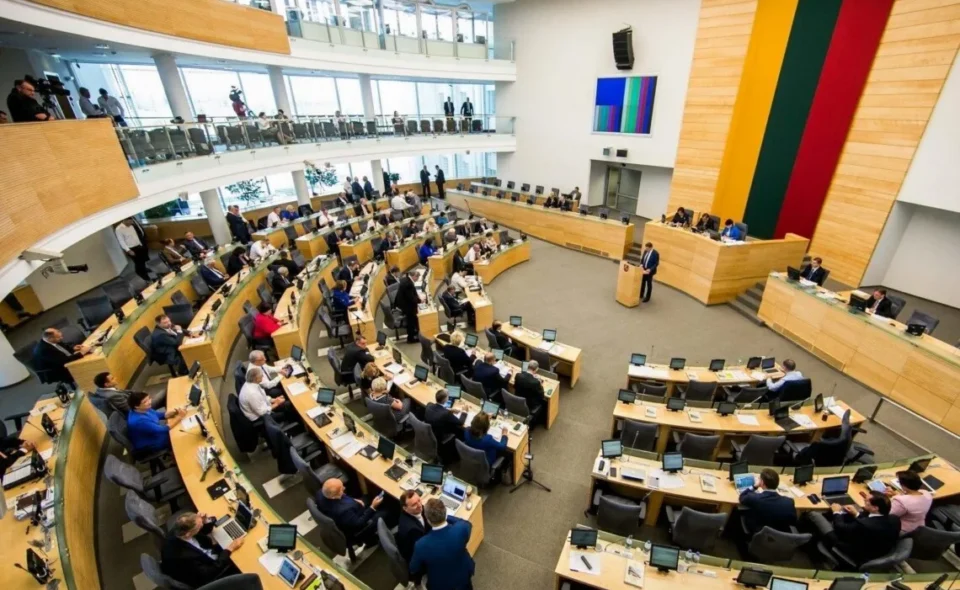
The second recommendation addressed the historic joint-venture structure, noting that cost- and responsibility-sharing between Ignitis Renewables and former partner OW Offshore, S.L. did not fully reflect future profit-allocation assumptions. Ignitis Renewables underscores that Curonian Nord is not expected to generate revenue until after its commercial operation date, currently anticipated post-2030; therefore, no profits have yet been distributed. Since acquiring 100% of the project company’s shares on 13 October 2025, Ignitis Renewables will now receive the entirety of the project’s future profit.
The third recommendation focused on seabed survey methodology. The audit observed that dividing surveys into two stages resulted in EUR 4 million of inefficiently used expenditure out of total investments of EUR 60.3 million. Ignitis Renewables explains that the two-stage model, informed by international experts, was chosen to mitigate geological and design risks and to reduce the likelihood of additional surveys later. The surveys targeted the most complex zones of the site, including the deepest areas and those with shallow bedrock — crucial factors for foundation design, which can influence overall project investment by up to EUR 100 million.
“Offshore wind projects are inherently complex, and Curonian Nord is the first of this scale in Lithuania. It is essential that we learn from global experience and continuously strengthen our processes. The audit provides valuable insights, and we are fully committed to implementing its recommendations — work that is already well underway,” Frank Oomen, CEO, Ignitis Renewables told The Voice of Renewables.
As part of its routine oversight, the Ignitis Group Supervisory Board also commissioned an independent project assessment by Wood Mackenzie earlier this year. The review compared Curonian Nord’s progress against global offshore wind benchmarks, evaluating schedule, investment assumptions and risk management. The assessment concluded that the project is being developed in line with best international practice, that investment levels are comparable to peer projects, and that Ignitis Renewables maintains a robust risk-governance framework.
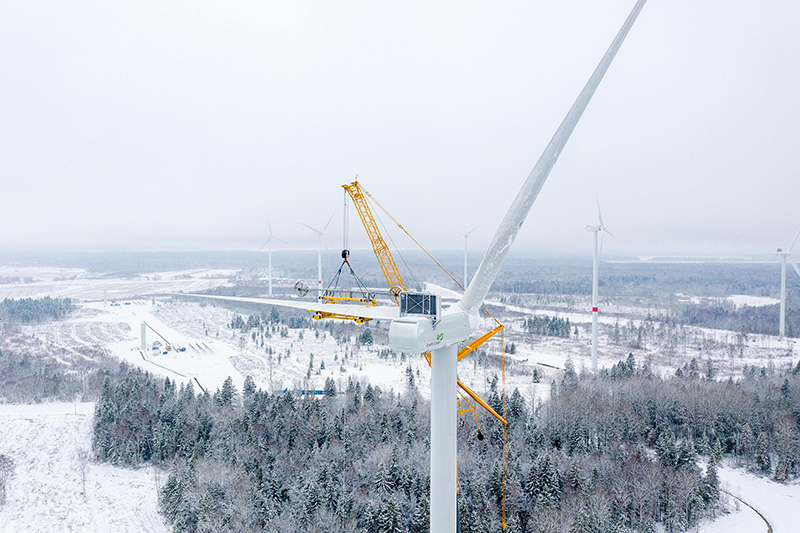
In its February 2025 annual report, the company highlighted external pressures on large-scale offshore developments, including delays in European electrolysis projects and tightening supply chains for turbine components — factors that may affect PPA availability and project financing timelines. As a result, the start of commercial operations may need to be postponed. Nonetheless, Ignitis Renewables continues to advance all critical preparatory work with the objective of securing a construction permit by 2027.
Curonian Nord remains one of the most significant renewable energy developments in Lithuania’s history and a cornerstone of the country’s journey toward long-term energy independence. The Voice of Renewables will continue to follow the project as it progresses toward the next phase of development.