


As Europe accelerates its transition to low-emission transport, the Port of Klaipėda is preparing to produce green hydrogen on-site from next year. The project, led by the Klaipėda State Seaport Authority, is unique in Lithuania and among neighbouring countries, and is expanding its network of partners to integrate hydrogen into transport and logistics systems.
A new partnership with Volvo Trucks Lithuania marks a significant step towards establishing a hydrogen-based economy.
“A new stage at the Port of Klaipėda is about to begin — next year we will start producing green hydrogen. As we prepare to launch this project, which has no equivalent in neighbouring states, we are laying the foundations for an integrated system linking all stages from fuel production to end use. Our partnership with Volvo Trucks is a first and vital step towards incorporating hydrogen into road transport and developing cleaner logistics,” Algis Latakas, Director General of the Klaipėda State Seaport Authority said during an interview with The Voice of Renewables.
The memorandum of understanding between Klaipėda Port Authority and Volvo Lithuania was signed during the Transport Innovation Forum in Vilnius. Both partners are committed to reducing environmental impact and promoting cleaner operations, and the agreement formalises their intention to cooperate in the production and application of green hydrogen.
The partnership sets clear objectives: to reduce carbon emissions, encourage transport and logistics companies to adopt green fuel technologies, and implement a pilot project introducing green hydrogen into road transport.
Volvo Trucks plans to deploy a hydrogen-powered truck in Klaipėda that will use hydrogen produced at the port. The trial will test how alternative-fuel trucks integrate into existing logistics operations while transporting cargo efficiently.
“Hydrogen is a crucial element of the alternative fuels puzzle for achieving zero-emission road transport. Leadership today means building an ecosystem of collaboration that accelerates decarbonisation and generates value for carriers, clients, and society. By joining forces with the Port Authority — an innovative, sustainability-focused partner — we aim to contribute to a smoother transition to cleaner transport and promote hydrogen technology,”
said Asta Koženiauskienė, Sales Director at Volvo Lithuania.
Beyond road transport, the Klaipėda Port Authority is also working to expand hydrogen use in rail. A cooperation memorandum has been signed with the LTG Group, and a similar agreement with Klaipėda-based cargo company Bega explores using green hydrogen to power port machinery.
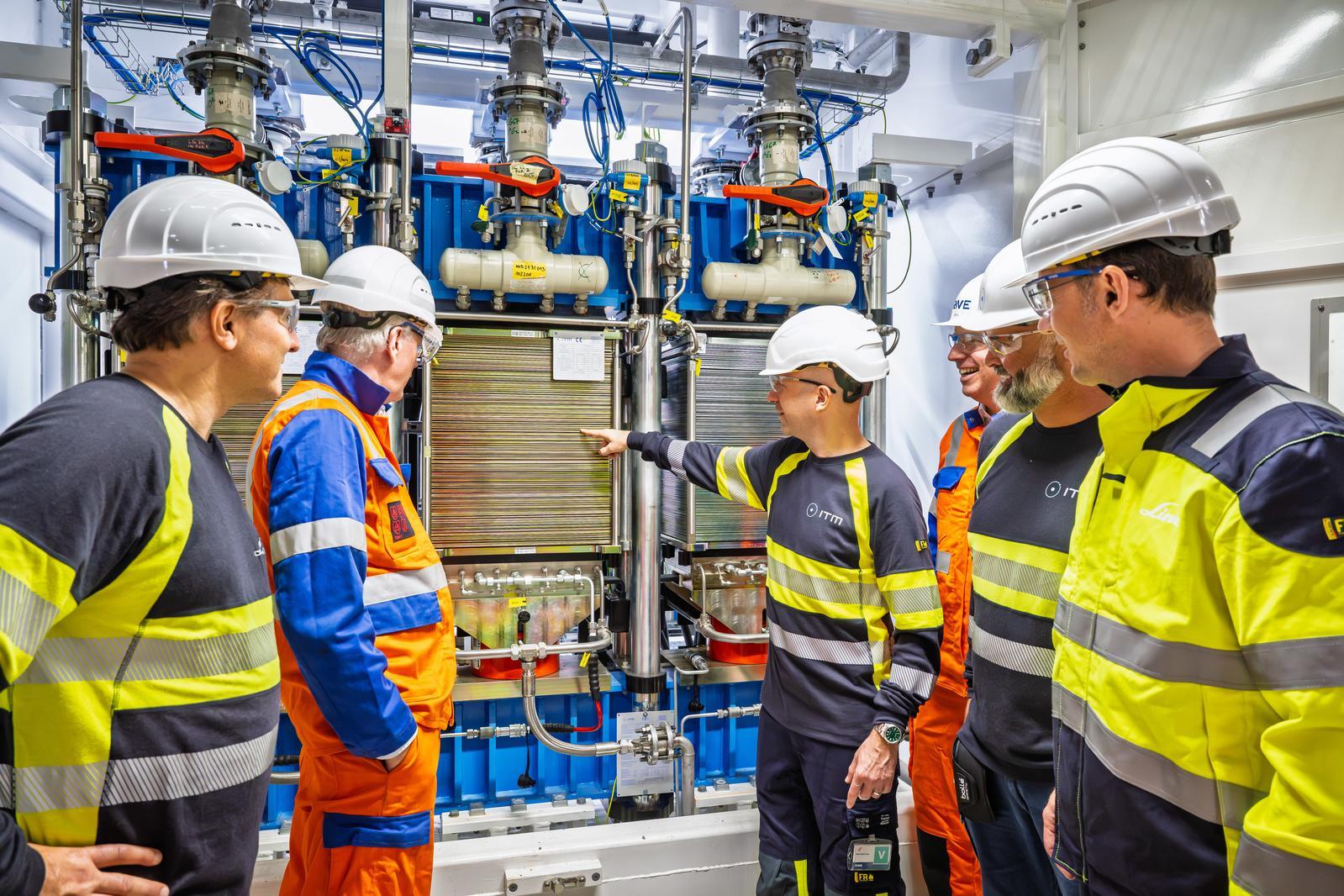
Construction of the hydrogen production facility is underway, while equipment for the refuelling station is being manufactured abroad. In late September, the facility’s most critical component, the electrolyser, successfully completed factory testing in Italy.
The project is scheduled for completion by February next year, with green hydrogen production commencing in spring 2026.
The green hydrogen project is partially financed by the 2021–2027 European Union funds and Lithuania’s Recovery and Resilience Plan “New Generation Lithuania”. The total investment is estimated at approximately €12 million, with around €6 million covered by EU funding.
The initiative represents a major milestone for Lithuania’s green energy transition, demonstrating how ports, industry, and transport partners can collaborate to decarbonise logistics, advance hydrogen technology, and create a cleaner, sustainable future.