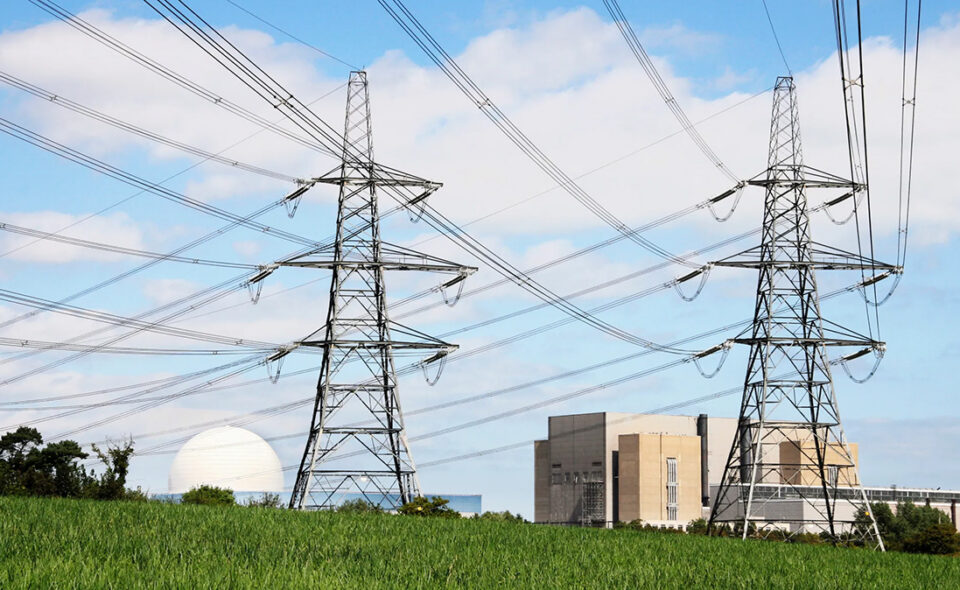
Lithuania stands at a pivotal point in its energy transition. Having successfully synchronised its power grid with continental Europe and launched major tenders for large-scale battery energy storage, the country has taken impressive steps towards energy independence and decarbonisation. Yet, beneath this progress lies a quieter but crucial challenge: the nation’s electricity grid remains largely centralised and slow in data management. To harness the full potential of renewables, energy storage and consumer participation, Lithuania must now build a truly data-driven, responsive and flexible grid. The Voice of Renewables explores the crucial role of Lithuania’s electricity grid in enabling the expanded deployment of energy storage.
At the heart of this transformation are three technologies: smart meters, real-time flexibility markets and digital twins. Together, they can make the electricity system not only cleaner but also more efficient, resilient and participatory. But progress in these areas has been uneven, and the next few years will be decisive in determining whether Lithuania becomes a regional leader in smart grid innovation—or risks being left behind.
A promising foundation
The rollout of smart electricity meters has been one of Lithuania’s most visible achievements. Energijos Skirstymo Operatorius (ESO), the country’s distribution system operator, has already installed over one million smart meters, investing around €103 million to date. The programme’s benefits are clear: more accurate billing, faster fault detection and greater visibility for consumers into their energy use. As Aurelija Židickytė-Orvydė, Head of Smart Metering Management at ESO, put it, “Today, one million ESO customers in Lithuania can already benefit from the advantages of the smart electricity meter—analyse detailed consumption data, manage energy consumption more efficiently and thus save money.”
By the end of 2026, ESO aims to have covered the majority of high-consumption users, prosumers and faulty or obsolete meters, before expanding the rollout to smaller households in subsequent years. The scheme is expected to generate lifetime savings of around €265 million across the system.
Lithuania’s commitment to flexibility is equally evident in its ambitious energy storage programme. The Ministry of Energy has expanded its subsidy scheme by €37 million in response to overwhelming investor interest, with projects ranging between 15 and 150 megawatts. The country’s target now stands at 1.7 gigawatts of installed storage, or approximately 4 gigawatt-hours of capacity—sufficient to stabilise the grid during fluctuations in renewable generation. Minister of Energy Žygimantas Vaičiūnas recently observed, “Such capacities will ensure greater resilience, flexibility and security of the electricity system, which will also contribute to the stability of electricity prices.”
The data gap
Despite these successes, Lithuania’s energy data infrastructure still lags behind its ambitions. Much of the country’s electricity data remains aggregated in hourly or even daily intervals, especially for smaller consumers still using legacy meters. Without fine-grained, near-real-time data, operators cannot fully optimise demand response, and storage operators cannot react quickly enough to grid signals.
A second limitation lies in market access. While Lithuania’s participation in the Baltic Balancing Capacity Market marks significant progress, smaller storage units and flexible loads often face steep participation thresholds or complex contractual conditions. The market remains dominated by larger players, leaving household-scale flexibility largely untapped. Revenue stacking—earning from multiple services such as balancing, frequency regulation and energy arbitrage—remains technically possible but administratively cumbersome.
Then there is the issue of digital modelling. Some Lithuanian universities and municipalities, notably Kaunas University of Technology, have piloted digital twins for urban planning and campus energy management. However, these efforts remain isolated from the national grid. What Lithuania lacks is a system-wide digital twin—an integrated, dynamic model that simulates real-time grid conditions across transmission, distribution, storage and demand. Such a tool would allow operators to test scenarios, predict bottlenecks and plan investments more intelligently.
Cybersecurity, meanwhile, looms as both a risk and a regulatory challenge. As data flows increase and remote control of grid assets becomes more common, secure communication protocols and trusted software certification will become essential. Lithuania has already moved in this direction, with national cybersecurity standards for energy infrastructure introduced under Article 733 of its Electricity Law, but practical implementation across thousands of distributed devices remains demanding.
Why the stakes are high
A lack of timely and granular data has tangible costs. When transmission and distribution operators cannot see precisely what is happening across the network, they are forced to maintain larger reserves and overbuild infrastructure. That translates into higher system costs and, ultimately, higher prices for consumers. It also slows the integration of renewables, as the grid struggles to accommodate intermittent generation from solar and wind farms without sophisticated forecasting and balancing.
Investors, too, depend on transparency and predictability. Clear data standards, reliable telemetry and functioning flexibility markets reduce risk and attract capital. Without them, developers hesitate, project timelines lengthen, and Lithuania’s renewable momentum loses pace.
Learning from neighbours
Lithuania’s Nordic neighbours offer useful lessons. Denmark and Sweden have already demonstrated how digital twins, sub-15-minute markets and demand response programmes can lower costs and defer expensive grid reinforcement. Germany, too, uses high-resolution grid simulation models to test contingencies and optimise renewable dispatch. Adopting similar tools would allow Lithuania to accelerate towards its 2030 targets without overburdening public finances.
A path forward
To bridge the gap, Lithuania must complete the smart-meter rollout, ensure real-time data sharing through open and secure APIs, and align market design with European balancing platforms such as MARI and PICASSO. Distributed flexibility should be recognised and rewarded, allowing community storage, electric vehicles and household batteries to participate in balancing services. In parallel, a national digital twin of the electricity system should be developed, bringing together transmission, distribution, generation and consumption data into one simulation environment.
Crucially, regulation must evolve alongside technology. Clear frameworks for data privacy, cybersecurity certification and flexible market participation are indispensable. The National Energy Regulatory Council, Litgrid, and the Ministry of Energy will need to coordinate closely to ensure that innovation does not outpace oversight.
The next leap
If Lithuania succeeds, the rewards will be substantial. A smarter, data-rich grid could cut costs for consumers, stabilise prices, and enable a far greater share of renewable generation. It could also make the country a regional hub for cross-border flexibility services within the continental European synchronous area. Most importantly, it would empower citizens and communities to play an active role in managing energy use—a genuine step towards democratised energy.
Lithuania’s energy system has already come a long way, from post-Soviet dependency to European synchronisation in less than two decades. But to turn this technical success into long-term resilience and prosperity, the country must now embrace the digital layer of the energy transition. Smart meters, real-time data, flexibility markets and digital twins are not optional extras—they are the nervous system of the modern grid.
The next few years will determine whether Lithuania simply keeps up with Europe, or leads the way in building a clean, connected and intelligent energy future.