Lithuania has entered a new chapter in its energy transition with the appointment of Lukas Savickas as Minister of Energy following the July 2026 government reshuffle. His arrival comes at a defining moment for the country’s energy sector. Having successfully synchronised its electricity system with Continental Europe, reduced its dependence on Russian energy supplies and accelerated the deployment of renewable generation, Lithuania is now turning its attention to a different challenge: transforming energy into a driver of economic growth.
Unlike many of his predecessors, Savickas does not come from a traditional energy engineering or utility background. Instead, he brings extensive experience in economic policy, investment promotion and government reform. His appointment signals that energy policy is increasingly being viewed through the lens of industrial competitiveness, investment attraction and long-term economic value.
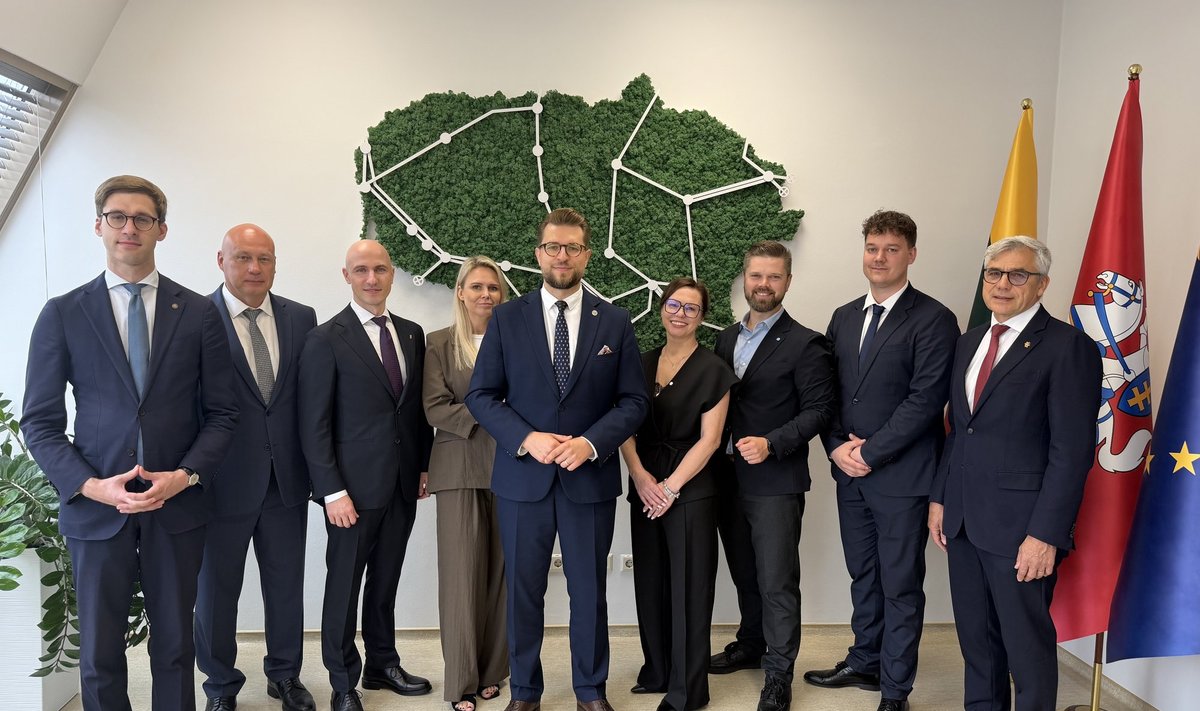
His first major decision as minister reinforced that approach. Savickas moved quickly to assemble a political leadership team combining renewable energy expertise, electricity system knowledge, financial experience and regulatory understanding — signalling that the ministry intends not only to develop strategy, but to focus strongly on implementation.
Speaking after taking office, Savickas set out his vision clearly: “I am entering the position of Minister believing that the time has come for a new stage of ambition in the Lithuanian energy sector. We have already won energy independence – now we must not only protect what we have achieved, but also turn energy into a competitive advantage for Lithuania.”
The statement encapsulates Lithuania’s changing priorities. The previous decade was dominated by energy security, diversification of supply and integration with European markets. The coming decade is likely to be defined by how effectively Lithuania converts abundant renewable electricity into industrial growth, exports, innovation and investment.
From Economic Policy to Energy Leadership
At just 36 years old, Lukas Savickas represents a new generation of Lithuanian policymakers with strong international experience and a distinctly economic perspective on public policy.
He studied Politics and International Relations at the University of York in the United Kingdom before completing postgraduate studies in European Public Affairs at Maastricht University in the Netherlands. His education provided an international outlook that has remained evident throughout his career.
Before entering frontline politics, Savickas built his reputation working to improve Lithuania’s investment climate. He worked with Invest Lithuania, the country’s foreign investment promotion agency, before leading the Investors’ Forum, representing many of Lithuania’s largest domestic and international companies. These roles gave him first-hand experience of what global investors expect from governments – stable regulation, modern infrastructure, skilled talent and an efficient public sector.
His move into government saw him appointed as Adviser to Prime Minister Saulius Skvernelis before becoming First Vice-Chancellor of the Government, where he coordinated strategic reforms across ministries and worked on improving economic competitiveness, public administration and investment policy.
Savickas was subsequently elected to the Seimas, where he is now serving his second parliamentary term. During this time, he has worked across several committees, including Economy and Innovation, Environmental Protection, Human Rights and European Affairs, giving him broad policy experience extending well beyond the energy sector.
Prior to becoming Minister of Energy, he served as Minister of the Economy and Innovation between 2024 and 2026. His tenure focused on attracting foreign direct investment, reducing bureaucracy, accelerating digitalisation, strengthening advanced manufacturing and positioning Lithuania as an attractive destination for artificial intelligence, defence technologies and high-value industries.
His international profile has also continued to grow through participation in the Atlantic Council Millennium Fellowship and the World Economic Forum’s Global Shapers initiative.
Collectively, this background makes Savickas a distinctly different type of energy minister. Rather than approaching energy primarily as a technical or engineering discipline, he sees it as a strategic economic asset capable of driving competitiveness, productivity and long-term prosperity.
Building on a Decade of Transformation
Savickas inherits an energy sector that has undergone one of the most remarkable transformations in Europe over the past decade.
Successive governments have fundamentally reshaped Lithuania’s energy system, moving the country from heavy dependence on imported energy towards one increasingly powered by domestic renewable generation and fully integrated with the European electricity market.
Perhaps the defining achievement came in February 2025, when Lithuania, together with Latvia and Estonia, successfully synchronised its electricity system with the Continental European grid. Ending decades of operation within the BRELL system represented not only a technical milestone but one of the most important geopolitical and energy security achievements since the restoration of Lithuanian independence.
The foundations for today’s energy system were laid under successive Ministers of Energy, most notably Dainius Kreivys (2020–2024) and Žygimantas Vaičiūnas (2024–2026).
During Kreivys’ tenure, Lithuania accelerated renewable energy deployment, introduced reforms to streamline permitting, advanced offshore wind development, strengthened support for battery energy storage and corporate power purchase agreements, and significantly increased investor confidence in the country’s renewable energy market. His period in office was characterised by rapid policy development designed to move Lithuania towards energy independence while stimulating private investment.
Vaičiūnas inherited that momentum and oversaw one of the most consequential periods in Lithuania’s modern energy history. Alongside the successful synchronisation with Continental Europe, his ministry continued expanding renewable generation, strengthened transmission infrastructure, supported the deployment of battery energy storage systems and advanced strategic regional interconnection projects.
By mid-2026, Lithuania had connected more than 6 GW of combined wind and solar capacity, while battery storage was becoming an increasingly important component of system flexibility. Renewable electricity had become central not only to decarbonisation but also to national energy security.
At the same time, policymakers increasingly recognised that adding renewable capacity alone would no longer be enough. As solar and wind generation continued to grow, new challenges emerged around grid congestion, storage, balancing services, electricity market design and industrial demand.
It is against this backdrop that Savickas assumes office.
Unlike his predecessors, whose principal mission was to secure Lithuania’s energy future, Savickas now faces the challenge of ensuring that abundant renewable electricity delivers maximum economic value. His task is not simply to continue the energy transition, but to translate it into sustainable industrial growth and international competitiveness.
A Leadership Team Designed for Delivery
Savickas’ first appointments indicate that the ministry intends to combine economic ambition with technical expertise.
The most significant renewable energy appointment is Ignas Junevičius, who joins as Deputy Minister after leading the Renewable Energy Centre at Lithuania’s electricity transmission system operator Litgrid.
During his time at Litgrid, Junevičius was responsible for renewable energy development, contributing to improvements in Lithuania’s renewable energy regulatory framework and investment environment. In his new role, he will oversee renewable energy, electricity system flexibility, electrification and the promotion of energy investments.
His appointment comes at a critical moment as Lithuania moves beyond simply adding renewable generation capacity and focuses increasingly on integrating large volumes of variable electricity into the grid.
Darius Indriūnas has also been appointed Deputy Minister, bringing more than 30 years of experience in financial management, strategic development and public administration.
Having previously served as Vice Minister of Economy and Innovation, led Turto bankas and held senior positions in the financial sector, Indriūnas will be responsible for the heat and gas sectors as well as improving competitiveness across Lithuania’s energy markets.
His background reflects the growing connection between energy policy and economic strategy — particularly as Lithuania seeks to attract electricity-intensive industries and position affordable renewable power as a competitive advantage.
Energy security remains central to the ministry’s agenda, with Gabriel Gorbačevski continuing as Deputy Minister responsible for strategic infrastructure, security and emergency preparedness.
Gorbačevski brings extensive experience in national energy policy, international cooperation and strategic projects, having previously served as Lithuania’s Energy Attaché in Poland and adviser to the Prime Minister on energy and climate policy.
A fourth Deputy Minister is expected to join the ministry in August, taking responsibility for Lithuania’s energy agenda during its upcoming Presidency of the Council of the European Union, as well as international energy policy, consumer protection, energy pricing and efficiency.
The advisory team further strengthens the ministry’s institutional expertise.
Former Litgrid and EPSO-G chief executive Virgilijus Poderys joins as adviser on energy policy and regulation, bringing decades of experience in electricity markets, regulation and strategic planning. He will also lead dialogue between the ministry and energy sector stakeholders.
Strategic communications specialist Artūras Ketlerius will oversee the ministry’s strategic communications, reputation management and public presentation of major energy policy decisions.
Meanwhile, Ervinas Šurka will advise on energy security and strategic infrastructure, bringing experience from parliamentary advisory roles and legal practice.
Together, the appointments suggest a ministry structured around delivery — combining renewable energy expertise, market knowledge, investment experience and institutional memory.
A New Strategic Vision for Lithuanian Energy
Savickas has already outlined several ambitious objectives that indicate the direction of Lithuania’s energy policy over the coming years.
Producing More Electricity Than Lithuania Consumes by 2028
One of the headline commitments is for Lithuania to generate more electricity annually than it consumes by 2028.
While ambitious, the target reflects the country’s rapid expansion of renewable generation and continued investment in onshore wind, offshore wind and utility-scale solar. Achieving it will require substantial investment not only in generation but also in transmission infrastructure, distribution networks, battery energy storage and digital grid management.
For renewable energy developers, the target sends a strong signal that government support for clean electricity projects is expected to remain robust throughout the remainder of the decade.
Achieving a Positive Electricity Trade Balance by 2032
Savickas also wants Lithuania to achieve a positive balance in the value of electricity imports and exports by 2032.
This objective represents a significant evolution in national energy policy. Previous governments understandably concentrated on reducing import dependence and strengthening domestic supply. The new ambition is to position electricity itself as an export commodity capable of generating long-term economic value.
As cross-border interconnections expand, Lithuania could increasingly benefit from exporting surplus renewable electricity to neighbouring European markets. This would create new commercial opportunities for renewable developers, electricity traders and industrial consumers while strengthening the country’s position within the regional electricity market.
Building a Transparent Electricity Market
Another key priority is creating a transparent and fair electricity market for residents.
Although detailed policy proposals are still to emerge, the emphasis on transparency is expected to improve confidence among households, businesses and investors alike. Stable, predictable market rules remain essential for financing renewable generation, storage and grid infrastructure over the long term.
Strengthening Transatlantic Cooperation
Savickas has also highlighted the importance of strengthening Lithuania’s transatlantic relationship with the United States.
While energy cooperation has traditionally focused on security and LNG, future collaboration could increasingly extend into clean energy technologies, artificial intelligence, cybersecurity, advanced manufacturing and strategic industrial investment.
Given Savickas’ background in investment promotion, this priority aligns naturally with broader efforts to attract high-value industries that depend on reliable, competitively priced renewable electricity.
Delivering Strategic Infrastructure
Infrastructure remains central to Lithuania’s long-term ambitions.
Savickas has reaffirmed support for the Harmony Link electricity interconnection with Poland, one of the region’s most strategically important transmission projects.
He has also highlighted plans for a future subsea electricity connection between Lithuania and Germany. Together, these projects would strengthen regional market integration, expand electricity trading opportunities and improve the resilience of the Baltic electricity system.
Why This Appointment Matters for Renewable Energy
Savickas’ appointment represents more than a change in ministerial leadership.
It reflects the evolution of Lithuania’s energy strategy itself.
The country’s earlier energy transition focused on strengthening security of supply, reducing geopolitical vulnerabilities and accelerating renewable deployment. Those objectives remain important, but they are increasingly being complemented by a broader economic agenda.
Renewable energy is no longer viewed solely as a means of decarbonising electricity generation. It is becoming the foundation for industrial electrification, export growth, digital infrastructure and economic competitiveness.
This shift naturally places greater emphasis on flexibility, battery energy storage, demand response, electricity trading, digital optimisation and the efficient operation of renewable assets.
The emergence of electricity-intensive industries—including data centres, AI infrastructure, advanced manufacturing and green industry – further reinforces this direction. These sectors require abundant, reliable and affordable renewable electricity, creating entirely new sources of demand that can support continued investment in generation and infrastructure.
In this context, Savickas’ economic background appears particularly well suited to the next stage of Lithuania’s energy transition.
Implications for Investors and Developers
For investors, Savickas’ appointment is likely to be viewed positively.
His professional experience suggests a strong appreciation of the importance of regulatory certainty, efficient permitting and investor confidence—critical ingredients for attracting the significant private capital needed to continue expanding Lithuania’s electricity system.
Renewable developers can expect continued political support for wind, solar and offshore wind projects as Lithuania works towards becoming a net exporter of electricity.
Battery developers may benefit from increasing recognition of flexibility as an essential component of future electricity systems, while electricity traders are likely to see growing opportunities as regional market integration deepens.
Industrial electricity consumers could also benefit from greater availability of competitively priced renewable electricity, strengthening Lithuania’s attractiveness for energy-intensive manufacturing and technology investment.
Data centre operators and AI companies are another group likely to watch developments closely. Savickas has consistently promoted Lithuania as a location for innovation and digital infrastructure, and renewable electricity will increasingly underpin that proposition.
Perhaps most significantly, his appointment suggests closer integration between energy policy, industrial strategy, innovation policy and investment promotion than Lithuania has previously experienced.
What It Could Mean for Lithuania’s Energy Future
Lithuania has already demonstrated that determined policymaking, sustained investment and regional cooperation can transform an energy system in remarkably little time.
The next stage of that transformation may prove even more significant.
Rather than measuring success solely through installed renewable capacity or reductions in imported energy, policymakers are increasingly asking how clean electricity can create jobs, attract investment, strengthen exports and support industrial competitiveness.
Savickas appears well placed to lead that conversation.
His career spans government reform, economic development, international cooperation and investment promotion—areas that are becoming increasingly intertwined with energy policy as electrification accelerates.
Challenges remain. Grid expansion must keep pace with renewable deployment. Flexibility markets need to mature. Strategic infrastructure must be delivered efficiently. New industrial demand must develop alongside increasing renewable generation.
However, the direction of travel is becoming increasingly clear.
Lithuania is seeking not only to produce more renewable electricity, but to maximise the value that electricity creates throughout the economy.
If Dainius Kreivys’ legacy was accelerating Lithuania’s renewable energy revolution, and Žygimantas Vaičiūnas oversaw the successful completion of Baltic synchronisation and the consolidation of the country’s energy security, Lukas Savickas now faces a different challenge. His task is not simply to continue the energy transition, but to ensure that Lithuania’s renewable electricity becomes a foundation for industrial growth, investment attraction and economic competitiveness.
The leadership team assembled during his first days in office reflects that ambition: combining renewable energy specialists, electricity system experts, financial professionals and experienced regulators. The coming years will show whether Lithuania can convert its energy independence into a lasting economic advantage.
The country has secured the foundations of its energy future. The next chapter is about turning clean electricity into economic value — and that is the challenge now facing Lithuania’s new Minister of Energy.
EVENT ALERT: