Author: Derek Michalski, Editor.
Poland has become one of Europe’s most important energy investment markets. Driven by rapid economic growth, rising electricity demand and one of the continent’s largest renewable development pipelines, the country is attracting unprecedented investment in power generation, grids, storage and electrification. This series examines the market forces, regulatory changes and investment opportunities reshaping Poland’s electricity sector – and why they matter to developers, investors, technology providers and businesses looking to be part of Europe’s next major energy growth story.
From Megawatts to Market Power: How Poland’s Electricity System Is Being Rebuilt
Between 2024 and 2026, Poland’s power sector stopped being primarily a generation market and became an infrastructure market. The value proposition shifted from building megawatts to securing grid access, flexibility and digital capabilities. For investors, developers and infrastructure companies, this represents the most significant structural change in the Polish electricity market in more than two decades.
For years, discussions about Poland’s energy sector followed a familiar script: coal versus renewables, climate targets, and the pace of decarbonisation. While these issues remain important, they no longer explain how the market actually functions.
The real transformation since 2024 has taken place beneath the surface. The Polish electricity market is being redesigned around a different set of constraints. Capital is available, renewable technologies are mature, and developer interest remains exceptionally strong. What increasingly determines whether a project succeeds is no longer the availability of land or financing—it is access to the electricity network.
This represents a fundamental shift in market structure.
From an energy market to an infrastructure market
Historically, Poland’s electricity sector revolved around large, vertically integrated utilities. Their competitive advantage was based on owning generation assets, operating distribution networks and supplying electricity to end customers.
Today, those traditional value drivers are becoming less decisive.
Instead, the market is increasingly shaped by infrastructure:
- transmission capacity;
- distribution network availability;
- digital market platforms;
- storage assets;
- flexibility services.
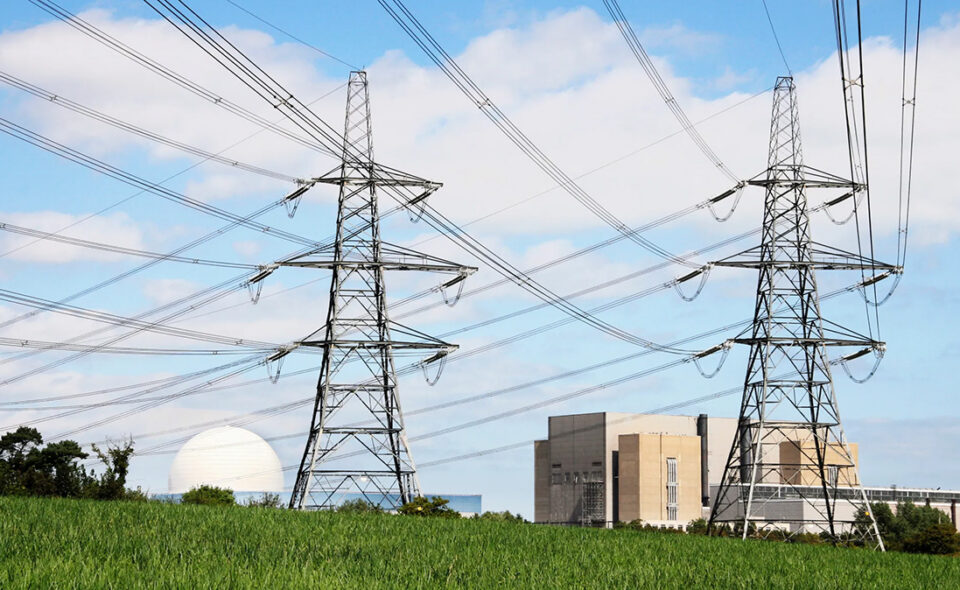
This transition is clearly reflected in the investment strategy of the national transmission system operator, PSE. Its latest development programme foresees investments exceeding PLN 64 billion by 2034, including approximately 4,700 km of new 400 kV transmission lines, 28 new substations, and extensive upgrades of the existing network. The objective is to enable the connection of around 18 GW of offshore wind, 45 GW of photovoltaic generation and 19 GW of onshore wind, while also preparing the system for Poland’s first nuclear power plant and future small modular reactors.
These figures illustrate an important point: Poland is no longer planning incremental network upgrades. It is rebuilding the architecture of its electricity system.
Renewable growth is no longer the biggest story
Installed renewable capacity continues to grow rapidly. In early 2026, renewables accounted for more than 50% of Poland’s installed electricity capacity, a symbolic milestone that would have seemed ambitious only a few years ago. Total renewable capacity exceeded 37.7 GW, almost three times the level recorded in 2020.
However, installed capacity tells only part of the story.
Generation and investment are increasingly constrained by the ability of the grid to absorb new projects. Developers, lenders and investors have shifted their focus accordingly. A well-located solar or wind project without a viable grid connection may have little commercial value. Conversely, projects with secured connection rights have become highly sought after acquisition targets.
The market’s scarcest resource is no longer generation technology – it is connection capacity.
Grid access becomes the new competitive advantage
The surge in renewable investment has exposed weaknesses in the existing connection process.
According to the Ministry of Climate and Environment, the government has identified significant problems with speculative reservation of network capacity. Thousands of megawatts of connection requests have effectively occupied available capacity without progressing into construction.
To address this, the Polish cabinet approved draft amendments to the Energy Law designed to accelerate grid connections, improve transparency and discourage speculative applications. Among the proposed measures are higher application fees and significantly shorter deadlines for developers to convert preliminary agreements into firm connection contracts. Energy Minister Miłosz Motyka described the reforms as a way to ensure “fairness and transparency” in access to the grid.
For developers, these changes are more than administrative reforms. They directly affect project bankability and investment timing.
Digitalisation becomes market infrastructure
Another less visible – but equally important – structural change is the introduction of the Central Energy Market Information System (CSIRE).
Unlike traditional infrastructure investments, CSIRE does not build transmission lines or substations. Instead, it creates the digital backbone of Poland’s retail electricity market.
The Ministry acknowledged that implementation required a phased rollout after major distribution operators and electricity suppliers warned that they could not safely migrate all market processes by the original deadline. Rather than forcing a single implementation date, the government introduced staged participation extending into 2026 to maintain operational security.
Although largely invisible to consumers, CSIRE will fundamentally change how electricity suppliers, distribution operators and customers exchange information.
In practical terms, it enables:
- faster supplier switching;
- dynamic electricity tariffs;
- greater participation of aggregators;
- improved access to consumption data;
- new flexibility services.
Digital infrastructure is therefore becoming just as important as physical infrastructure.
A different investment thesis
Perhaps the clearest indication that Poland’s electricity market has entered a new phase is the way investors evaluate projects.
Five years ago, a renewable development was primarily assessed on its resource quality, permitting status and construction costs.
Today, investors ask different questions:
- Is grid capacity available?
- How significant is curtailment risk?
- Can storage improve project economics?
- Is long-term revenue secured through a corporate PPA?
- How exposed is the project to balancing costs?
These questions reflect a more mature electricity market where integration matters as much as generation.
The result is a shift in value creation. Future market leaders are unlikely to be those that simply own the largest number of megawatts. Instead, competitive advantage will increasingly depend on controlling critical infrastructure, managing flexibility and operating across multiple parts of the electricity value chain.
The next chapter
The transformation of Poland’s electricity market is far from complete. The country’s renewable pipeline continues to expand, offshore wind is entering construction, storage projects are accelerating and electricity demand is expected to rise as transport, heating and industry electrify.
Yet the defining characteristic of this new market is no longer the pace of renewable deployment. It is the race to build the infrastructure capable of supporting it.