


How the Steel River Energy Center Signals the Next Phase of Renewable Energy Economics
At first glance, Google’s latest renewable energy investment looks like another headline about scale. The Steel River Energy Center in Arkansas is expected to combine 2.5 GW of solar generation with 2.9 GWh of battery storage, making it one of the largest solar-plus-storage developments in the United States. For most readers, the obvious takeaway is that another technology company is investing heavily in clean energy to support its rapidly growing portfolio of data centres.
That interpretation, however, misses the real story.
The most important feature of the project is not the number of solar panels that will be installed or even the scale of the investment. It is the business model behind it. Steel River demonstrates how the economics of renewable energy are evolving from a world where generating cheap electricity was enough into one where the greatest value comes from controlling when, where and how that electricity is delivered.
In many respects, Google is not buying more solar. It is buying greater control over energy.
The Era of Cheap Solar Has Already Arrived
For more than a decade, the renewable energy industry pursued a remarkably clear objective: make solar electricity as inexpensive as possible. The strategy succeeded beyond expectations. Module prices collapsed, manufacturing expanded rapidly and utility-scale solar became one of the cheapest forms of new electricity generation across much of the world.
As costs fell, project development followed a familiar formula. Secure land, obtain a grid connection, build the plant and maximise electricity production. Investors focused on construction costs, annual energy yield and long-term revenue certainty through power purchase agreements or government support mechanisms.
That model transformed the global electricity sector, but its success has also created a new challenge.
As solar capacity has expanded, electricity has become increasingly abundant during sunny periods. In markets with high renewable penetration, wholesale prices frequently weaken during the middle of the day when photovoltaic generation reaches its peak. Germany, Spain, the Netherlands and parts of the United States have all experienced periods where abundant renewable generation has significantly reduced market prices, sometimes even pushing them into negative territory.
The challenge facing developers is no longer how to produce more solar electricity. It is how to create greater value from the electricity that is already being produced.
Why a Battery Changes Everything
This is where Google’s project becomes particularly interesting.
Without battery storage, a solar plant has very little influence over when its electricity reaches the market. Production follows the weather rather than demand, and revenues depend heavily on whatever electricity prices happen to prevail at that moment.
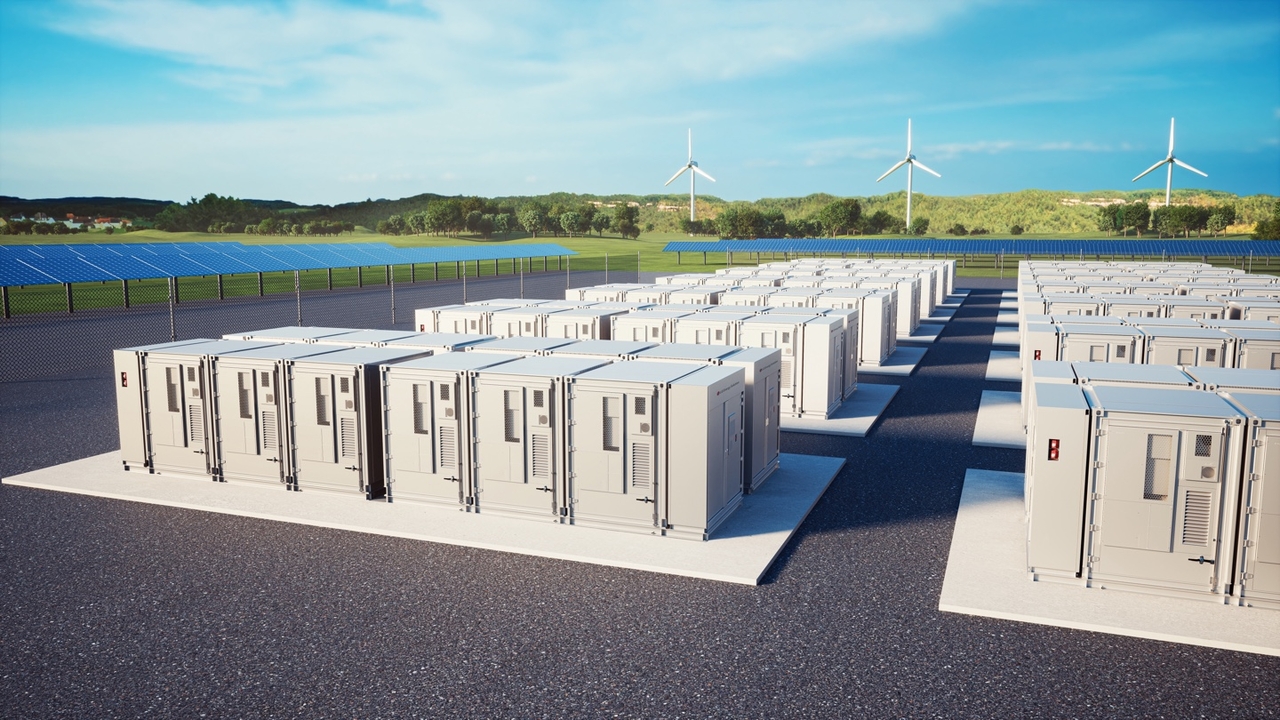
Adding nearly 3 GWh of battery storage fundamentally changes that equation.
The battery allows electricity generated during periods of low prices to be stored and dispatched later when demand is higher or when the grid requires additional support. It creates opportunities to participate in balancing markets, respond to price volatility and optimise electricity sales rather than simply accepting whatever market conditions exist when the sun is shining.
The battery therefore does much more than store electricity. It introduces flexibility, and flexibility is rapidly becoming one of the most valuable commodities in modern power systems.
This distinction is often overlooked. Battery storage is frequently presented as an accessory to renewable generation, something that makes solar more reliable. In reality, it is changing the commercial characteristics of the asset itself. A solar project with large-scale storage operates according to a completely different economic model from a conventional photovoltaic plant.
The Data Centre Economy Is Changing Renewable Energy
Steel River also illustrates another structural change taking place across electricity markets.
The explosive growth of artificial intelligence and cloud computing is transforming electricity demand. Modern hyperscale data centres operate continuously and require enormous quantities of reliable power. Their energy requirements bear little resemblance to those of a traditional commercial building that can tolerate fluctuations in electricity availability.
For companies such as Google, Microsoft, Amazon and Meta, purchasing renewable electricity is no longer simply about reducing carbon emissions or meeting sustainability targets. It is about securing dependable, long-term energy supplies capable of supporting critical digital infrastructure.
That changes the nature of corporate renewable procurement.
Traditional power purchase agreements were designed primarily to guarantee renewable generation and provide long-term price certainty. Increasingly, however, large electricity consumers are looking for something more sophisticated. They need renewable energy that can be integrated with storage, managed intelligently and aligned more closely with operational demand.
In effect, they are buying an energy service rather than a source of generation.
Solar Plants Are Becoming Commercial Platforms
The significance of Google’s project extends well beyond one development in Arkansas. It reflects a broader transformation taking place across the renewable energy industry.
A modern utility-scale solar project is no longer simply a collection of photovoltaic panels connected to the grid. It is becoming a commercial platform that combines generation, storage, forecasting, software and market participation.
The role of the asset is changing accordingly.
Instead of asking only how much electricity can be produced, operators increasingly ask when electricity should be exported, when it should be stored, whether battery capacity should be reserved for ancillary services, or whether market conditions justify delaying dispatch until prices improve.
These are commercial decisions rather than engineering decisions.
The value of the asset is therefore determined by much more than installed capacity or annual energy production. Forecasting accuracy, optimisation software, battery management and electricity trading are becoming equally important components of project performance.
The renewable power station is gradually evolving into an intelligent energy platform.
The New Competitive Advantage
This evolution is changing the profile of successful renewable energy companies.
For years, competitive advantage came from developing projects quickly, securing low equipment costs and constructing assets efficiently. Those capabilities remain essential, but they are increasingly being complemented by expertise that traditionally belonged to utilities and energy traders.
Leading renewable companies are investing heavily in electricity market analysis, forecasting, digital optimisation platforms and sophisticated trading capabilities. The objective is no longer simply to maximise production. It is to maximise the economic value of every megawatt-hour generated.
The distinction may appear subtle, but it fundamentally changes how renewable assets are managed.
Two solar plants with identical capacity can generate very different financial returns if one is able to optimise battery dispatch, respond to changing electricity prices and participate in multiple revenue streams while the other simply exports electricity whenever it is produced.
The future premium will belong to assets that can adapt continuously to changing market conditions.
Investors Are Looking Beyond Megawatts
This transformation is also changing how infrastructure investors evaluate renewable projects.
Installed capacity remains an important metric, but it is no longer sufficient on its own. Investors increasingly examine merchant market exposure, storage integration, flexibility, revenue diversification and operational sophistication when assessing long-term asset quality.
Questions that once centred on generation forecasts and construction costs are being replaced by more commercially focused considerations: can the project respond to volatile electricity prices? Can it create value beyond wholesale power sales? Can it provide balancing services or support grid stability? Can it remain profitable as renewable penetration continues to increase?
These questions recognise an increasingly important reality. Future renewable markets will reward flexibility as much as generation.
More Than a Google Story
It would be easy to view Steel River as simply another example of a technology company investing in renewable energy. That would underestimate its significance.
The project reflects the changing economics of electricity itself.
The first generation of renewable investment focused on replacing fossil fuels with low-cost clean generation. The next generation will focus on integrating that generation into increasingly complex electricity systems where timing, flexibility and intelligent operation determine commercial success.
This is why Google’s largest solar project is not really about solar.
It is about creating a renewable energy asset capable of behaving less like a conventional power plant and more like an intelligent participant in the electricity market.
That distinction may define the next decade of renewable energy investment.
The companies that succeed will not necessarily be those that build the largest solar portfolios. They will be those that understand how to transform abundant renewable electricity into a reliable, flexible and increasingly valuable commercial product.
Steel River is not simply another large solar development. It is a glimpse of where the renewable energy industry is heading.