


For much of the past five years, Europe’s renewable hydrogen industry has measured progress in megawatts. Every new electrolyser, every gigawatt-scale project announcement and every government subsidy has been viewed as another milestone in the continent’s ambition to replace fossil fuels with green hydrogen.
Yet as the market begins to mature, another question is becoming increasingly important: once hydrogen has been produced, how does it actually reach the customer?
French renewable hydrogen producer Lhyfe believes the answer lies in logistics.
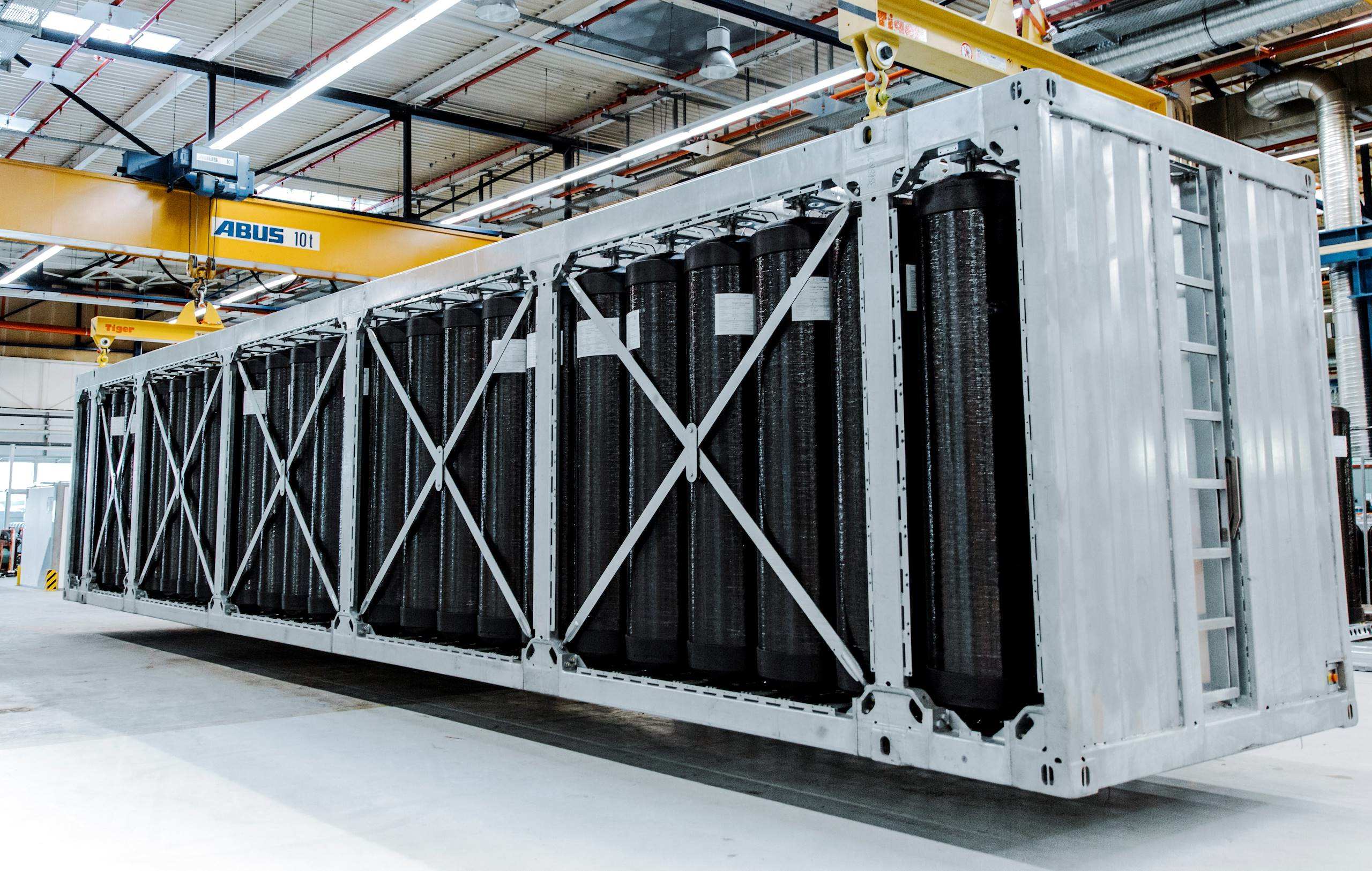
The company has expanded its hydrogen transport fleet to 84 high-pressure composite containers following the delivery of ten additional units from Norwegian manufacturer Hexagon Purus. While the announcement may appear modest compared with the industry’s frequent headlines about hundred-megawatt electrolysers, it highlights an area that many observers increasingly see as one of the biggest bottlenecks facing Europe’s emerging hydrogen economy.
Unlike electricity, hydrogen cannot simply be injected into an existing continent-wide network. Dedicated pipeline infrastructure remains limited, leaving producers dependent on road transport to supply industrial customers, hydrogen refuelling stations and early adopters across Europe.
For companies seeking to build commercial hydrogen businesses today rather than in a future pipeline economy, transport capability has become an important competitive differentiator.
From project developer to integrated supplier
Lhyfe has quietly evolved from a technology pioneer into a vertically integrated hydrogen supplier.
Founded in western France in 2017, the company attracted international attention in 2021 when it commissioned what it described as the world’s first industrial-scale renewable hydrogen production plant directly connected to a wind farm in Bouin on France’s Atlantic coast.
Rather than relying on conventional electricity supplies, the facility demonstrated that electrolysers could be powered using renewable electricity to produce hydrogen with virtually no carbon emissions.
Since then, Lhyfe has expanded its operational footprint with production facilities in Brittany, Occitanie and, more recently, Baden-Württemberg in Germany. Together these plants currently provide around 21 MW of installed electrolysis capacity, with further projects expected to increase production significantly over the coming years.
Equally important has been the company’s investment beyond production itself.
Instead of treating transport as a third-party service, Lhyfe has built much of its own supply chain. The company now operates dozens of high-pressure hydrogen containers, maintains storage hubs in several European countries, works with specialist hazardous-goods transport operators and has developed digital systems to coordinate production, storage and deliveries.
According to the company, these capabilities enabled it to exceed 1,000 customer deliveries during 2025, supplying renewable hydrogen in nine European countries.
Solving the “last-mile” problem
Hydrogen logistics rarely receive the same attention as electrolyser projects, yet they are increasingly central to commercial deployment.
Industrial users need uninterrupted supply. Refuelling stations cannot tolerate missed deliveries. Chemical manufacturers replacing fossil-derived hydrogen require consistent quality and reliability.
Until Europe develops an extensive hydrogen pipeline network, compressed hydrogen transported by road will remain the primary distribution method for many regions.
Composite Type IV transport containers, such as those used by Lhyfe, offer several advantages over older steel alternatives. Their lighter construction allows operators to transport larger quantities of hydrogen within road weight limits while operating at higher pressures, improving transport efficiency and reducing costs per kilogram delivered.
For customers located hundreds of kilometres from production sites, these incremental improvements can make the difference between a commercially viable hydrogen supply and one that remains prohibitively expensive.
Expansion across Europe
Lhyfe’s ambitions extend well beyond its current operating sites.
Construction continues on new French production facilities at Le Cheylas and Croixrault, while one of the company’s flagship developments is the planned 100 MW Green Horizon project near the industrial port of Le Havre. Supported by French state funding under the European IPCEI programme, the project is intended to provide renewable hydrogen for heavy industry, including fertiliser production and other hard-to-abate sectors.
In Sweden, the company is advancing two large hydrogen projects alongside Euromekanik and electrolyser manufacturer Hystar, targeting industrial demand in the country’s southern manufacturing regions.
Germany has also become an increasingly important market. Earlier this year Lhyfe entered a strategic partnership with construction group STRABAG to jointly develop renewable hydrogen infrastructure as demand grows under the implementation of the revised Renewable Energy Directive (RED III).
The company now has development activities across more than a dozen European countries.
Offshore innovation continues
Lhyfe remains one of Europe’s most active hydrogen innovators.
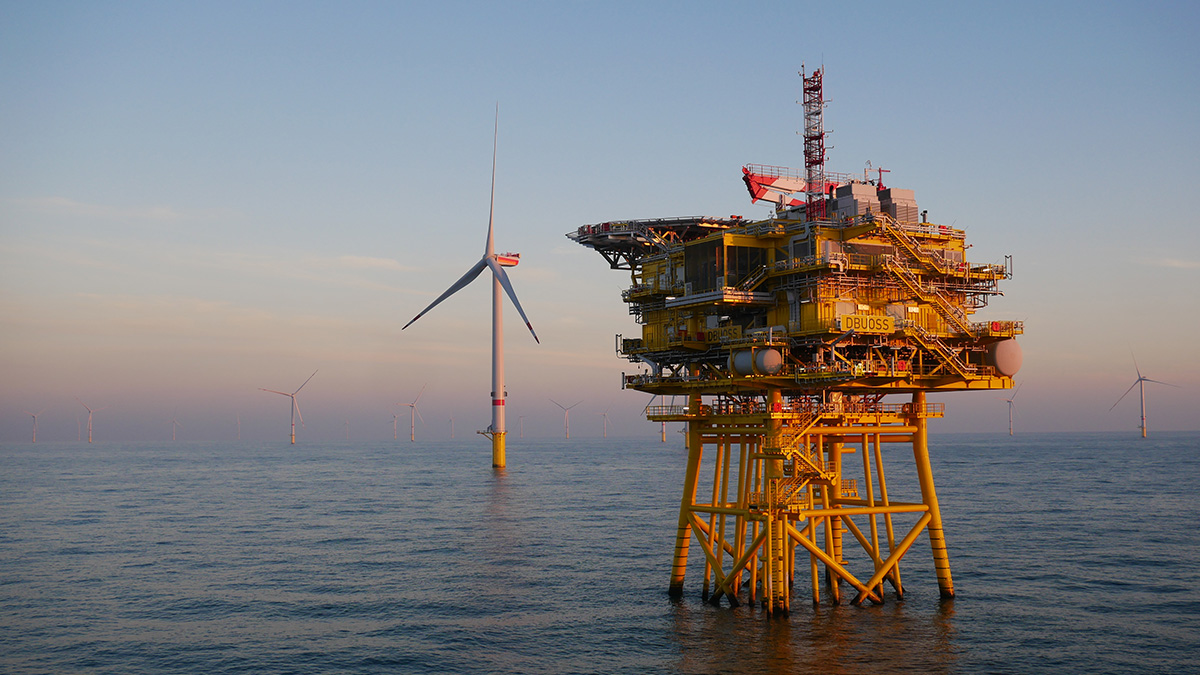
In 2022 it commissioned the world’s first offshore renewable hydrogen production demonstrator, proving that hydrogen can be produced directly at sea using electricity generated by offshore wind turbines.
The project attracted considerable attention because offshore hydrogen could eventually reduce pressure on electricity grids by converting renewable electricity into transportable molecules close to where offshore wind energy is generated.
Although commercial deployment remains some years away, the demonstration positioned Lhyfe among Europe’s leading developers of offshore hydrogen technology.
The market is changing
Europe’s hydrogen industry is entering a different phase from the one that characterised its early years.
The first wave focused on proving that renewable hydrogen could be produced.
The next phase will determine whether it can be supplied consistently, competitively and at industrial scale.
That shift explains why announcements about transport fleets, storage terminals and logistics software may become increasingly common alongside news of new electrolysers.
Without reliable distribution networks, even the largest hydrogen production plants remain isolated assets.
For Lhyfe, investing in logistics is not simply about moving hydrogen from one location to another. It is an acknowledgement that Europe’s hydrogen economy will depend as much on efficient supply chains as on renewable electricity and electrolysis technology.
As governments continue investing billions of euros in hydrogen production, the companies capable of reliably connecting producers with industrial consumers may ultimately shape how quickly the market develops.