Securing permits is one milestone in developing a wind farm. Securing financing is another altogether. For Romania’s rapidly expanding renewable energy sector, projects reaching financial close are increasingly becoming the clearest indication of which developments are likely to progress from ambitious plans to electricity generation.
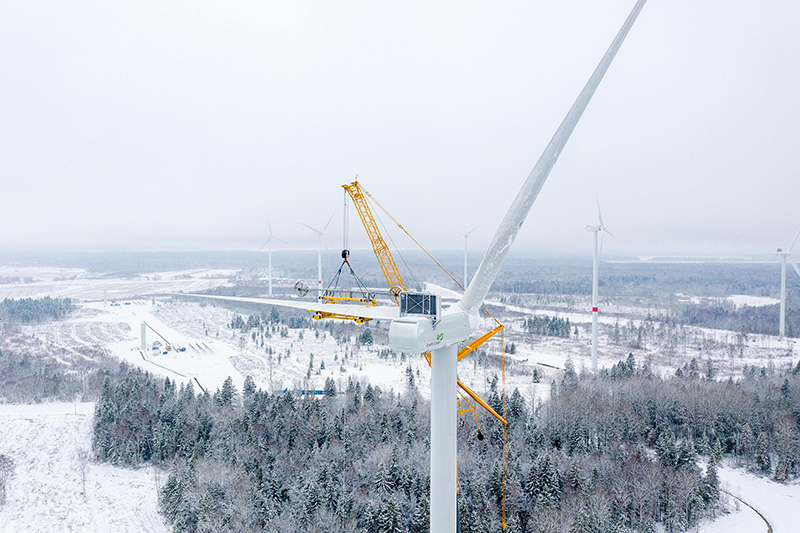
That transition is now underway for the 49.8 MW Gura Văii (CEE Onești) wind farm in Bacău County, where OMV Petrom and the Renovatio Group have secured a €47 million investment loan from Banca Comercială Română (BCR). The financing enables construction to proceed and marks the first wind project within the partners’ Electrocentrale Borzești renewable platform to reach financial close.
The project forms part of the initial 300 MW portfolio of wind developments for which OMV Petrom recently took a final investment decision. More significantly, it is the first project within a renewable energy pipeline exceeding 1 GW to move from development into execution, providing an early indication of how quickly one of Romania’s largest privately backed renewable energy portfolios is beginning to take shape.
From development pipeline to construction
Romania has announced several gigawatts of proposed wind and solar capacity over the past three years, encouraged by rising electricity demand, growing corporate demand for long-term power purchase agreements (PPAs), and renewed investor confidence ahead of the country’s Contracts for Difference (CfD) support scheme.
The real test, however, is whether projects reach construction.
Commercial lenders typically commit long-term debt only after technical, environmental, legal and commercial risks have been substantially reduced. Financial close therefore represents one of the strongest indicators that a renewable energy project has progressed beyond planning and is on course for delivery.
For OMV Petrom, the Gura Văii project is also another step in the company’s transformation into a broader energy producer. Alongside its traditional upstream and gas operations, the company is investing heavily in renewable electricity generation, storage and low-carbon energy infrastructure.
“Our objective is to have over 2.5 GW of installed capacity in renewable energy projects by 2030, together with our partners,” said Franck Neel, Member of the OMV Petrom Executive Board responsible for Gas & Power. “We have developed a diversified portfolio of solar, wind and hydro projects. We are now entering a new phase, transforming these projects into production capacities.”
According to OMV Petrom, the company already has around 70 MW of renewable generation in operation and approximately 1.5 GW under development across wind, solar and hydropower projects.
A strategic project for eastern Romania
The wind farm is being developed by Borzești Wind, a wholly owned subsidiary of Electrocentrale Borzești, the joint venture established by OMV Petrom and the Renovatio Group to develop renewable energy projects across Romania.
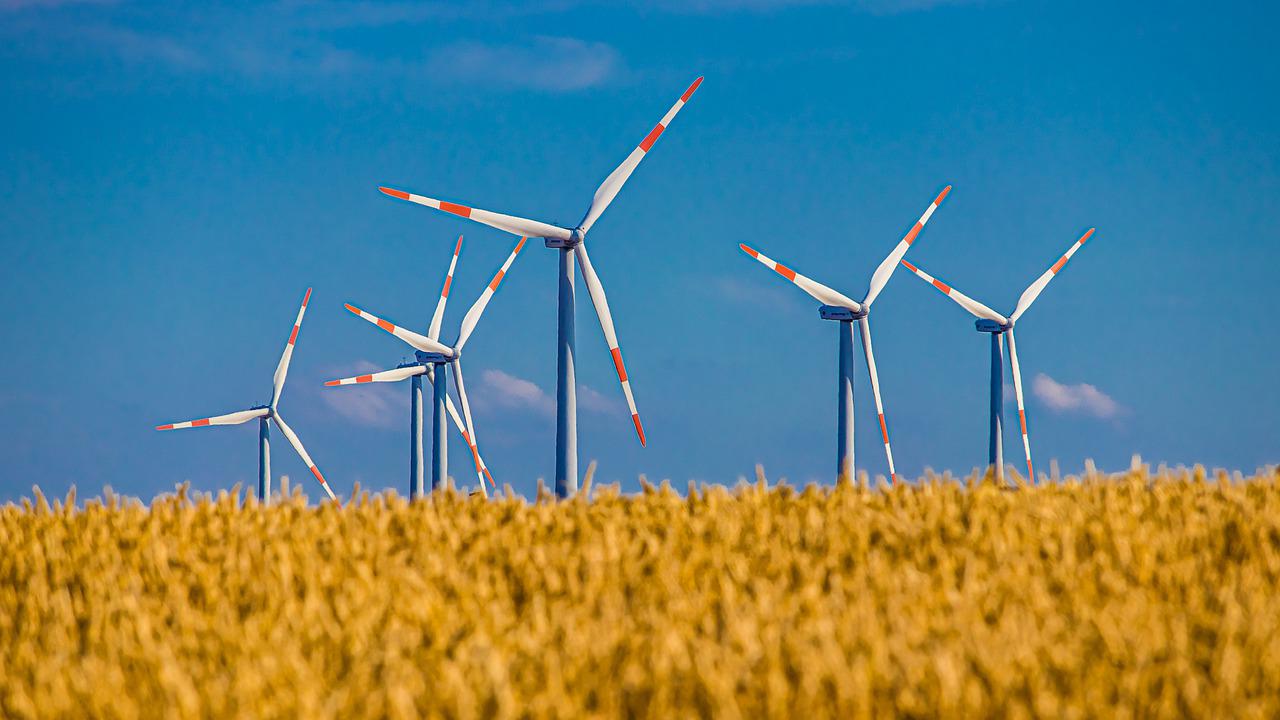
Located across the administrative areas of Onești, Gura Văii and Helegiu in Bacău County, the project will comprise 11 wind turbines with a combined installed capacity of 49.8 MW. Once operational, it is expected to generate approximately 110 GWh of electricity annually, equivalent to the annual electricity consumption of a city the size of Buzău.
Part of the project’s output has already been contracted under a 10-year power purchase agreement with Renovatio Trading, providing long-term revenue certainty while complementing other mechanisms such as PPAs and the emerging CfD market.
For Electrocentrale Borzești, Gura Văii represents the first operational step in a much larger investment programme.
“Electrocentrale Borzești aims to contribute to the energy transition through a broad portfolio of projects that will position the company as a major player in Romania’s energy market,” said CEO Ionuț Cristian Ciubotaru. “Financing solutions represent a critical element in ensuring the successful implementation of these investments. Our partnership with BCR for the construction of CEE Onești strengthens the project’s execution in line with the commitments made under the investment decision.”
The wider Electrocentrale Borzești platform comprises approximately 950 MW of wind projects together with around 70 MW of solar generation and battery energy storage, representing investments expected to exceed €1.3 billion.
Beyond increasing renewable generation, the portfolio is intended to strengthen electricity supply in Romania’s Moldova region, where the retirement of ageing thermal power plants has increased the importance of new generation capacity and transmission infrastructure.
Financing reflects growing lender confidence
BCR is acting as the sole banking partner for the project with total exposure of up to €61.6 million through a financing package that includes the investment loan, a VAT facility and a Debt Service Reserve Facility (DSRF). The facilities support the development, construction and operational phases over a 15-year period.
The financing also reflects the increasing willingness of commercial banks to back utility-scale renewable energy projects in Romania as developers establish more predictable long-term revenue streams through corporate PPAs, Contracts for Difference and other market-based mechanisms.
Manuela Trisnevschi, Head of Energy and Utilities at BCR, said the bank sees renewable energy investments as fundamental to Romania’s future energy system.
“We stand alongside Electrocentrale Borzești on the first wind project in a pipeline exceeding 1 GW because investments in renewable energy require expertise and robust financing structures,” she said. “We will continue to support investments in new generation capacity, distribution networks and storage solutions.”
According to BCR, the bank provided more than €800 million in financing to Romania’s energy sector during 2025, supporting projects representing over 1,150 MW of installed capacity, including more than €300 million allocated to new renewable energy developments.
Romania’s renewable market enters a new phase
Romania’s renewable energy sector is moving beyond the rapid expansion of development pipelines towards the more demanding phase of financing, construction and commissioning.
Against that backdrop, the importance of the Gura Văii project extends beyond its 49.8 MW capacity. It demonstrates that major commercial lenders are prepared to finance utility-scale wind projects and that large development portfolios are beginning to translate into tangible infrastructure.
For OMV Petrom and the Renovatio Group, financial close on Gura Văii is unlikely to be the most significant project in their portfolio by capacity. It is, however, the first to demonstrate that their long-term renewable strategy is moving from ambition to implementation. The pace at which the remaining projects within the 1 GW Electrocentrale Borzești platform follow will provide an important indicator of how quickly Romania’s next generation of renewable energy capacity can be brought online.
EVENT ALERT: