
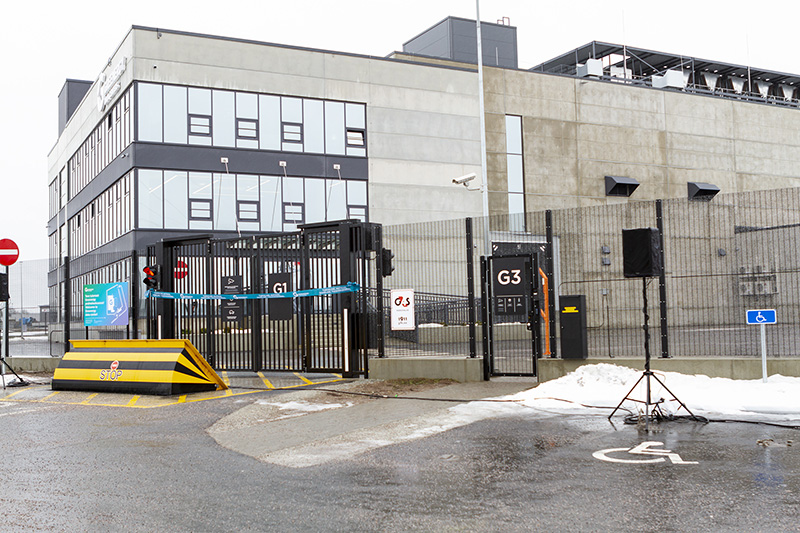
A single building in Hüüru, just outside Tallinn, is about to become the second-hungriest electricity user in Estonia. When the Greenergy data centre adds roughly 20 megawatts of demand in December, only the Estonian Cell pulp mill in Kunda will draw more power from the grid, according to Andrus Durejko, chief executive of state-owned Eesti Energia.
Durejko thinks that is good news. In a televised interview this week, he said data centres help balance Estonia’s power system and that the country has enough electricity for the ones now planned. On nuclear power he was far more cautious: he does not expect it in Estonia before 2040.
A summer fix, a winter headache
Durejko’s case rests on the shape of Estonian demand. On long summer days the country has more wind and solar output than it can comfortably use; winter is when the system struggles. A large, steady consumer eases the first problem and worsens the second.
“This development will help us address the summer energy surplus, but it will make things more difficult in winter, meaning the energy deficit will deepen,” he said. “Overall, however, it is beneficial for the energy system because the price signal enables new investments.”
The winter gap is real. On 5 February 2026 a cold snap pushed consumption to a record 1,723 MW, while domestic generation was around 850 MW. Imports covered roughly half of demand.
For those peaks, Durejko falls back on the fleet his company is trying to move away from. “The winter problem will inevitably remain and we also have oil shale-fired power plants to deal with it. When prices are high, they can cover that peak in demand,” he said.
That fleet is ageing. Grid operator Elering warned in December 2025 that most of Estonia’s power stations reach the end of their lives by 2035, and that the country needs around 2,100 MW of dispatchable capacity by then. “We definitely need at least an additional 800 to 1,000 megawatts of new power plants in Estonia,” said Kalle Kilk, chief executive of Elering.
Looking north for a model
Durejko’s benchmark is Finland. He said the Google and Microsoft data centres planned there would consume almost as much as Estonia’s entire peak demand. Earlier this month Google announced a €13bn, two-year investment in Finnish AI infrastructure, including a 22-year deal supporting the life extension of the Loviisa nuclear plant.
Microsoft’s campus is the one he singled out. “The 200-megawatt Microsoft data center will feed waste heat from its processors into Espoo’s district heating network. An additional €200 million investment has been made to put that heat to use,” he said. “This is definitely a direction we should follow and, where possible, emulate.”
Fortum, which runs the scheme, puts its investment at about €225m. Heat production started in May at two sites in Espoo and Kirkkonummi. Once fully running, the system should cover about 40% of the area’s district heat demand, serving around 250,000 people.
Estonia’s first steps
By comparison, Estonia’s data centre sector is small. The Hüüru facility has about 30 MW of capacity, capped by its grid connection. If clients sign up, it could in principle grow to 300 MW across three buildings. Its owner, Tensor Estate, is refitting it for AI workloads and chasing international customers. It is backed by around €100m from Estonian entrepreneurs Kristjan Rahu, Jüri Käo, Enn Kunila, Bolt founder Markus Villig and Urvo Männama.
“More than €70 million has already been invested in this project. Broadly speaking, the total investment will come to just under €200 million by the end of the year,” said Martin Rungi, head of key accounts at Greenergy Data Centers. Männama was blunter: “So far Estonia has been rather modest in this field.”
Durejko is cheering them on. “On the positive side, we are also seeing the first signs of data centres in Estonia, which I am pleased about,” he said. “I wish Estonian investors strength and perseverance — this needs to be done.”
Demand is rising, and nuclear is slow
Eesti Energia expects consumption to keep climbing for the next 10 to 15 years, even as equipment becomes more efficient. “The fact is that electricity use is growing and replacing all other forms of energy. The question, of course, is how that electricity is generated,” Durejko said.
The company’s new Strategy 2030+ was approved on 17 September. It aims to meet about two-thirds of Estonia’s extra demand growth by 2030 and to add up to 350 MW of cleaner dispatchable capacity, pairing renewables with storage.
Durejko called nuclear one of the few viable long-term options, but his timetable is slower than that of its main promoter. “Technological solutions that reduce the negative aspects of nuclear energy will certainly improve, but we do not see nuclear energy being introduced in Estonia before 2040. The alternatives available today, however, are relatively inadequate,” he said.
Fermi Energia still aims to have the first of two GE Vernova Hitachi BWRX-300 reactors running by the end of 2035. The government began spatial planning for the plant in May 2025, and parliament passed Estonia’s first full nuclear energy and safety act in June 2026. Kalev Kallemets, chief executive of Fermi Energia, said in April that the company was focused on choosing a site.
The five years between those two dates matter. If Durejko is right, the data centres he is welcoming will spend the next decade and a half relying on oil shale and imports to get through the winter. Elering says that backup is running out.


