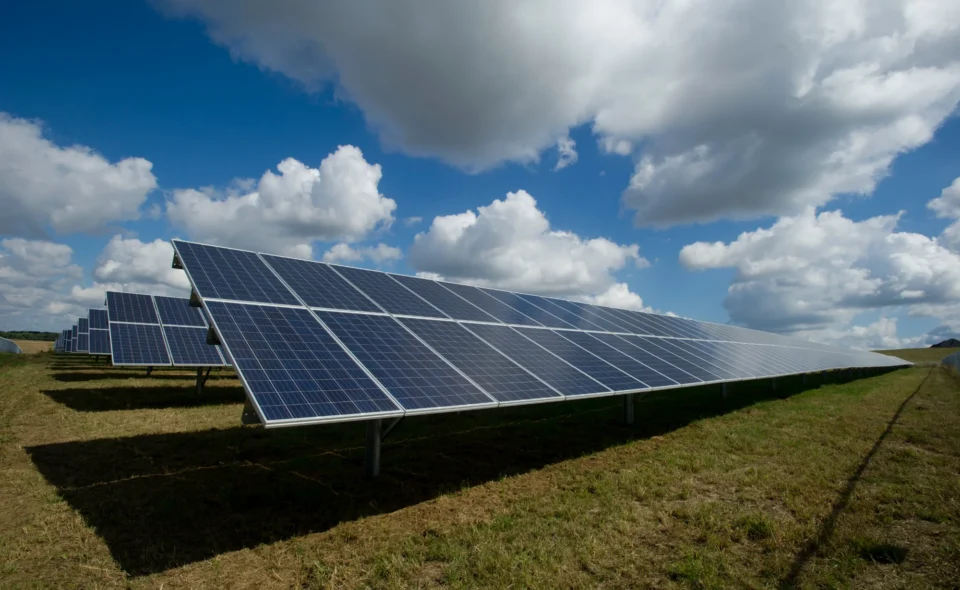
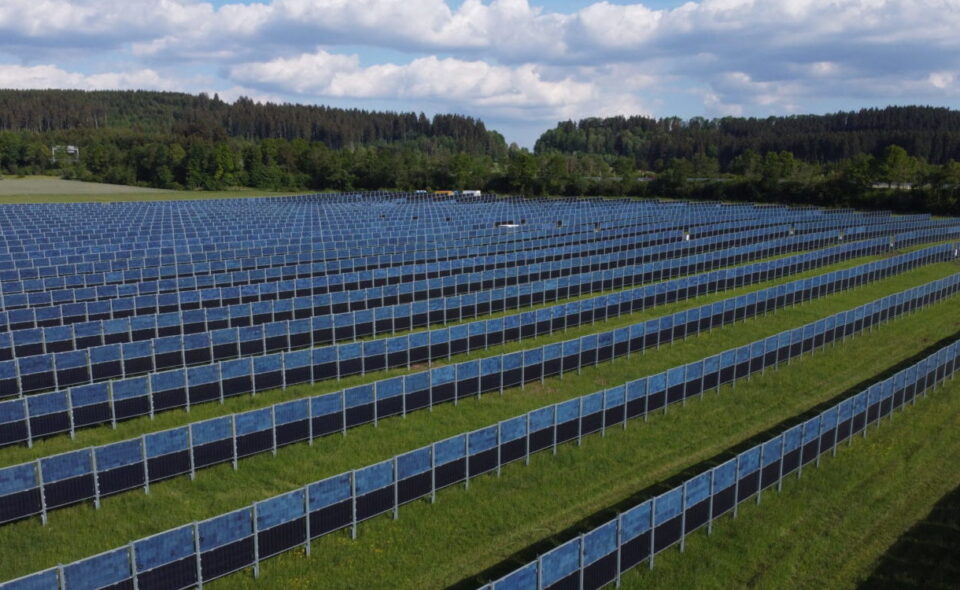
In Lääneranna, a rural municipality on Estonia’s west coast, the local council has now run three separate auctions to lease land for a solar park at Alaküla Lodu. All three drew zero bidders. Deputy mayor Henrik Raave says developers have moved on — to data centers, to battery storage, to wind — and simply stopped asking about solar.
It’s a small, local data point, but it lines up with a blunter statement from the country’s grid operator. René Tomera, head of renewable energy development at transmission system operator Elering, told ERR News this week that Estonia has installed solar capacity equal to nearly one and a half times its summer electricity consumption. “The market probably doesn’t need any more standalone solar parks,” he told The Voice of Renewables. Solar developers, he added, have not received state subsidies for six years — this saturation is happening on pure merchant economics, with no policy cliff to blame.
That distinction matters, because it means the slowdown isn’t a story about subsidies being pulled. It’s a story about a market that built faster than its own grid could absorb, and that Estonia’s own industry group warned was coming while the boom was still underway.
From record year to near-standstill in twelve months
The numbers show just how sharp the swing has been. Estonia added a record 513 MW of solar in 2024, up 82% from the 282 MW installed the year before, pushing cumulative capacity to roughly 1,325 MW by year’s end, according to pv magazine’s annual tally. Even then, the strain was visible: 2024 recorded 236 hours of zero or negative electricity prices, and Silver Sillak, director of the Estonian Chamber of Renewable Energy, was already saying the market was “somewhat saturated” and that “the rapid growth will likely stop soon.”
It did. Estonia installed just 105 MW of new solar in 2025 — a roughly 80% drop from the year before — bringing cumulative capacity to about 1,430 MW. Average spot prices during sunny hours in 2025 came in at €46/MWh, about half the average price across the full year, a direct measure of how much midday solar output was depressing the value of every additional megawatt-hour. Sillak’s read at the time was that negative prices were “nudging producers to supplement solar parks with batteries” — the same shift Tomera is now describing as close to mandatory for any new project to pencil out.
Notably, around 60% of Estonia’s solar fleet was built without state aid in the first place, according to pv magazine’s reporting — reinforcing that this was a market genuinely getting ahead of itself, not a subsidized bubble popping on schedule.
The hybrid pivot is already under construction
Tomera’s prescription — pair solar with storage, or add it to an existing wind site — is already showing up in Estonia’s project pipeline. Developer Sunly’s 244 MW Risti solar-battery hybrid is under construction and due to finish in summer 2026, and the existing 77.5 MW Kirikmäe solar park is adding 55 MW/250 MWh of battery storage.
The infrastructure to trade those hybrid assets is arriving from just across the water. Capalo AI, a Finnish company founded in 2022, has built a virtual power plant platform called Zeus that handles day-ahead, intraday and balancing-market trading for solar-battery pairs as a single dispatchable unit — it already manages 1.6 GW of batteries and 460 MWp of solar region-wide, with roughly 600 MW and 300 MWp actively trading.
Capalo has partnered with Danish developer European Energy on two Baltic hybrid projects: a 78.5 MW solar plant with a 25 MW/65 MWh battery in Anykščiai, Lithuania, commissioned in June 2026, and a hybrid park under construction in Saldus, Latvia, pairing solar with a 46 MW/105 MWh battery. Lithuania’s government, meanwhile, has approved support for roughly 1.7 GW/4 GWh of new storage capacity — a sign that the region is trying to build the flexibility layer before the next wave of solar arrives, rather than after.
Estonia isn’t the exception — it’s just early
Estonia is living through solar cannibalisation. Pexapark’s tracking of the European PPA market shows the same forces reshaping deals well beyond the Baltics — the firm attributes a broader shift toward hybrid contracts to “cannibalisation risks and the increasing frequency of negative pricing” pushing developers to seek storage that can “capture higher electricity prices during peak hours and mitigate the impact of low or negative pricing periods.” In April 2026 alone, Europe recorded 17 new PPAs totaling 966 MW, including a 150 MW virtual hybrid deal between Endesa and Sonnedix spanning Spain and Portugal, alongside nine separate battery-storage agreements covering 800 MW and 2.8 GWh.
Estonia is a small market — its entire solar fleet is a rounding error next to Spain’s or Germany’s. But it may be one of the faster, cleaner illustrations of where a lot of Europe’s solar buildout is heading: a market that grew record-fast, ran into the ceiling its own success created, and is now betting that batteries and wind pairings — not subsidies — are what get the next megawatt built.