
The €60 million that the EBRD and Raiffeisen Bank International are lending for a second battery at Tenevo, Bulgaria’s largest solar-and-storage complex, shows where the bankable value now sits in south-eastern Europe’s power market: in the storage, not the solar. The site lies near Yambol in the country’s south-east, about 300 km from Sofia. It pairs a 242 MWp solar plant with battery capacity that will reach 311 MW once the new unit connects in November.
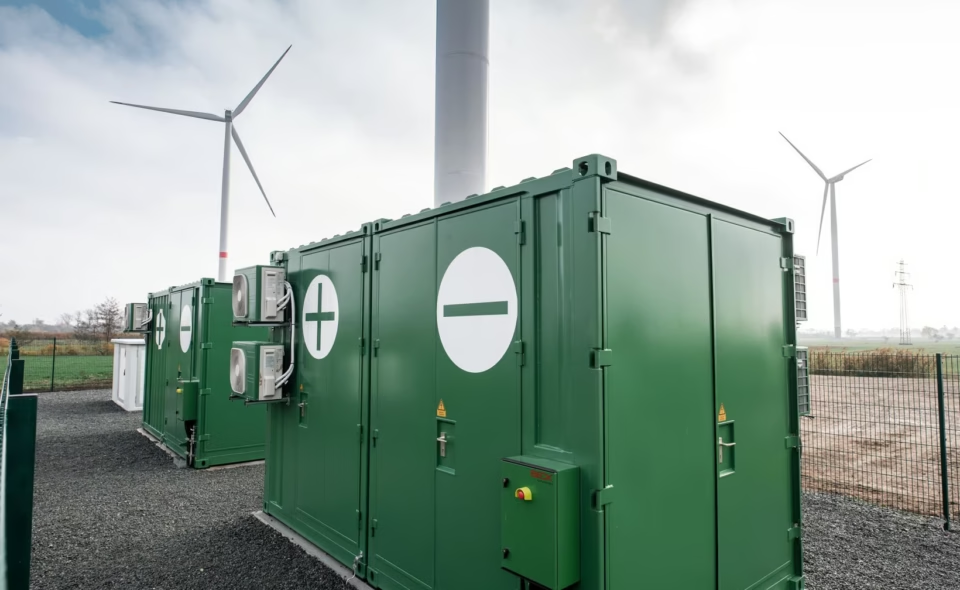
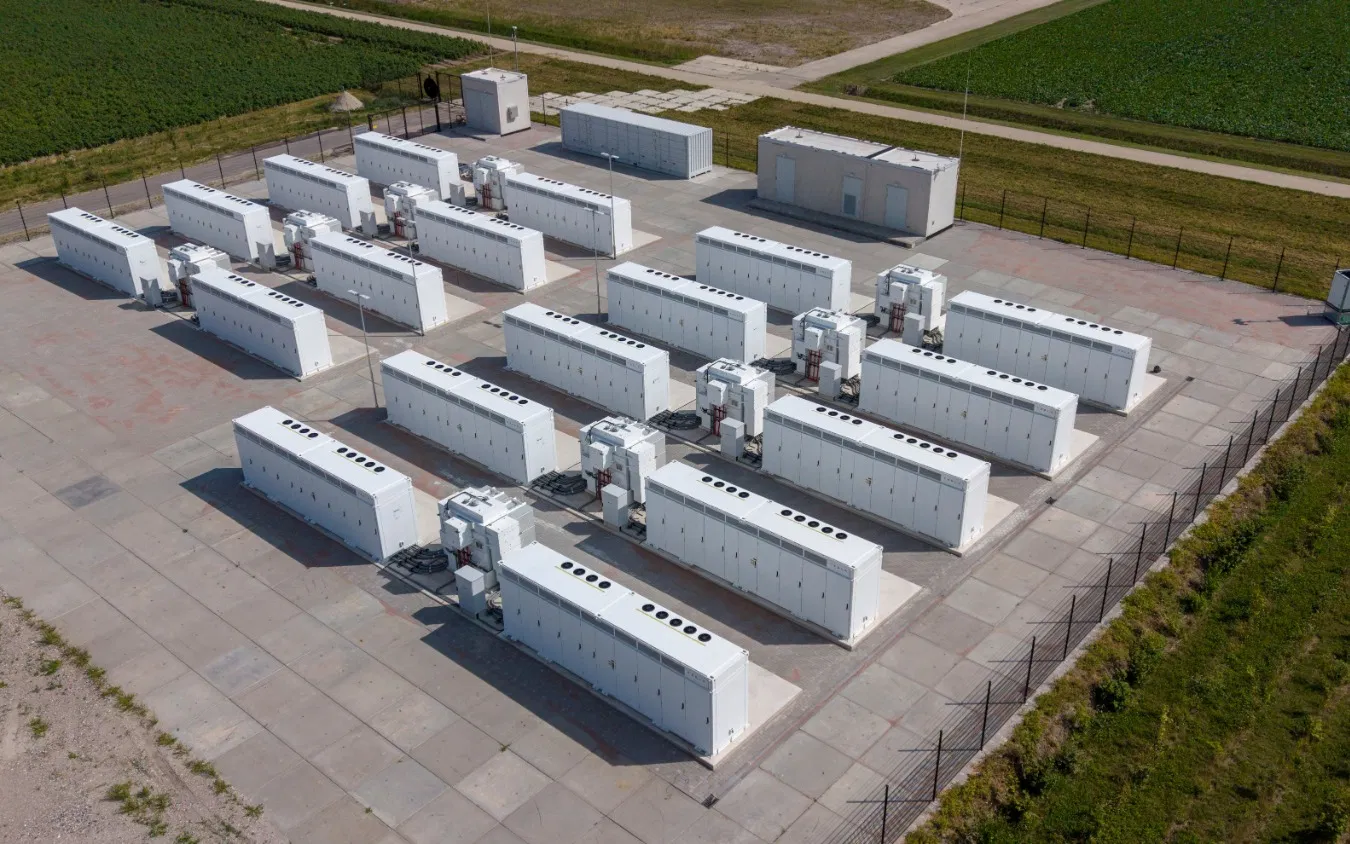
The financing is split evenly. The EBRD lends €30 million and RBI provides a matching €30 million in parallel. The money funds a 246 MW battery able to hold 512.5 MWh, alongside a first-phase 65 MW/260 MWh unit already in operation. The EBRD puts the new unit’s cost at about €70 million, which means debt covers roughly 85% of it. That is a high level of gearing for storage attached to a solar plant the EBRD itself classes as fully merchant. With 311 MW of battery power against 242 MWp of panels, the storage now outsizes the generation it was built to serve.
A hybrid built the hard way
Tenevo’s path to completion was uneven. Work started in 2023 on a disused military airfield near the village of Tenevo in Yambol province. The project company, Tenevo Solar Technologies, is split equally between Eurowind Energy of Denmark and Vienna-based Renalfa IPP. Renalfa IPP is in turn a partnership between Renalfa Solarpro Group and the French infrastructure investor RGreen Invest. Solarpro Holding, a group company, handled engineering, procurement, construction and project management.
The first 69 MW of solar came online in August 2025. The full 400 kV connection to the national transmission grid was energised at the same time, built largely with Siemens Energy equipment. Three months earlier, a violent hailstorm had wrecked part of the panel field. Completion of the solar plant slipped into early 2026 while the owners worked through the claim with insurers and lenders. Bulgarian business press has called it the EU’s largest loss on an insured renewable project, and solar lenders in the region should keep that loss in mind.
The storage design changed as often as the schedule. The 2023 plan called for 250 MW/500 MWh. By 2025 the target had grown to 315 MW/760 MWh. The final build is 311 MW/772.5 MWh, and the two phases are configured differently. The first phase uses Hithium and Kehua equipment and runs for four hours. The second runs for roughly two. The sponsors formally opened the complex on 30 September, and the final battery segment is due to connect in November. In practice, the lenders are signing as the equipment is almost ready to switch on.
Why merchant storage now clears credit committees
Bulgaria’s market data explains why the lenders are comfortable. By early September the country had around 5.4 GW of batteries in operation. That equals almost 23% of its total installed capacity, the highest share anywhere in the world, and the EBRD now puts the fleet above 6.2 GW/19 GWh. The driver is an extreme daily price shape. Wholesale prices drop below zero around midday and recover to about €250/MWh in the evening peak.
That price shape erodes the value of standalone solar. Well-researched forecasts say that from 2030 Bulgarian solar will earn on average about 48% less than baseload power. Its analysts argue that co-located storage defends the solar asset by soaking up output when prices are low or negative and selling it later in the day. That is the business model at Tenevo. The batteries let a merchant solar plant behave much more like a dispatchable generator, and Renalfa’s leadership presents the site as the first renewable asset of this scale in Europe to work that way.
The EBRD also helped shape the market it is now lending into. From 2023 it worked with the energy ministry on the design, competitive allocation and technical checks for the storage and renewables grant schemes under Bulgaria’s Recovery and Resilience Plan. Those schemes were completed in September. The bank also financed Tenevo’s solar phase with €50 million alongside €53 million from RBI. That loan was the EBRD’s first use of the InvestEU guarantee in Bulgaria.
The risk lenders are actually pricing
Bulgaria could become the test case for batteries cannibalising their own revenues. Early movers earn the gap between cheap solar hours and the evening peak – that gap shrinks as capacity grows though. The RESTORE programme alone awarded €587 million to 82 standalone projects totalling 9.71 GWh. The transmission operator has received grid applications for 12 GW of batteries. Each new megawatt-hour narrows the spread that paid for the previous one.
Tenevo’s protection comes from how it is built rather than from its contracts. The sponsors set out to extract the maximum value from a single grid connection by stacking technologies behind it. A rare 400 kV connection, a captive solar supply and two batteries of different durations give the operator more room to manoeuvre than a standalone unit competing with hundreds of near-identical peers. By lending, the credit committees have in effect judged that this advantage will hold.
The sponsors are already planning the next phase. They intend to add more than 250 MW of wind, which would take total investment across all phases above €500 million.
Wind is the real test. Solar and storage follow the same predictable daily cycle, but wind does not. If one connection can take on a third technology without diluting the economics of the first two, Tenevo becomes a template for the region. If it cannot, the project will show exactly where the hybrid model reaches its limits.