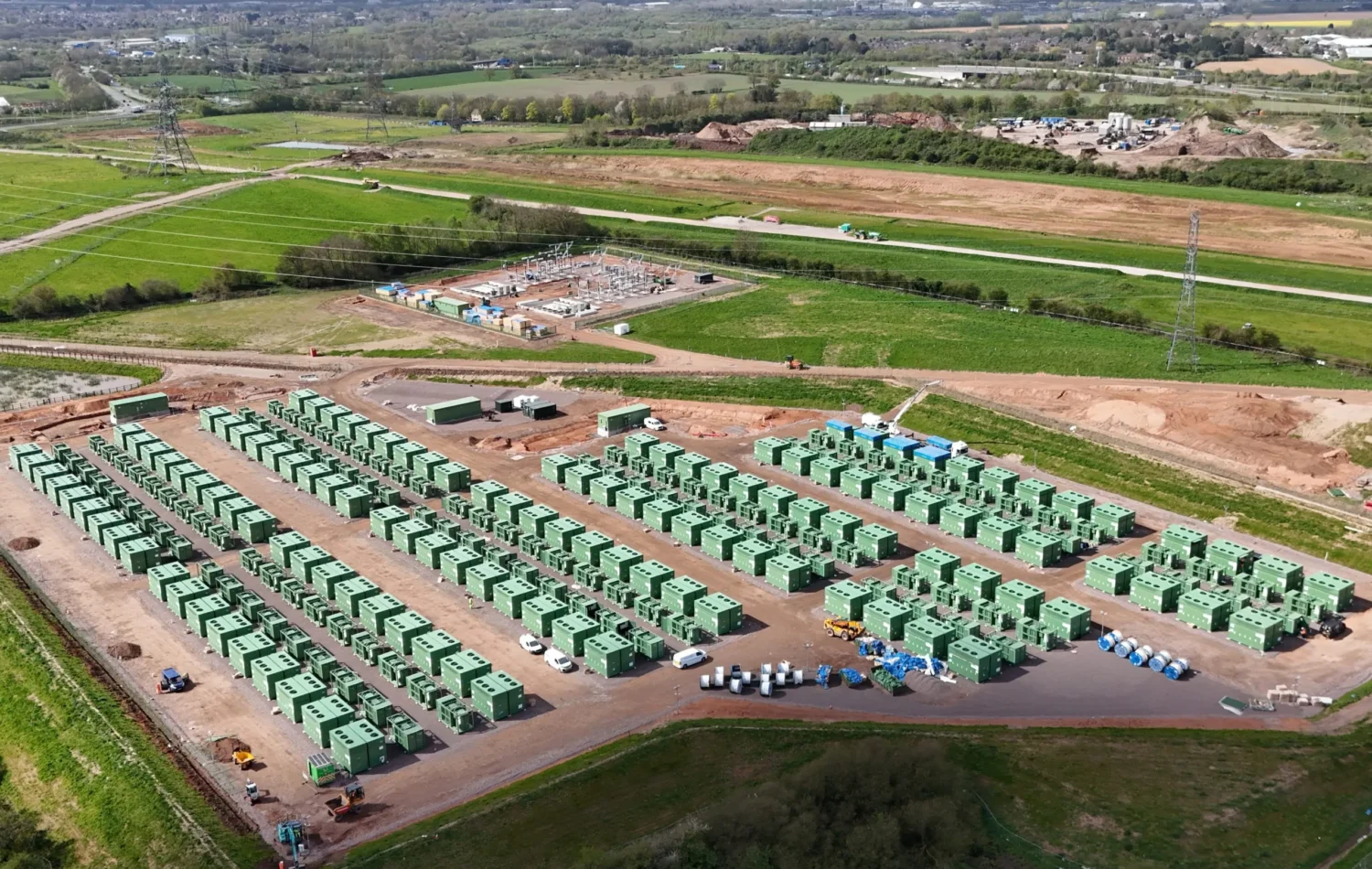

BW ESS took Hams Hall from energisation to commercial operation in 20 days, and Europe’s largest battery by storage capacity is now running as a commercial asset. The first phase in North Warwickshire puts 350 MW / 1,243 MWh to work beside National Grid’s 400 kV Hams Hall substation, with a 10-year EDF revenue floor and a three-bank debt package already in place. The milestone landed last week and was announced on 2 November.
On a site this large, a tight commissioning window decides whether debt service starts on time or contingency drains away while compliance testing drags on. BW ESS worked through testing with Sungrow, Energy-IO, National Grid and NESO. Chief Executive Erik Strømsø says the project was built and commissioned on budget and ahead of schedule.
A floor first, then the banks
In April, BW ESS signed a 10-year floor and optimisation agreement with EDF, which trades the asset through its PowerShift platform. EDF called it the longest-duration battery it has contracted to date. The floor gives lenders a downside they can model, while the optimisation upside stays merchant.
That revenue base unlocked the debt. OCBC, Rabobank and Societe Generale are lending in equal shares, with Rabobank also acting as facility agent and hedge provider. More than 30 lenders engaged in the process, according to BW ESS. CMS advised the sponsor and Watson Farley & Williams the banks, with Everoze as technical adviser and Modo Energy as market adviser. OCBC booked the deal against its £10 billion memorandum of understanding with the UK Government, a sign that storage now counts as core infrastructure lending.
Grid-forming kit at transmission scale
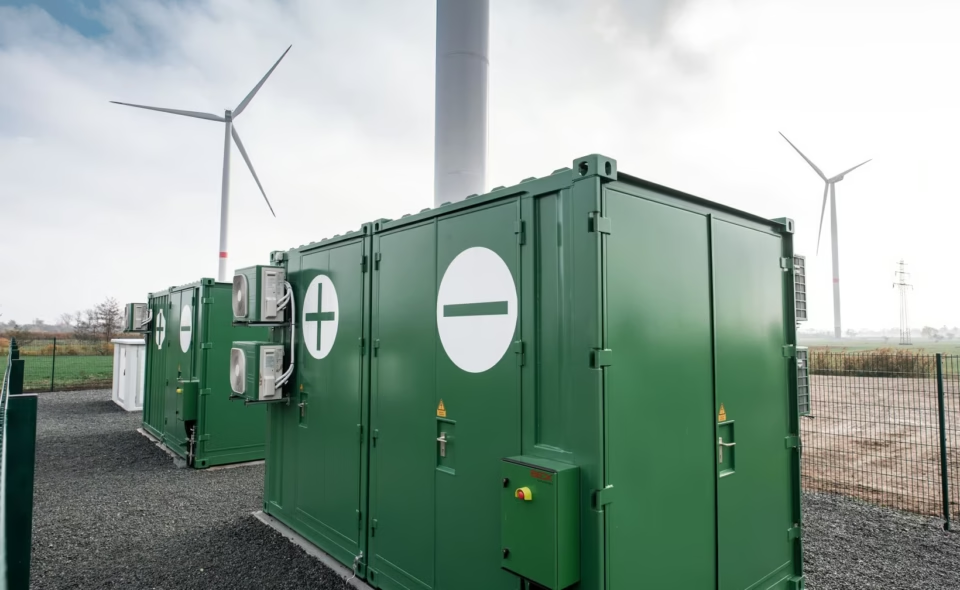
Sungrow is supplying 280 liquid-cooled PowerTitan 2.0 systems, specified for grid-forming operation with black-start capability. At roughly 3.5 hours’ duration, Hams Hall sits well beyond the short-duration assets of Britain’s first battery wave, and its 400 kV connection steers revenue towards arbitrage and balancing.
The missing 500 MWh
One number deserves a question. When the Sungrow supply deal was signed in 2024, Hams Hall was described as a 350 MW / 1,750 MWh project. Balance-of-plant contractor Wills Bros still states that the approved design allows more than 1,750 MWh, with scope for over five hours’ duration. Phase 1 delivered 1,243 MWh, and even after a second 50 MW phase the site will reach 1,424 MWh.
The announcements don’t explain the gap. Revenue modelling, the terms of the EDF floor, debt sizing and equipment cost could each justify a shorter-duration first build. Either way, consented capacity is sitting unused on a green-belt site that North Warwickshire Borough Council approved only because of exceptional Midlands grid need. That headroom is an option BW ESS and AIP Management can exercise later through augmentation.
Part of a bigger UK build-out
Hams Hall belongs to BW ESS’s 2.6 GWh Ardenham portfolio, co-owned with AIP Management. It joins the 331 MWh Bramley battery in Hampshire and 857 MWh under construction at Berkswell.
Developers studying Hams Hall should look past the scale. The value came from sequencing: a floor from a credible optimiser, then a competitive bank process, then commissioning fast enough to reach commercial operation inside three weeks. The duration question shows the other side of that discipline: the asset that got financed is the one the revenue contract could carry.