Hydrogen has always promised something batteries struggle to match: fast refuelling and high energy storage potential. Yet one of the biggest obstacles for hydrogen vehicles has never been the fuel cell itself — it has been the challenge of storing enough hydrogen safely, efficiently and without sacrificing vehicle space.
BMW believes it has found a new answer with its Hydrogen Flat Storage system, developed for the upcoming BMW iX5 Hydrogen. Rather than using traditional large cylindrical hydrogen tanks, the German manufacturer has created a flatter, more integrated storage architecture designed to make hydrogen a more practical part of future electric mobility.
Moving beyond the traditional hydrogen tank
Compressed hydrogen is normally stored at extremely high pressure, typically around 700 bar for passenger vehicles. Conventional designs rely on large cylindrical pressure vessels, which are strong and effective but difficult to package within modern vehicle platforms.
BMW’s new approach changes the geometry rather than the basic principle.
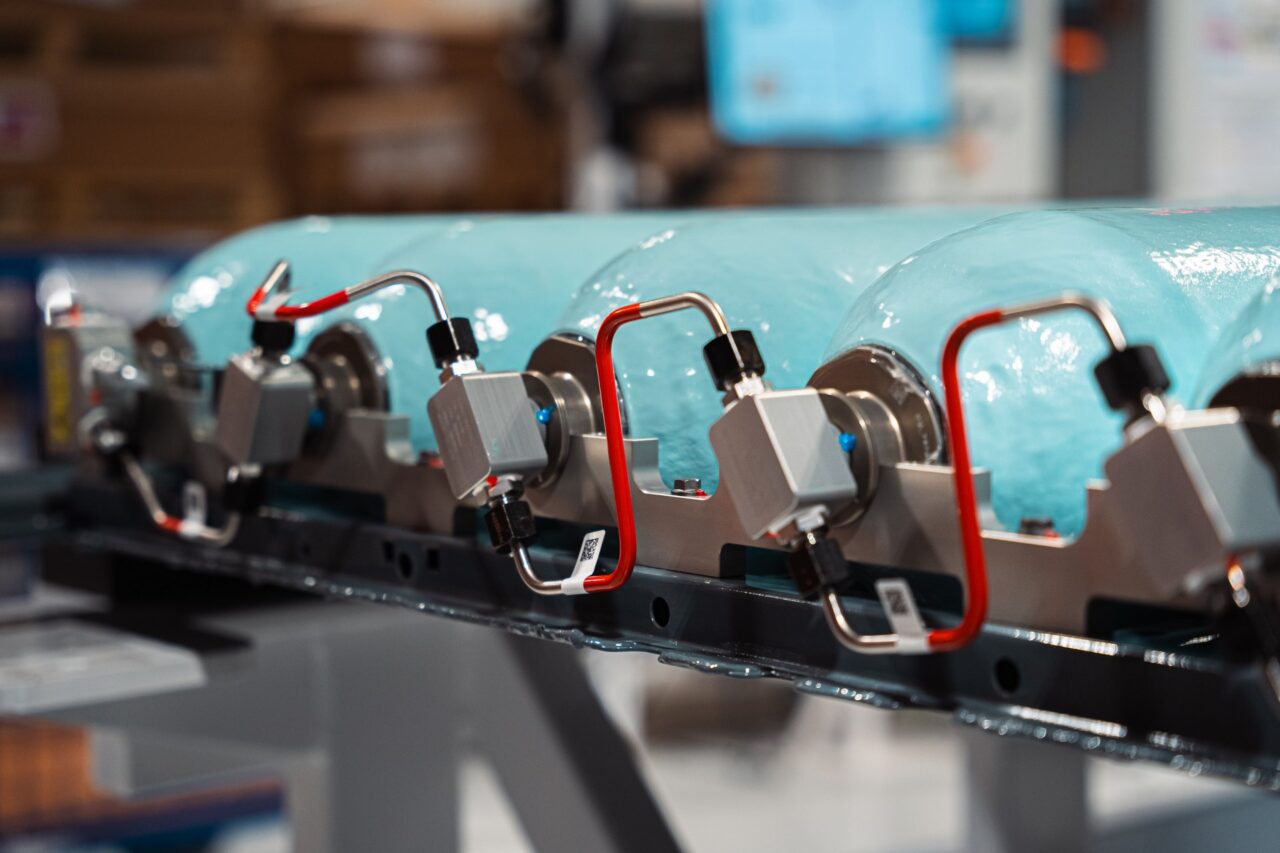
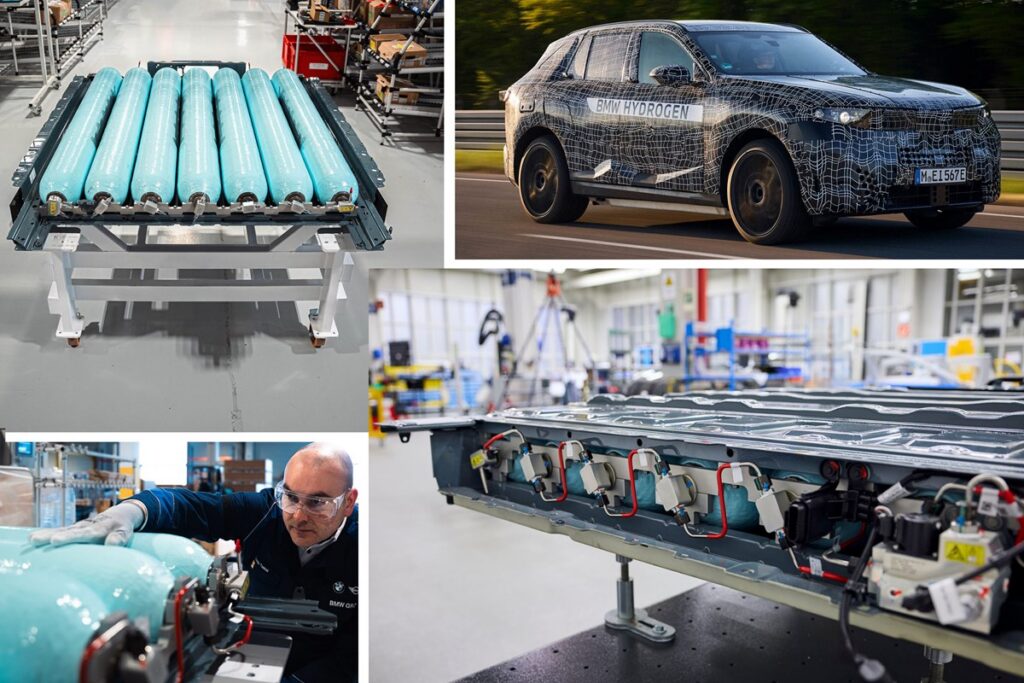
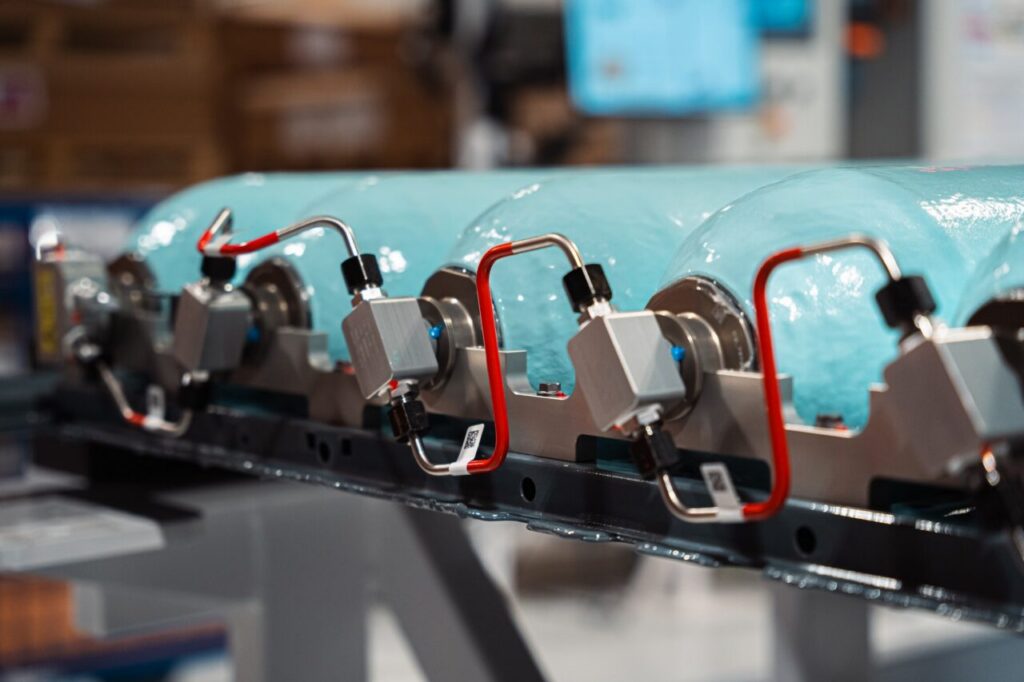
The Hydrogen Flat Storage system uses seven carbon-fibre-reinforced composite high-pressure tanks connected in parallel and housed inside a reinforced metal structure. Instead of operating as separate cylinders, the tanks work together as a single storage module controlled through a central valve system.
The result is a flatter unit that can be integrated into the vehicle floor area — an arrangement closer to the way battery-electric vehicles store energy.
Designing hydrogen around the vehicle, not the other way around
One of the biggest engineering challenges for fuel-cell vehicles is packaging.
Battery-electric cars have benefited from the “skateboard” platform concept, where a large flat battery pack sits beneath the cabin. Hydrogen vehicles have traditionally struggled to achieve similar flexibility because their fuel tanks require more awkward shapes.
BMW’s Hydrogen Flat Storage system is intended to solve this problem by fitting into the same general installation space as the company’s next-generation high-voltage battery architecture. This means the hydrogen version of the BMW iX5 can share more of its underlying vehicle design with other drivetrain versions, including electric and hybrid variants.
In simple terms, BMW is trying to make hydrogen another interchangeable energy-storage option rather than a completely separate vehicle concept.
Seven kilograms of hydrogen, five-minute refuelling
The new storage system is designed to hold around 7 kg of hydrogen. BMW says the tank can be refilled from empty in less than five minutes, offering one of the traditional advantages of hydrogen fuel-cell vehicles: rapid energy replenishment.
The company is targeting a range of up to around 750 kilometres in development testing for the iX5 Hydrogen.
The hydrogen does not directly power the wheels. Instead, the vehicle uses a fuel cell, where hydrogen reacts with oxygen from the air to generate electricity. That electricity drives an electric motor, meaning the driving experience remains fundamentally electric.
The only direct by-product from the vehicle is water vapour.
Hydrogen as part of a wider renewable energy system
For BMW, hydrogen is not only a vehicle fuel — it is part of a broader energy transition strategy.
Renewable electricity generation from wind and solar is variable by nature. Hydrogen can potentially act as a storage medium, allowing excess renewable electricity to be converted into a chemical form that can be stored, transported and used later.
This is one reason hydrogen continues to attract interest beyond passenger cars, particularly in sectors where direct electrification is more difficult, such as heavy transport, shipping, industry and seasonal energy storage.
However, the efficiency challenge remains. Producing hydrogen through electrolysis, compressing it, transporting it and converting it back into electricity requires more energy than directly charging a battery. The climate benefits also depend heavily on how the hydrogen is produced.
Green hydrogen made using renewable electricity has a very different environmental profile from hydrogen produced using fossil fuels.
Can hydrogen still compete with batteries?
BMW’s new system arrives at a time when battery technology is advancing rapidly.
Modern electric vehicles are achieving longer ranges, faster charging and improved efficiency. As charging infrastructure expands, hydrogen passenger cars face a difficult question: where does their unique advantage outweigh the additional complexity of producing and distributing hydrogen?
The answer may not be in replacing battery vehicles everywhere.
Instead, hydrogen may find its strongest role in applications where energy density, rapid refuelling or long operating cycles matter most.
BMW’s Hydrogen Flat Storage system is therefore significant not because it proves hydrogen will dominate road transport, but because it demonstrates that engineers are still finding new ways to integrate hydrogen into future mobility systems.
A storage innovation rather than a fuel revolution
BMW’s flat hydrogen storage technology does not change the fundamental challenges facing hydrogen mobility. It does, however, address one of the technology’s most important engineering barriers: how to fit hydrogen into the vehicles of the future.
By combining multiple smaller pressure vessels into a single compact module, BMW has created a storage system that brings hydrogen closer to the architecture of battery-electric vehicles.
Whether hydrogen becomes a major part of passenger transport remains uncertain. But as the energy transition develops, innovations such as BMW’s Hydrogen Flat Storage show that the future may not belong to a single technology — but to a combination of solutions designed for different needs.