Chile’s energy transition is entering a new phase. After years of rapid growth in renewable generation, the country is now building an increasingly large battery storage fleet that could exceed 10 GW across projects in operation, construction and development.
The challenge is no longer simply to add storage capacity. It is to ensure that batteries can be operated, dispatched and valued efficiently as an integral part of the National Electricity System.
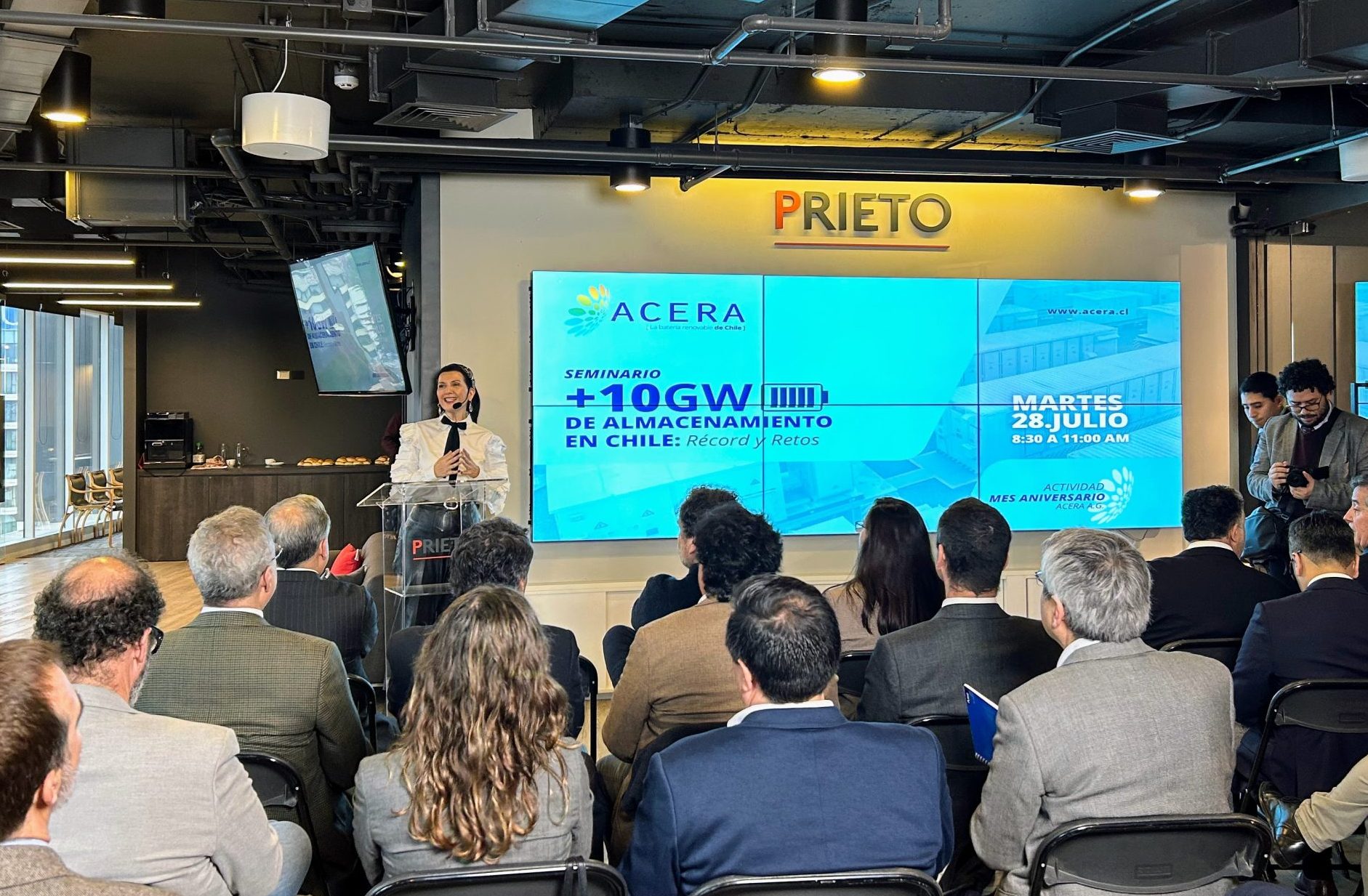
That was the central message from the Chilean Renewable Energy and Storage Association (ACERA) at its recent seminar, More Than 10 GW of Storage in Chile: Records and Challenges. The industry body used the event to present a technical study commissioned from consultancy Vinken, proposing changes to the way storage is scheduled and operated.
The proposals come as Chile’s government is itself updating the regulatory framework for storage. However, the two positions should not be conflated: ACERA is calling for further improvements to the system, while the Ministry of Energy has already introduced regulatory changes designed to formally integrate storage into centralised system operation.

Storage moves from emerging technology to system infrastructure
Chile’s storage pipeline reflects the rapid transformation of its electricity system. According to ACERA, more than 10 GW of storage projects are now either operating, under construction or being developed.
The industry’s argument is that this scale changes the nature of the challenge. Batteries are no longer a marginal technology that can be accommodated within rules designed primarily around conventional generation. Their operation affects how renewable electricity is shifted through the day, how congestion and curtailment are managed, and how the system responds to changing supply and demand.
ACERA President Sergio del Campo described storage as a strategic component of Chile’s electricity system, highlighting its ability to separate the timing of generation and consumption, provide flexibility and stability, reduce exposure to price volatility and facilitate greater integration of renewable generation.
For Chile, this is particularly important as increasing solar and wind output creates periods when renewable electricity is abundant but cannot necessarily be absorbed by demand or the grid.
The industry’s call: modernise how batteries are dispatched
The Vinken study commissioned by ACERA focuses specifically on the procedures used to schedule and operate storage.
Its recommendations include improvements to the calculation of opportunity costs, more frequent intraday scheduling, stronger traceability and auditability of operational decisions, improved dispatch tools and better use of up-to-date information.
ACERA is also calling for the gradual development of mechanisms that more accurately reflect the contribution of storage to the electricity system and for electricity market design to evolve as battery deployment increases.
The underlying argument is straightforward: adding gigawatts of batteries without adapting the operational framework could limit the value that those assets deliver to the wider system.
The association is therefore not simply asking for better commercial conditions for storage developers. Its study explicitly frames the proposed changes around system efficiency, arguing that better storage optimisation should help make greater use of renewable electricity, reduce operating costs and improve security of supply.
The government’s position: storage is already being incorporated into system rules
The Chilean Ministry of Energy’s position is somewhat different from the industry’s call for further reform.
Deputy Energy Minister Hugo Briones, who attended the ACERA seminar, highlighted the country’s renewable energy potential and the importance of storage in integrating renewable generation, reducing curtailment and strengthening the security and flexibility of the electricity system. He also stressed the importance of regulatory certainty and effective tools for integrating storage.
His participation, however, should not be interpreted as an endorsement of every recommendation contained in the ACERA-Vinken study.
The government’s clearest position is found in the regulatory framework it has already adopted.
A major amendment to Chile’s electricity coordination and operation regulations was published in June 2026. Decree 32 formally incorporates energy storage systems into the rules governing coordination and operation of the National Electricity System.
Under the amended framework, the National Electricity Coordinator is required to incorporate storage systems participating in the energy and capacity markets into operational scheduling. The Coordinator is responsible for determining when stored energy should be charged and discharged, with the objective of minimising total operating and outage costs while maintaining system security.
The rules also establish how the opportunity cost of stored energy is to be treated and introduce specific provisions for smaller storage installations that may operate under an autodespatch regime.
This is significant because it demonstrates that the government’s approach is not to leave storage entirely to market participants. Storage is being brought explicitly into the centralised optimisation of the power system.
From regulation to implementation
The regulatory changes also indicate where the government sees the immediate priority: establishing a framework in which storage can participate predictably in system operation.
The amended rules define storage systems as coordinated installations within the national electricity system and require relevant storage facilities to provide the information needed by the Coordinator, including information relating to state of charge and storage limits.
For renewable projects incorporating storage, the rules also establish methodologies for how the generation and storage components can be represented in operational scheduling.
In other words, Chile has moved beyond recognising batteries as a promising technology. Storage now has a defined place within the country’s formal electricity-market and system-operation framework.
Industry says the framework must continue evolving
This is where ACERA’s argument begins.
The association’s study suggests that formal recognition of storage is only the starting point. As the installed fleet grows, the operational framework will need to become more sophisticated.
During the ACERA seminar, participants from the National Electricity Coordinator, the National Energy Commission, ACERA, Prieto Abogados and Synex broadly agreed that the rapid expansion of storage requires continued improvements in scheduling and system operation.
Among the issues raised were the need to accelerate work on a new Technical Standard for Coordination and Operation, increase the frequency of intraday scheduling, improve automation of dispatch tools, strengthen the quality and availability of operational data and make operational processes more traceable and auditable.
The discussion also highlighted a broader concern for investors: predictability.
As battery projects become increasingly dependent on the way the system operator optimises their charging and discharging, uncertainty over operational rules can become an investment issue as well as a technical one.
The next test for Chile’s storage market
Chile therefore finds itself between two stages of its storage development.
The first was about establishing the business case and deploying capacity. The second is about making several gigawatts of storage work efficiently within a power system dominated increasingly by variable renewable generation.
The government has already taken an important step by updating the regulatory framework and explicitly integrating storage into centralised system scheduling.
ACERA’s position is that this process cannot stop there.
Its recommendations point towards a more dynamic electricity market in which batteries can be scheduled more frequently, their opportunity costs can be calculated more effectively and operational decisions can be monitored and audited with greater transparency.
For Chile, the issue is ultimately larger than the economics of individual battery projects. The value of the country’s rapidly expanding storage fleet will depend on how effectively it can absorb surplus renewable generation, shift electricity to periods of higher demand, reduce system costs and provide flexibility when the grid needs it.
With more than 10 GW of storage in the development pipeline, the question is no longer whether batteries will become an important part of Chile’s electricity system. It is whether the country’s market and operating rules can evolve quickly enough to make full use of them.