



Chile’s data-centre market has matured quickly from a handful of facilities to a national cluster of dozens of sites – and that growth is now colliding with questions about energy supply, water and grid planning. A variety of market trackers put the current installed footprint in Chile at roughly 30–37 data centres with nameplate campus power in the low hundreds of MW; market reports and industry databases list ~241 MW–186 MW of known power capacity today and project another ~100–250 MW of new power capacity by 2025–2030.
Location, location, location
Geography matters. Santiago (Quilicura, Huechuraba, Puente Alto, and surrounding communes) is the primary hub, with subsea cable landings at Valparaíso and other coastal nodes strengthening Chile’s value proposition as a Pacific-facing digital gateway. Northern regions such as Antofagasta are also attracting proposals because of abundant renewable power and space for wholesale campuses, while trans-Pacific cable projects (notably Google’s Humboldt cable) will further improve latency and make Chile more attractive to hyperscalers and global cloud customers.
Energy consumption
How much energy do data centres in Chile currently use? Public datasets are fragmentary, but a simple arithmetic bound illustrates the scale: with roughly 241 MW of nameplate data-centre power capacity reported in market databases, continuous full output would equal about 2.11 TWh/year (241 MW × 8,760 hours = 2,111 GWh/year). In practice, IT load factors, PUE and partial phasing mean actual annual consumption is lower today – plausibly 0.8–2.1 TWh/yeardepending on utilisation and cooling efficiency – so Chile’s current data-centre electricity draw is likely in the lower end of that range but is already material for grid and procurement planning. (Calculation: 241 MW × 8,760 hrs = 2,111 GWh = 2.11 TWh.)
Planned development will push those numbers higher. Market reports and company announcements point to dozens of announced or planned projects – estimates range from another ~100–250 MW of new data-centre power capacity by 2025–2030, with some individual campus projects sized at 100 MW+ (often built in phases). If nameplate capacity reaches ~500 MW by 2030 and facilities operate at similar load/PUE profiles, aggregate annual consumption could move into the ~2.5–4.4 TWh/year range – an outcome that would require coordinated increases in firm renewable supply, storage and transmission.
Hyperscaler commitments are a major reason for the accelerated pipeline. Amazon Web Services announced a planned US$4 billion investment to establish an AWS Region in Chile (three availability zones), expected to be operational by late-2026 – an investment that implies multiple data-centre campuses and substantial incremental electricity demand. Google, Microsoft and other cloud providers also operate or are expanding capacity in Chile, and recent deals by private operators (financing rounds for multi-site deployments) underline strong commercial momentum.
Chilean energy generation response
That momentum is already testing the power system.Chile is not the only place where the strain on energy supply can be felt. Some states in the US, some European hubs (e.g. Amsterdam, Dublin) and also Singapore, have placed moratoriums on many new data enter builds in recent years primarily because they lack the power infrastructure to support them.
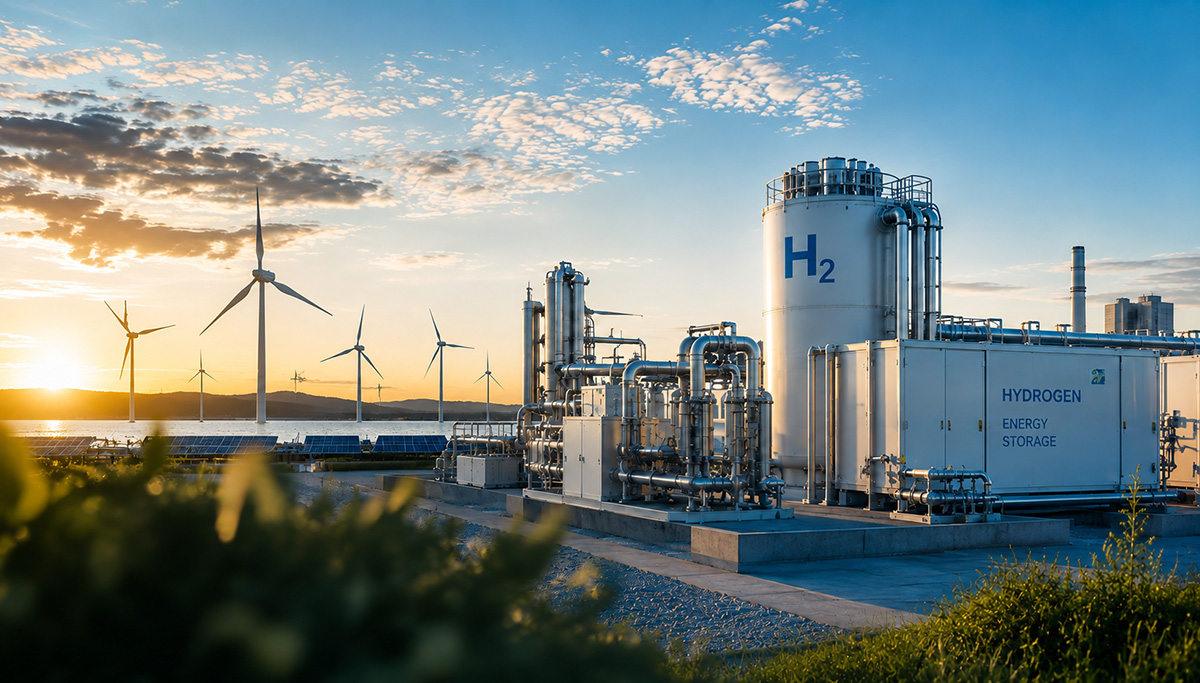
Chilean utilities and grid planners will need to resolve site-level and system-level constraints: delivering contracted, firm power to campuses; upgrading substations and local transmission; and integrating large quantities of renewable energy and battery storage to meet corporate sustainability commitments. Several large campus proposals (for example, a 100 MW Puente Alto campus announced by TECfusions and Baeza Group) are explicitly being positioned near existing substations and transmission corridors – but many such projects hinge on confirmable long-term PPAs or dedicated generation.
Chilean data centres and ESG
Environmental and community issues are front-of-mind. Chile’s long droughts and water stress mean water-intensive cooling strategies face public scrutiny; NGOs and courts have already forced changes to cooling plans for some proposals, and operators increasingly point to air-cooling, evaporative systems with limited water use, desalination, or closed-loop approaches. Policymakers and local communities are pressing for clear water-use disclosures and for assurances that data-centre growth will not compete with municipal or agricultural water needs. Those questions will influence site selection, permitting timelines and reputational risk for hyperscalers.
What are government, utilities and associations saying? The Chilean government (through InvestChile and ministry briefings) is actively courting hyperscaler investment as a national economic win and highlights commitments to renewable sourcing and local jobs; AWS’s investment was publicly welcomed as a major strategic project. Utilities and market analysts emphasize that meeting future demand will require coordinated grid upgrades, additional renewable procurement and possibly targeted storage procurement to provide dispatchable, firm load. Industry trackers and local associations stress the need for transparent planning data (PPA commitments, substation upgrades, water plans) so regulators can sequence transmission and environmental approvals effectively.
Most notable examples
Google operates its first Latin American data center in Quilicura, a municipality located just north of Santiago, Chile. The company has entered into a long-term agreement with AES Chile to supply 440 GWh per year of hybrid energy, combining wind and solar sources, for a duration of 14 years.
ODATA, now operating under Aligned Data Centers, has significantly expanded its footprint in Chile, positioning itself as a key player in the country’s growing digital infrastructure sector. The company launched its second hyperscale data centre, DC ST02, in San Bernardo, a southern municipality of Santiago, in November 2023. ODATA’s total IT capacity in Chile now exceeds 80 MW. The company has also secured a Power Purchase Agreement (PPA) with Atlas Renewable Energy, ensuring that its Chilean operations are powered by 100% renewable energy, aligning with global sustainability goals
Earlier this year Microsoft’s first data centre in Chile begun operating – the largest investment plan in Microsoft’s history in Chile so far. n line with its global sustainability goals, Microsoft has committed to powering the Chile Central region entirely with renewable energy. Through a 15-year Power Purchase Agreement (PPA) with AES Andes, the data centres will utilise energy generated from solar and wind sources.
Equinix has significantly expanded its presence in Chile, establishing itself as a key player in the country’s data center landscape. In 2022, the company acquired four data centres from Entel. This acquisition included three facilities in Santiago – ST1, ST2, and ST3 – and one in Longovilo, a town approximately 108 kilometres southwest of Santiago. These facilities collectively offer over 7.5 MW of IT capacity.
Equinix’s expansion continued with the announcement of a new data center, ST5, in Santiago’s Pudahuel district.
Conclusion
Chile’s data-centre growth is real, quantifiable and poised to rise sharply – driven by hyperscaler regions, large domestic campus projects and improved subsea connectivity. That growth translates into terawatt-hour-scale electricity needs within a decade unless utilisation or efficiency assumptions change materially. Closing the loop between corporate demand, renewable generation, storage, grid upgrades and water management will determine whether Chile can host a sustainable, high-capacity digital ecosystem without undermining other national priorities.