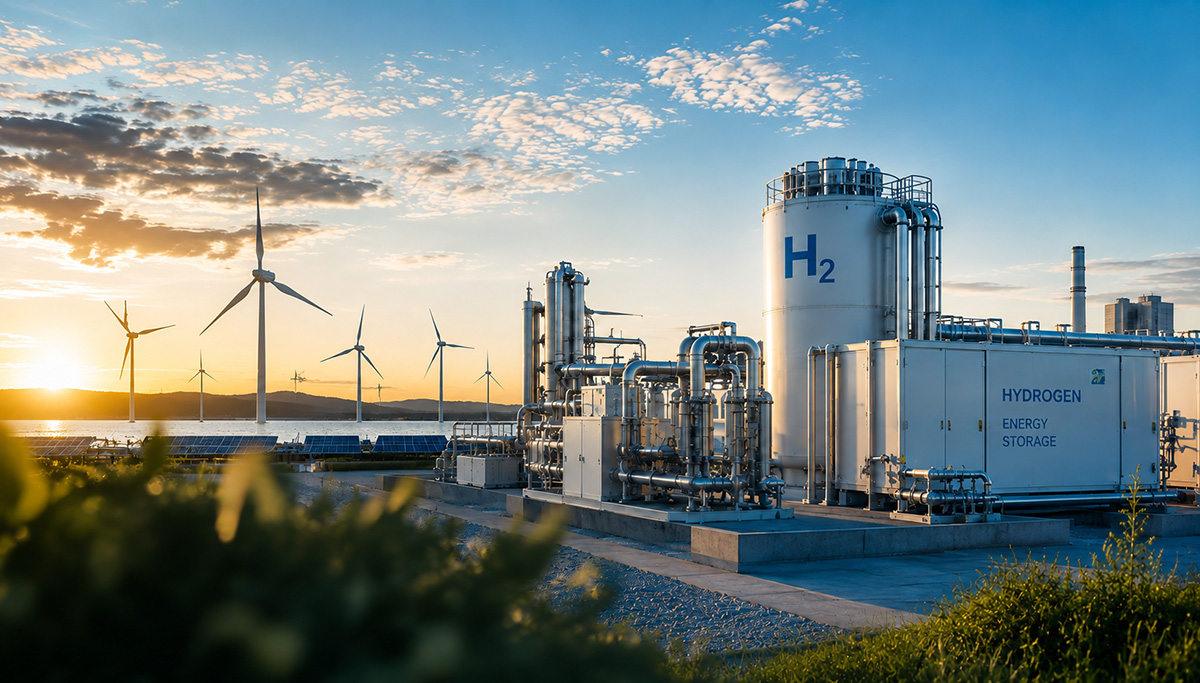



Germany has awarded more than €1.3 billion (£1.1 billion) in subsidies to three major Danish green hydrogen projects, providing a significant boost to cross-border hydrogen trade and reinforcing plans to import renewable hydrogen into Europe’s largest industrial economy.
The funding has been allocated through the European Hydrogen Bank’s (EHB) Auctions-as-a-Service mechanism, which allows EU member states to use the European Commission’s auction platform while providing national financial support. The three successful projects, led by Copenhagen Infrastructure Partners (CIP), European Energy and Everfuel, are expected to collectively produce around 78,000 tonnes of renewable hydrogen annually.
All three developments are expected to begin supplying hydrogen from 2031 via the planned hydrogen interconnector between Denmark and Germany, creating one of Europe’s first dedicated renewable hydrogen supply chains linking production in one country directly to industrial consumers in another.
The largest award was secured by Copenhagen Infrastructure Partners, which received €777 million for a 240MW hydrogen project in Esbjerg. The subsidy equates to approximately €1.70 per kilogram of hydrogen produced. The project forms part of the wider HØST Esbjerg development, which aims to host up to 1GW of electrolysis capacity capable of producing as much as 120,000 tonnes of green hydrogen annually.
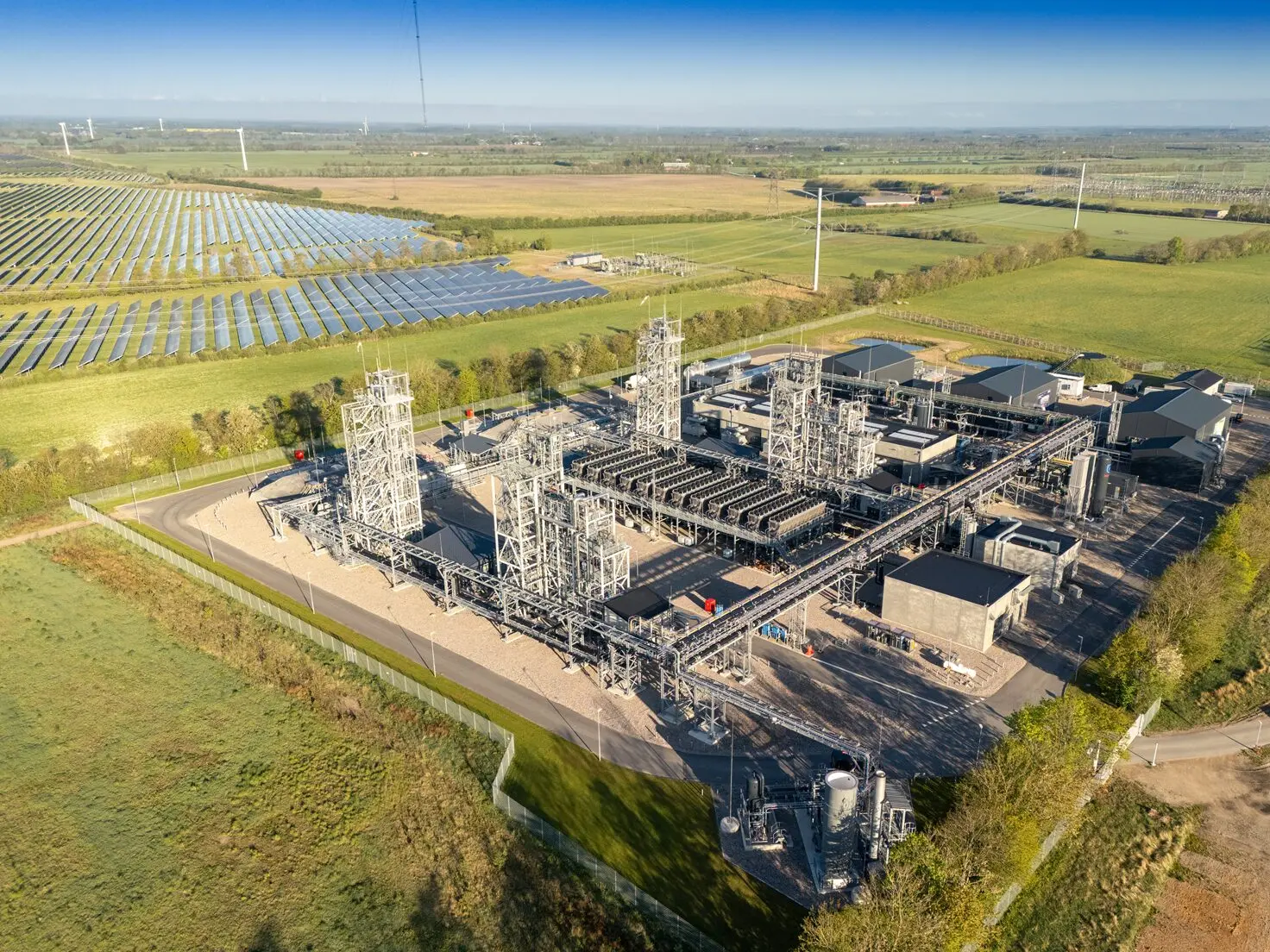
European Energy was awarded up to €228 million to support the construction of an additional 150MW electrolyser at its Kassø facility in southern Denmark. The subsidy corresponds to approximately €1.07 per kilogram of hydrogen produced. The company plans to integrate the new hydrogen production capacity with its existing e-methanol operations, which entered full commercial operation last year.
“We are very pleased with this support awarded by the German Government. The support enables further expansion of hydrogen production connected to Kassø and contributes to strengthening Europe’s renewable fuels infrastructure,” René Alcaraz Frederiksen, Executive Vice President and Head of Power-to-X at European Energy told The Voice of Renewables.
European Energy believes the award strengthens the business case for the planned hydrogen pipeline between Denmark and Germany, with both producers and off-takers demonstrating increasing commitment to the emerging market.
“We, among others, are dedicated to moving forward the green hydrogen industry in Denmark, and we now call on the incoming Danish Government to commit to constructing the hydrogen infrastructure that will transport our products to off-takers in Germany,” Frederiksen added.
Meanwhile, Everfuel secured €244.9 million to support the first 200MW phase of its Project Frigg development in Vejen. At approximately €0.98 per kilogram of hydrogen, the project submitted the lowest successful bid, underlining the increasing competitiveness of large-scale hydrogen developments in Europe. Project Frigg is designed to eventually scale to as much as 2GW of electrolyser capacity and supply industrial customers in Germany through the future hydrogen network.
The awards are strategically important because they directly link hydrogen production capacity with future transport infrastructure. All three projects are expected to rely on the planned Danish-German hydrogen pipeline, which has emerged as one of Europe’s most important proposed hydrogen transport corridors. As a result, the projects not only add substantial production capacity but also provide an early anchor demand case for the wider European Hydrogen Backbone initiative.
For Germany, the scheme reflects growing recognition that domestic hydrogen production alone will not be sufficient to meet future industrial demand. The country increasingly views imported renewable hydrogen as essential to decarbonising sectors such as steel, chemicals, refining, heavy transport and shipping.
European Energy also highlighted growing demand for renewable hydrogen and hydrogen-derived fuels such as e-methanol, particularly in sectors where direct electrification remains challenging. The company pointed to Germany’s renewable fuels policy as a key market driver. Under recently updated regulations, 0.1% of all road transport fuel placed on the German market must be certified as a Renewable Fuel of Non-Biological Origin (RFNBO) from 2026. This requirement is set to increase to 1.5% by 2030 and 10% by 2040.
“By financing hydrogen production in Denmark and implementing ambitious targets for the uptake of green fuels, Germany is leading the way in Europe,” Frederiksen said. “We call on the Danish Government to step up and follow the German example to ensure that green hydrogen can play a crucial role in the green transition.”
The European Hydrogen Bank was established by the European Commission to help close the cost gap between renewable hydrogen production and market demand through competitive auctions and targeted support schemes. The latest awards demonstrate how Europe’s hydrogen sector is beginning to move beyond announcements towards commercially structured projects supported by long-term revenue mechanisms.
Ten-year subsidy agreements are expected to be finalised by October, placing the three Danish developments among the most advanced large-scale hydrogen export projects currently progressing in Northern Europe.
If completed as planned, the projects will serve as a major test case for Europe’s broader hydrogen import strategy and could provide a blueprint for future cross-border renewable hydrogen supply chains across the continent.
European Energy currently operates two Power-to-X facilities in Denmark, including a green hydrogen production facility in Esbjerg and the Kassø e-methanol plant, which it owns jointly with Mitsui & Co. The company also maintains a broad international Power-to-X development portfolio spanning Europe, North America, Brazil and Australia.
EVENT ALERT: