


The EU has made substantial commitments: targets for low-/green hydrogen production and hydrogen consumption (especially in industry), funding instruments (e.g. the Hydrogen Bank), pipelines/infrastructure plans, and import strategies.
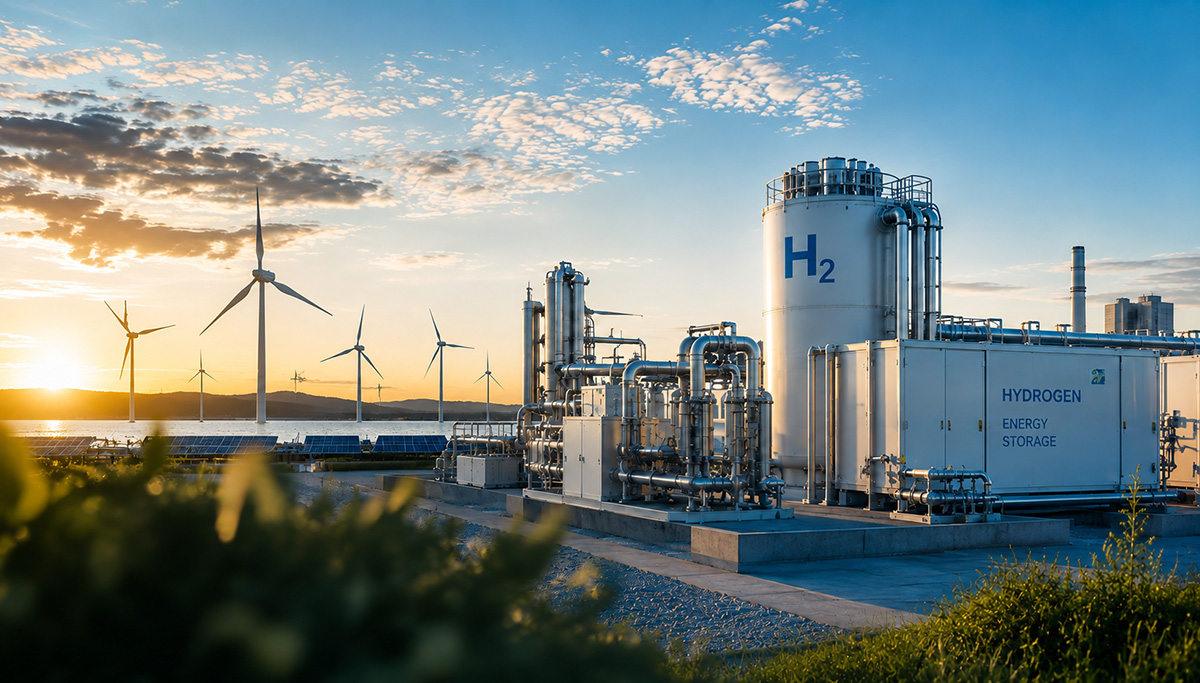
The idea is that hydrogen — ideally green hydrogen (produced using renewable electricity) or low-carbon hydrogen (using carbon capture, etc.) — can replace “grey” hydrogen (from natural gas without CO₂ capture) and fossil-based heat/chemicals in applications that are difficult to electrify directly.
Governments, refiners and steelmakers have publicly signalled huge potential demand — for example, TotalEnergies’ 2023 tender for up to 500,000 tonnes per year of green hydrogen and subsequent commercial deals show how big offtake contracts could anchor supply. At the same time, authoritative analyses have revised near-term production expectations downward because many projects have been cancelled, delayed, or remain only at the concept stage.
Concrete offtake opportunities remain attractive where buyers and producers can align on price, timing and risk allocation. Refiners and chemical plants — current large hydrogen consumers — are actively tendering multi-year supply deals and are therefore natural early buyers. Utilities and independent electrolyser developers are stepping in as sellers, and a few long-term contracts have already been struck that demonstrate a workable commercial model. The RWE–TotalEnergies long-term supply agreement for 30,000 tonnes a year from a German electrolysis project and the Air Products–TotalEnergies deal for refinery hydrogen show that negotiated, system-backed offtakes can close the investment loop when volumes, transport and regulatory support line up.
Europe’s Fragile Hydrogen Market: Dream or Delusion?
In spite or all the above, Europe’s hydrogen market sits at a crossroads: the promise of large industrial decarbonisation is still real, but the pipeline of announced projects is shrinking as market realities bite.
A worrying string of high-profile project withdrawals and pauses underlines the market’s fragility. Large steelmakers and project consortia have recently backtracked: ArcelorMittal cancelled plans to convert two German sites to green-hydrogen steelmaking despite receiving subsidy offers, citing adverse economics and market conditions. Thyssenkrupp publicly paused a major hydrogen supply tender for its Duisburg DRI plant because bidder prices were far above expectations. These reversals turn headline capacity into a reminder that announced projects are not the same as firm, bankable assets.
This shift has been confirmed by analysts. The International Energy Agency cut its 2030 low-emission hydrogen outlook by nearly a quarter in September 2025, citing widespread cancellations and weaker-than-expected firm commitments. Dozens of projects were scaled back, postponed, or dropped across utilities, refiners and steelmakers. Iberdrola reduced its near-term hydrogen ambitions after financing delays, while several consortium-backed projects in Spain, Norway, Germany and the UK were shelved or downsized between mid-2024 and 2025. The trend is broad rather than isolated, showing that the gap between announced ambition and realised capacity is still wide.
Costs still major factor shaping H2 offtake landscape
Why are projects being dropped or delayed? The recurring reasons cluster into a mix of structural and practical challenges. First, renewable electricity and electrolyser costs still make green hydrogen far more expensive than fossil-based hydrogen without subsidies or premium markets. Second, many offtake agreements remain non-binding memoranda of understanding, which lenders view as too weak to support billions in financing. Third, hydrogen transport, storage and permitting processes lag behind developer timetables, creating bottlenecks and raising costs. Finally, inconsistent national schemes and slow rollout of EU-level mechanisms such as contracts for difference or hydrogen corridors make long-term revenue streams uncertain. Even with subsidies on offer, some projects have been abandoned because the residual economics simply did not work.
Notable recent withdrawals and pauses (Europe) — dates and developer reasons:
- ArcelorMittal (Bremen & Eisenhüttenstadt, Germany) — June 2025: ArcelorMittal publicly announced it will not proceed with the previously announced DRI/EAF decarbonisation investments at these sites, turning down roughly €1.3bn of proposed subsidies and citing high energy costs and an insufficiently robust business case.
- Thyssenkrupp Steel (Duisburg hydrogen tender) — March 2025: the company suspended/paused a major hydrogen supply tender after bids came in significantly higher than expected; the pause reflected a mismatch between buyer price targets and supplier economics.
- Iberdrola (scaled ambitions) — 2024–2025: Europe’s large utilities have scaled back or reprioritised some green hydrogen commitments following financing delays and tougher returns, with Iberdrola publicly reducing near-term ambitions.
Portfolio cancellations / pauses across majors and projects — mid-2024 to 2025: reports from Reuters, Hydrogen Insight and sector roundups show multiple projects across Spain, Germany, Norway and the UK were cancelled, postponed or materially downsized, often by energy majors and consortiums.
The way forward
Despite these challenges, concrete opportunities remain, and several major buyers continue to anchor demand. TotalEnergies has signed multiple long-term supply deals and continues to seek volumes for its European refineries. Thyssenkrupp and Salzgitter are pushing forward with decarbonisation pathways, albeit cautiously. BASF has commissioned a 54 MW electrolyser at Ludwigshafen, while Yara has entered long-term agreements for green ammonia and hydrogen-based fertiliser. Other players such as H2 Green Steel, Air Liquide, BP, Repsol and Nouryon are actively developing or consuming hydrogen in industrial clusters. Collectively, European refineries remain the single largest existing hydrogen consumers and therefore the most immediate offtake channel for low-carbon supply.
Looking ahead, the most promising path to revive and scale offtake activity is pragmatic. Producers and buyers must stitch together bankable contracts that share price and volume risk, pair projects with dedicated renewable supply or power-purchase guarantees to stabilise costs, and accelerate permitting while investing in regional hydrogen transport to unlock cluster economics. Where these ingredients already exist — a large anchor buyer, stable policy support, and financed electrolyser capacity — deals are moving forward. Where they do not, projects will likely continue to be postponed or quietly abandoned until costs fall further or governments create clearer frameworks.
For buyers, making offtake contracts financeable requires discipline and structure. Developers and financiers emphasise the need for firm minimum volumes, transparent price formulas with indexed components, long-enough contract tenors, and dedicated renewable supply arrangements. Credit support, regulatory milestones, inflation protection, and clear performance metrics all help lenders gain confidence. Offtake rights linked to hydrogen transport capacity and staged investment linked to project milestones further reduce risks. Such provisions are no longer “nice-to-haves” but essential ingredients in moving hydrogen projects from press release to reality.
The way to bridge the delivery gap
Europe has set itself up with ambitious plans. It has some of the most advanced policy frameworks and boldest industrial targets in the world, but the recent wave of cancellations shows how fragile project pipelines can be without firm commercial underpinnings.
Technically, it can happen: the physics and engineering are largely in place, and many pilot projects are underway. The question is more about delivery: cost, speed, policy, supply chain, infrastructure, and markets.
In spite of the picture pained above, not all is doom and gloom though. As we are preparing to publish this DEEP DIVE Hydrogen article, Austrian government announced announced launching ambitious hydrogen initiative – see detailed information published by The Voice of Renewables:
If industry and policymakers can close the gap with bankable offtakes, predictable regulation and infrastructure build-out, hydrogen demand from steel, refining and chemicals can indeed scale by the 2030s.
Without those steps, the risk is that Europe will continue to lead in announcements but lag in real deployment and, ultimately, go down as a story of ambition tempered by hard economics.
EVENT ALERT: