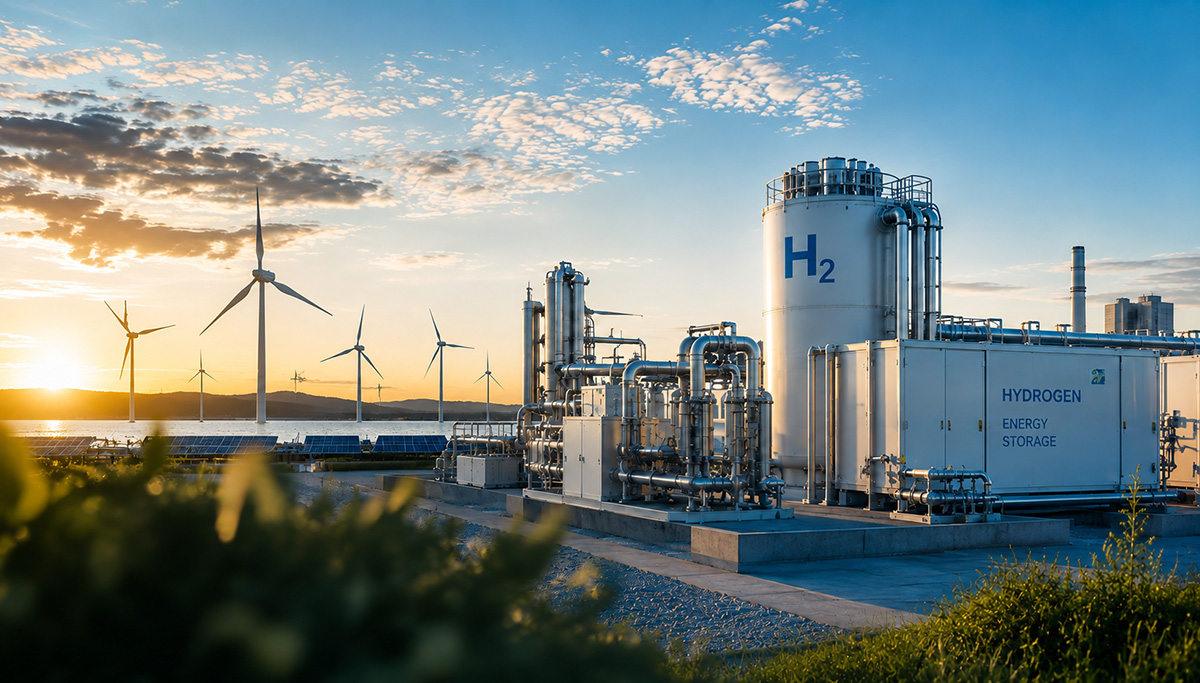




Austria is rolling out a comprehensive hydrogen initiative aimed at securing timely energy supply, creating jobs, and strengthening industrial competitiveness. The initiative focuses on a hydrogen import strategy, new subsidies for electrolysis plants, and the development of storage and pipeline infrastructure, marking the next step toward a climate-resilient, crisis-proof energy future.
“Hydrogen is not just an energy source; it is an economic project for the future. Our import strategy ensures supply security and competitiveness, creates new jobs, and opens markets. At the same time, we are laying the groundwork for tomorrow’s storage and infrastructure, supporting a strong industrial base and a secure energy supply,” said Minister of Economic Affairs Wolfgang Hattmannsdorfer speaking to The Voice of Renewables.
Strengthening Industry and Securing Jobs
Austria’s energy-intensive basic materials industry faces the challenge of decarbonizing production. To meet this, the government combines domestic hydrogen production with secured imports, including:
- Building electrolysis capacities
- Implementing a long-term import strategy
- Developing regulations and financing for pipelines and storage
- Establishing a Southern Hydrogen Corridor as a strategic infrastructure project
Currently, hydrogen-related activities secure approximately 5,800 jobs directly, while a study by the Austrian Federal Economic Chamber (WKO) estimates up to 300,000 indirect jobs. The initiative is expected to further increase employment through new investments, infrastructure expansion, and rising demand for hydrogen technologies.
“We are creating the energy supply of tomorrow today. By promoting plants that convert renewable electricity into hydrogen or synthetic gas, Austria remains independent, competitive, and crisis-proof,” adds Hattmannsdorfer. Hydrogen keeps value in Austria, opens export opportunities, and strengthens the industrial base.
National Hydrogen and Import Strategy
Building on the National Hydrogen Strategy of 2022, the government is now developing a complementary import strategy focusing on supply security, investment protection, and national value creation, bridging the gap between domestic production and future demand.
Regulatory Support
Two new regulations are supporting the initiative:
- Hydrogen Investment Grants Regulation: Providing €20 million in grants for electrolysis plants—the first of its kind in Austria.
- Hydrogen Certification Regulation (WstVO): Ensures legal certainty, aligns with EU requirements, and makes domestic renewable hydrogen eligible for funding and international trade.
Southern Corridor: Austria as a European Hub
The Southern Hydrogen Corridor is a geostrategic project connecting North Africa, Italy, and Austria to Central Europe. Joint agreements with Germany, Italy, Algeria, and Tunisia aim to deliver green hydrogen at industrial scale by 2035. Austria is actively shaping this corridor through:
- Hosting the HyPA annual conference in Vienna on October 22 to discuss next steps with policymakers, industry, and researchers
- A trilateral Austria-Germany-Italy working group meeting on October 23 to coordinate financing, development, and regulation
- Close collaboration with Algeria and Tunisia for future green hydrogen supply
The EU has highlighted the corridor as one of Europe’s most important energy highways. “With the Southern Corridor and clear framework conditions for storage, Austria is not just supporting the energy transition—it is actively shaping it. Our expertise in grid operation, storage, and technology makes us a key European partner,” says Wolfgang Anzengruber, Chairman of the HyPA Advisory Board.