Greece’s transmission network is about to take on more renewable capacity than it has absorbed in the country’s entire history to date, and the state operator responsible for wiring it all together has just put a price tag on the effort. This week IPTO, Greece’s independent power transmission operator, published its updated ten-year network development plan, committing €9 billion through 2035 to connect over 10 GW of new renewable generation. It is, on paper, one of the most ambitious infrastructure commitments the Greek power sector has made in a generation. It is also, on closer reading, a plan built on a demand forecast the operator itself doesn’t fully trust.
The headline number. IPTO’s transmission network already carries 9,837 MW of solar and wind, a figure that has crept up steadily over the past several years as the country’s renewables buildout matured past its early, subsidy-driven phase. What changes now is the scale of what comes next: over 10 GW of additional capacity connected by 2035, on top of 13,228 MW of projects already holding formal connection terms in the pipeline. Taken together, the pipeline and the target imply the network roughly doubling what it currently carries. IPTO has also revised its own investment forecast upward by €2 billion compared with last year’s version of the same plan, with roughly 80% of the total spend front-loaded before 2030 — a sequencing choice that tells its own story about where the operator sees the real bottleneck forming.
Where the money actually goes. The €9 billion isn’t simply the cost of stringing new lines to solar parks. It funds the Great Sea Interconnector linking Greece to Cyprus, upgrades across five major substations, a new ultra-high-voltage hub at Alexandroupolis, island interconnections for the Dodecanese and Northeast Aegean targeted for completion by 2030, and a further set of cross-border lines to Turkey, Albania and Italy scheduled between 2031 and 2033. This is a national-scale rebuild of the backbone infrastructure, not an incremental patch to keep pace with a few large solar tenders.
The gap nobody in the room wants to name. Buried in the plan’s own assumptions is a tension IPTO has been notably candid about: its forecast for 2036 electricity demand — 64 GW — sits well below the 74 GW projected in the government’s own National Energy and Climate Plan. A ten-gigawatt gap between the grid operator’s working assumption and the policy document steering the entire energy transition is not a rounding error. Overbuild against a demand curve that never materialises and the cost lands somewhere — on consumers, on IPTO’s balance sheet, or on the taxpayers behind its capital increases. Underbuild against the government’s more bullish case and Greece is back to the curtailment problem that has already become a familiar headline this year.
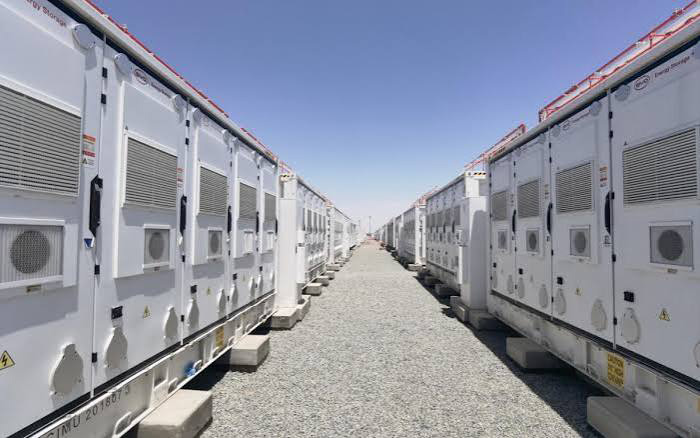
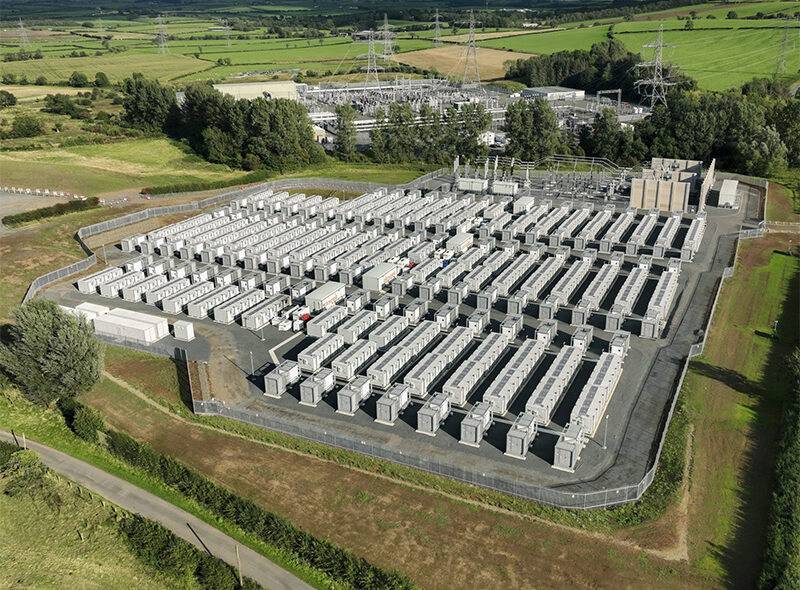
Storage as the pressure valve. That tension is precisely why battery storage keeps climbing the policy agenda. The government has revised its 2030 storage target upward again, to a range of 5–7 GW, from an already-recent 4.3 GW figure — and 1,403 MW/4,439 MWh of that has already secured connection terms. Read plainly, this is less a target than an admission: renewables growth alone was never going to solve Greece’s grid problem. It simply relocates the bottleneck.
What IPTO’s own chief will and won’t promise. IPTO CEO Manos Manousakis has struck a consistent note across the past year: Greece’s power-generation climate targets remain achievable ahead of 2030 “if renewable connections continue” at pace. He has been considerably more guarded about transport, shipping and heavy industry, which he’s said openly will require far more time, capital and social consensus than the electricity sector alone. The grid plan solves for gigawatts. It doesn’t resolve the harder argument underneath it.