



The hydrogen industry has spent much of the past decade focused on production.
Governments have announced ambitious electrolyser deployment targets. Developers have unveiled gigawatt-scale projects. Manufacturers have competed to improve efficiency and reduce costs. Across Europe and beyond, hydrogen has become a central pillar of plans to decarbonise heavy industry, transport and parts of the power sector.
Yet as the industry moves from announcements to deployment, a less visible challenge is coming into sharper focus.
Producing hydrogen is one thing. Storing it, transporting it and using it safely at scale is another entirely.
A new Finnish consortium, MatH2, has been established to tackle precisely this issue. Led by VTT Technical Research Centre of Finland and launched under Wärtsilä’s Wide and Intelligent Sustainable Energy (WISE) programme, the initiative brings together companies and research institutions from across the hydrogen value chain to address one of the industry’s most persistent obstacles: materials reliability.
While the announcement may appear highly technical, the implications extend far beyond engineering laboratories. The ability to develop affordable, durable and hydrogen-compatible materials could play a decisive role in determining how quickly the hydrogen economy develops and whether many projects ultimately prove commercially viable.
Hydrogen’s Cost Problem May Not Be Where Many Think
Much of the public discussion surrounding hydrogen focuses on production costs.
Industry targets are frequently framed around reducing the price of green hydrogen through cheaper renewable electricity, lower electrolyser costs and improved manufacturing scale. While these factors remain important, they represent only part of the challenge.
Hydrogen’s economics do not end at the electrolyser.
Once produced, hydrogen must be compressed, stored, transported, processed and delivered safely to end users. Each of these stages requires specialised infrastructure, and each introduces costs that can significantly affect the final price paid by consumers.
In many cases, these downstream costs represent a substantial portion of the total cost of hydrogen deployment.
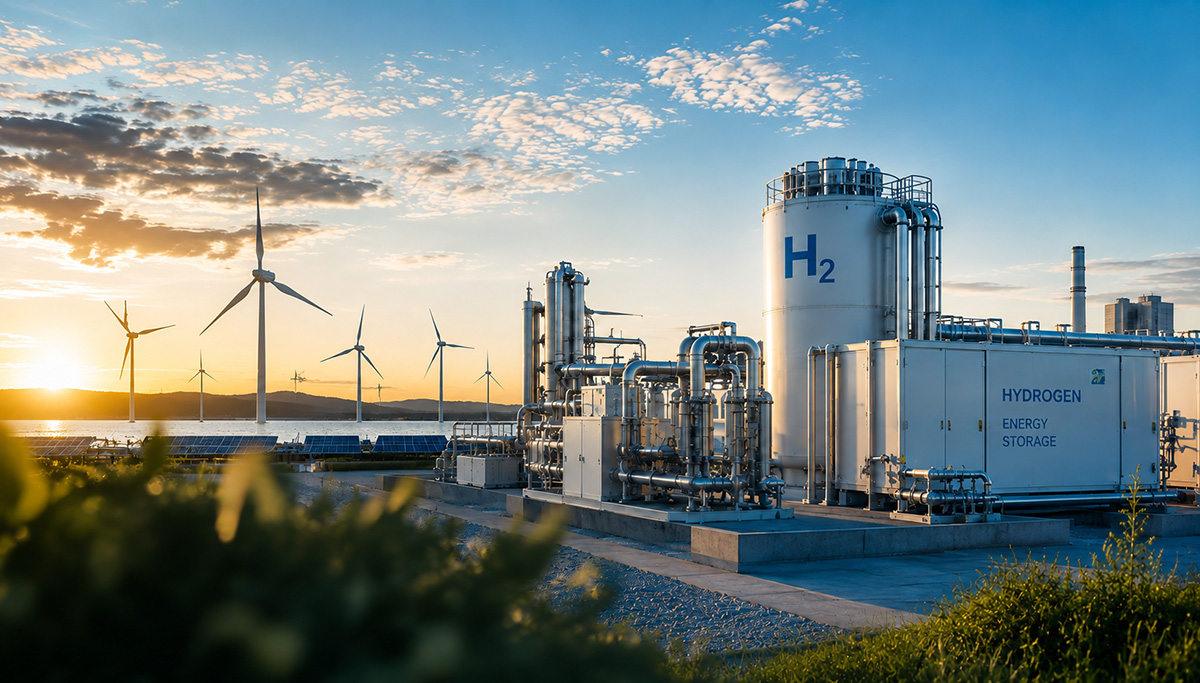
The challenge stems from hydrogen’s unique physical properties. Hydrogen molecules are exceptionally small and can penetrate materials that perform reliably in conventional natural gas applications. Under certain conditions, hydrogen can weaken metals, causing embrittlement, cracking and accelerated degradation over time. Welds, valves, compressors, storage vessels and pipelines can all be affected.
As a result, materials performance has become more than an engineering issue. It is increasingly an economic one.
Every reduction in asset lifespan, every increase in maintenance requirements and every additional inspection programme ultimately adds cost to hydrogen deployment. If the industry cannot solve these challenges efficiently, falling electrolyser costs alone may not be enough to make hydrogen competitive in many applications.
In that sense, the next major breakthrough in hydrogen may come not from electrochemistry but from metallurgy.
The Hydrogen Challenge Nobody Talks About
Hydrogen is often described as a clean, flexible and versatile energy carrier. Those characteristics are not in dispute.
What receives far less attention is the complexity involved in handling hydrogen at industrial scale.
Unlike electricity, hydrogen requires extensive physical infrastructure. Pipelines, storage facilities, compressors, fuelling stations and processing equipment must all operate safely under demanding conditions for decades.
This challenge becomes even more significant as Europe accelerates plans for hydrogen infrastructure.
Across the continent, governments and network operators are advancing proposals for hydrogen corridors, import terminals, industrial clusters and large-scale transport networks designed to move renewable hydrogen between production centres and demand hubs.
These projects are frequently discussed in terms of capacity and investment volumes. Less attention is given to the underlying materials that make such infrastructure possible.
Yet without confidence in long-term reliability, many of these projects will struggle to secure investment and regulatory approval.
The hydrogen economy ultimately depends on millions of individual components performing reliably over decades of operation. The failure of even relatively small components can create significant operational and safety challenges.
This is the problem MatH2 aims to address by developing and validating materials capable of operating reliably in hydrogen environments while remaining commercially competitive.
Can Existing Infrastructure Be Reused?
One of the most important questions facing the European hydrogen sector concerns the future of existing natural gas infrastructure.
Many hydrogen strategies assume that substantial portions of today’s gas networks can be repurposed to transport hydrogen. If achievable, this could significantly reduce costs compared with constructing entirely new infrastructure.
However, the reality is more complex.
The suitability of existing pipelines depends on numerous factors including age, metallurgy, operating pressure, weld quality and the intended hydrogen concentration. Infrastructure that performs adequately with natural gas may not necessarily perform in the same way under hydrogen service.
This uncertainty has major implications for project economics.
If large sections of existing infrastructure require extensive modification or replacement, hydrogen deployment costs could increase substantially. Conversely, if existing assets can be adapted safely and economically, the pace of deployment could accelerate considerably.
Understanding material behaviour is therefore becoming a critical factor in strategic planning.
For infrastructure operators, the question is no longer simply whether hydrogen can be transported. It is whether it can be transported safely, reliably and affordably over decades of continuous operation.
Why Investors Should Care About Metallurgy
Materials science may seem far removed from project finance, but the two are becoming increasingly interconnected.
Investors do not finance technologies. They finance risk.
Before committing capital to large-scale hydrogen projects, lenders and investors require confidence that assets will perform as expected throughout their operational lives. Uncertainty surrounding degradation rates, maintenance requirements and long-term reliability increases project risk and can affect financing terms.
This is particularly important in a sector where many projects already face economic challenges.
Hydrogen infrastructure often requires substantial upfront capital expenditure. Project economics are sensitive to operating costs, asset lifetimes and equipment availability. Even relatively small improvements in reliability can have a meaningful impact on long-term returns.
Reducing uncertainty around materials performance therefore offers benefits that extend far beyond engineering.
Improved durability can lower maintenance costs. Greater reliability can improve asset utilisation. Better performance data can increase confidence among financiers and insurers.
In many cases, solving materials challenges could prove just as important to project bankability as reducing hydrogen production costs.
The Race to Build a Hydrogen-Ready Supply Chain
The launch of MatH2 also reflects a broader shift taking place across the hydrogen sector.
For years, attention focused primarily on producing clean hydrogen. Increasingly, the discussion is moving towards the supply chains required to support large-scale deployment.
The consortium brings together organisations spanning multiple stages of the hydrogen value chain, including materials suppliers, component manufacturers, technology developers and industrial end users. Participants include Neste, SSAB, EOS, Nordic Tank, Teknos, Bumax and SP Stainless, alongside research partners VTT and the University of Oulu.
This type of collaboration is becoming increasingly important.
Hydrogen deployment cannot be achieved through individual technologies alone. Success depends upon the development of integrated industrial ecosystems capable of designing, manufacturing and deploying the infrastructure required to support the sector.
The countries that establish expertise across these supply chains may ultimately capture a significant share of future economic value.
Why Finland Wants to Become a Hydrogen Leader
The consortium also highlights Finland’s growing ambitions within the hydrogen economy.
The country benefits from several advantages that policymakers believe could position it as a major hydrogen producer and technology exporter. These include abundant low-carbon electricity, strong industrial capabilities, advanced engineering expertise and access to biogenic carbon dioxide suitable for the production of synthetic fuels and hydrogen derivatives.
Industry projections suggest hydrogen-related activities could contribute up to €34 billion annually to Finland’s economy by 2035 while supporting tens of thousands of jobs.
However, success will depend on more than renewable electricity generation.
The countries that lead the hydrogen economy are unlikely to be those that simply produce hydrogen. They are more likely to be those that develop the technologies, components, intellectual property and industrial capabilities that underpin the entire value chain.
From that perspective, initiatives such as MatH2 represent not only research programmes but industrial strategy.
Building the Foundations of a Hydrogen Economy
Earlier this month, Wärtsilä announced the validation of a large-scale engine capable of operating entirely on hydrogen under real grid conditions in Spain. The demonstration attracted attention because it showcased progress in hydrogen-powered electricity generation.
The launch of MatH2 focuses on a different but equally important part of the challenge.
The hydrogen economy will not be built solely through larger electrolysers or more ambitious production targets. It will also depend upon the less visible technologies that enable hydrogen to move safely and reliably through infrastructure networks, industrial facilities and energy systems.
That may not generate the same headlines as a new hydrogen production project.
Yet if hydrogen is to become a mainstream component of future energy systems, solving the materials challenge could prove every bit as important as producing the fuel itself.
For all the attention paid to hydrogen production, the industry’s future may ultimately depend on something far more fundamental: whether the materials underpinning the hydrogen economy can withstand the demands placed upon them for decades to come.
Author: Derek Michalski, Editor