



A market defined by ambition rather than execution
For much of the past decade, hydrogen has been discussed globally as a decarbonisation solution searching for scale. By 2026, India has emerged as one of the most closely watched markets in this transition — not because it is already a hydrogen leader, but because it is attempting to become one.
India is making one of the world’s most ambitious bets on the future of green hydrogen. Whether those ambitions translate into operating industrial scale remains one of the defining questions facing the global hydrogen economy.
The National Green Hydrogen Mission sets a target of 5 million tonnes per year of green hydrogen production by 2030, supported by policy incentives for electrolyser manufacturing, production-linked support schemes, and the creation of domestic demand across fertilisers, refining and industrial applications. The objective is explicitly structural: to build an integrated hydrogen ecosystem rather than a series of isolated pilot projects.
However, by 2026, the gap between ambition and execution remains pronounced. Commissioned production capacity is still measured in low thousands of tonnes per year, while most announced projects remain in early development stages — pre-financial close, memorandum-of-understanding status, or awaiting firm offtake agreements.
This divergence between policy ambition and industrial delivery defines India’s hydrogen trajectory more than any headline target.
Hydrogen’s cost advantage is real — but incomplete
India’s hydrogen narrative is often anchored in a structural advantage: highly competitive renewable energy costs.
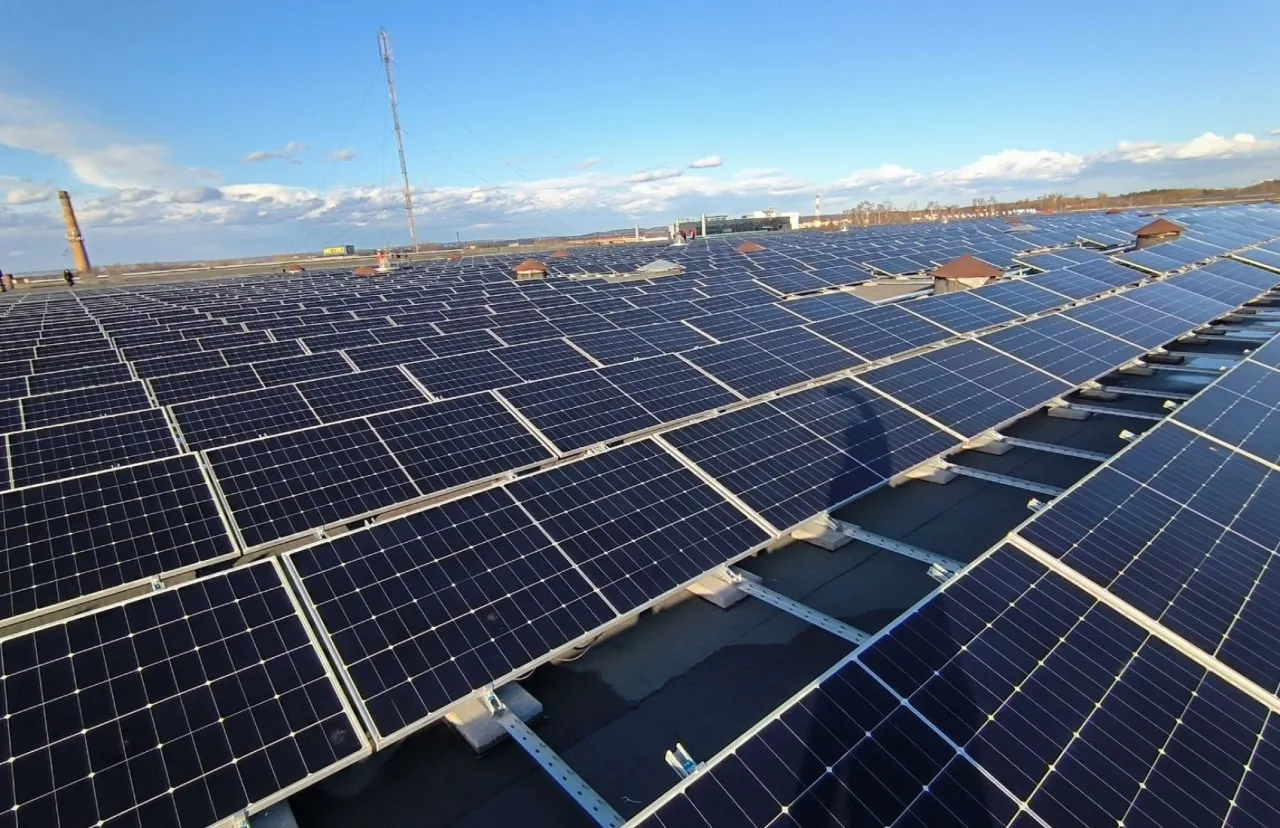
This advantage is real. India’s solar and wind resource base supports some of the lowest renewable generation costs globally, and the country continues to expand large-scale hybrid renewable capacity. These fundamentals provide a strong theoretical basis for low-cost green hydrogen production.
However, hydrogen economics extend well beyond electricity input costs.
Once produced, hydrogen must be compressed, stored, transported, or converted into derivatives such as ammonia before reaching end use. Each stage introduces additional system costs that materially influence delivered hydrogen pricing.
Electrolyser capital intensity remains high, utilisation rates are still evolving, and financing conditions for early-stage hydrogen infrastructure remain comparatively expensive. Water availability constraints in certain regions and transmission bottlenecks further complicate project design.
As a result, India’s competitiveness will depend not only on renewable generation costs, but on whether it can build integrated infrastructure and secure long-term industrial demand at scale.
Production cost leadership alone is not sufficient to determine success.
The companies shaping India’s hydrogen build-out
India’s hydrogen landscape is being driven not by a single national champion but by multiple parallel industrial strategies.
Reliance Industries is developing an integrated clean energy platform spanning solar manufacturing, battery storage, electrolyser production and green hydrogen. The strategy is closely linked to its Jamnagar refining complex and broader ambition to build a vertically integrated energy transition ecosystem with global export potential.
The Adani Group is pursuing a comparable infrastructure-led model, combining renewable generation, port infrastructure, logistics capabilities and export-oriented hydrogen and ammonia production. Hydrogen in this context is positioned as part of a wider energy trade system rather than a standalone commodity.
State-owned enterprises remain central to early domestic demand formation. NTPC, Indian Oil Corporation, Bharat Petroleum and Hindustan Petroleum are focusing on hydrogen integration through refinery decarbonisation and fertiliser-linked ammonia substitution. These sectors represent the most immediate and structurally anchored demand base.
Alongside these incumbents, developers such as ACME Group, AM Green, Greenko, ReNew and JSW Energy are targeting export-oriented green ammonia and industrial decarbonisation opportunities, where long-term offtake agreements are becoming a prerequisite for project progression.
A key shift in 2026 is that project viability is increasingly determined by contracted demand rather than announced capacity. This reflects a transition from ambition-led expansion to demand-anchored investment.
India in a global hydrogen context
India’s hydrogen strategy is unfolding alongside parallel global approaches that differ sharply in structure, maturity and execution speed.
China is currently the most advanced large-scale hydrogen market, having moved beyond pilot deployment into early industrialisation. It dominates global electrolyser manufacturing capacity and is rapidly integrating hydrogen into refining, chemicals and heavy industry clusters. Its model is increasingly industrial rather than policy-led, with hydrogen linked directly to manufacturing competitiveness.
Europe represents the most policy-intensive but execution-constrained market. Despite highly ambitious decarbonisation frameworks and hydrogen infrastructure plans, deployment has lagged significantly behind targets. Permitting delays, weak offtake structures and industrial contraction pressures have slowed project realisation, creating a widening gap between strategic ambition and operational delivery.
The United States is driven primarily by incentive design, particularly through the Inflation Reduction Act. This has generated a large pipeline of proposed hydrogen projects, but also introduced sensitivity to regulatory interpretation, policy stability and long-term offtake certainty. As a result, financial attractiveness does not always translate into execution certainty.
The Middle East is pursuing an export-led hydrogen model, leveraging extremely low-cost solar resources and large-scale infrastructure capability. Countries such as Saudi Arabia, the UAE and Oman are positioning themselves as future exporters of hydrogen-derived ammonia, but success depends heavily on the emergence of reliable international demand.
Within this global landscape, India occupies a hybrid position. It combines policy ambition comparable to Europe, industrial scale comparable to China’s early transition phase, and export aspirations similar to the Middle East — but remains earlier in converting these elements into operational projects.
Unlike China, India does not yet have a fully mature electrolyser manufacturing ecosystem at scale. Unlike Europe, it is not yet facing binding industrial decline pressures that force hydrogen demand creation. And unlike the Middle East, its export infrastructure remains in development rather than fully integrated.
Its defining characteristic is therefore not leadership in any single dimension, but the simultaneous presence of all critical ingredients — industrial demand, renewable potential and policy alignment — without full system integration.
Early signs of progress in India’s hydrogen transition
While India’s hydrogen economy remains in its early execution phase, there are already measurable indicators that the sector is moving beyond policy intent into initial deployment and system build-out. These are not yet signs of a mature market, but they represent important inflection points in industrial capability, investment direction and infrastructure preparation.
One of the most significant developments is the commissioning of early green hydrogen production facilities at industrial scale in the refinery and fertiliser-linked segments. These projects, while still small in global terms, mark the first shift from demonstration-scale electrolysis to continuous industrial operation. They provide the operational experience required to move towards larger commercial deployment, particularly in sectors where hydrogen demand already exists.
A second area of progress is the rapid emergence of large integrated renewable-to-hydrogen project pipelines led by major industrial groups. Companies such as Reliance Industries and the Adani Group have moved beyond conceptual announcements towards structured clean energy investment platforms that include electrolysers, renewable generation and downstream hydrogen or ammonia production. While many of these projects remain in development, their scale and vertical integration signal a shift in corporate strategy towards full-chain hydrogen systems rather than isolated assets.
A third milestone is the increasing number of binding or semi-binding offtake agreements for green ammonia. These contracts, particularly those linked to fertiliser imports and industrial buyers in Europe and Asia, are critical because they convert hydrogen from a speculative production target into a contracted commodity flow. Although volumes remain limited, the structure of these agreements reflects an emerging market mechanism for risk-sharing between producers and buyers.
India has also made progress in policy architecture compared with most emerging hydrogen markets. The National Green Hydrogen Mission has established not only production targets but also support mechanisms for electrolyser manufacturing, pilot projects, and demand creation in fertiliser, refining and industrial sectors. Importantly, the policy framework explicitly links hydrogen development to energy security and import substitution rather than purely climate objectives, which strengthens its long-term industrial relevance.
In parallel, early hydrogen transport and industrial clustering initiatives are beginning to take shape. These include planning for hydrogen hubs, port integration for ammonia exports, and feasibility studies for future pipeline infrastructure. While still at an early stage, these developments indicate that infrastructure thinking is now being integrated into hydrogen planning rather than being treated as a secondary consideration.
Finally, India has established one of the most active ecosystems for electrolyser and green hydrogen technology collaboration among emerging markets. Domestic conglomerates are increasingly partnering with international technology providers to accelerate capability transfer, particularly in electrolysis systems, storage solutions and ammonia synthesis technologies.
Taken together, these developments do not yet represent a mature hydrogen economy. However, they do indicate that India has moved into a phase where projects, contracts and infrastructure planning are beginning to align — albeit unevenly — around a coherent industrial direction.
The defining question is no longer whether India will participate in the hydrogen economy, but whether these early signals of progress can be converted into sustained, large-scale deployment before the end of the decade.
Where hydrogen demand in India will actually come from
The companies best positioned to succeed will not necessarily be those with the largest announced capacity today, but those that secure long-term demand. In India, hydrogen demand will not emerge evenly across the economy. Instead, it will be concentrated in a small number of industrial sectors where hydrogen is already used or structurally required.
The most immediate and systemically important demand base is fertiliser production. India is one of the world’s largest consumers of ammonia-based fertilisers, and this demand is deeply embedded in agricultural policy and food security systems. Today, this ammonia is overwhelmingly produced from fossil fuels. Replacing it with green hydrogen represents the clearest pathway for early-scale hydrogen deployment. By the early 2030s, fertilisers are expected to account for the largest share of hydrogen demand in India, potentially around 35–50% of total consumption.
Refining is the second major anchor demand sector. Indian refineries already consume significant volumes of hydrogen for desulphurisation and fuel upgrading. This creates a direct substitution opportunity for green hydrogen without requiring entirely new end-use infrastructure. Refining is expected to represent roughly 20–30% of early hydrogen demand, particularly as state-owned refiners begin integrating decarbonisation targets into operational planning.
Beyond these two core sectors, a more fragmented industrial cluster is expected to develop across chemicals, methanol, ammonia derivatives and industrial feedstocks. While more diverse and less concentrated, this segment could account for 10–20% of demand as industrial decarbonisation pressures increase and export-oriented chemical production expands.
Steel is widely viewed as a long-term structural opportunity, but its near-term role remains constrained. Hydrogen-based direct reduced iron technologies are still cost-intensive and early in commercial deployment. As a result, meaningful steel-related hydrogen demand is more likely to emerge post-2030, although the long-term scale potential is significant given India’s expanding steel capacity.
A further dimension sits outside domestic consumption entirely: green ammonia exports. In this model, hydrogen is embedded in ammonia molecules and exported to international markets, particularly in Europe and East Asia. These flows are not traditional domestic demand, but they are expected to play a material role in supporting project economics, particularly for large-scale export-oriented developments.
Taken together, this creates a highly concentrated demand structure: fertilisers and refining form the base, chemicals and steel provide medium-term expansion, and ammonia exports act as a parallel external demand channel.
The implication is structural. In India’s hydrogen economy, demand is not emerging as a consequence of supply expansion. It is the precondition for it. Projects without secured offtake agreements in fertilisers, refining or export markets will remain exposed to financing and execution risk regardless of scale.
The gap between announced capacity and operational reality
A defining feature of India’s hydrogen sector is the persistent gap between announced capacity and operational deployment.
While planned hydrogen projects collectively exceed the 2030 policy target in headline terms, only a small fraction has reached commissioning or advanced financial stages. The majority remain in early development, awaiting final investment decisions, infrastructure readiness or binding offtake agreements.
This distinction is critical.
Announced capacity reflects strategic intent. Operational capacity reflects industrial reality.
The trajectory between the two will determine whether India achieves its stated hydrogen ambitions on schedule or experiences a more gradual build-out extending into the early 2030s.
This does not weaken the policy framework, but it does align India with a global hydrogen trend: deployment consistently lags behind early policy expectations across all major markets.
Infrastructure remains the binding constraint
Hydrogen production alone does not constitute a functioning market.
Large-scale deployment requires pipelines, storage systems, port infrastructure, export terminals, industrial hubs and logistics networks capable of operating safely and continuously over long durations.
India has begun early-stage planning for hydrogen transport systems, industrial clusters and export infrastructure. However, physical build-out remains limited relative to the scale of announced production ambitions.
This creates a familiar structural challenge: production capacity can be announced rapidly, but infrastructure development is slow, capital intensive and operationally complex.
As in other hydrogen markets, infrastructure timing is likely to determine deployment pace more than production ambition.
Can India achieve its hydrogen targets?
India’s 2030 hydrogen ambitions remain among the most aggressive globally. Whether they are achieved will depend less on policy intent and more on execution over the next three to five years.
Current deployment levels indicate that full achievement of the 5 million tonne target by 2030 will be challenging. A more realistic outcome is gradual scaling through the late 2020s, with meaningful industrial-scale impact emerging in the early 2030s.
Should this be interpreted as failure? Not necessarily. Hydrogen has rarely moved at the pace of policy timelines, and global deployment has consistently lagged behind initial expectations.
This reflects a broader structural feature of the hydrogen economy, where scaling depends on complex interactions between infrastructure readiness, financing conditions, long-term offtake agreements and industrial adoption. Slower deployment often reflects system constraints rather than policy weakness.
What matters is not only whether India meets its formal target, but whether it builds the institutional, industrial and contractual foundations required for sustained hydrogen scaling beyond 2030.
On that measure, progress is evident, but the sector remains in an early execution phase.
Looking beyond 2030
India’s hydrogen sector is unlikely to evolve in a linear trajectory.
Green ammonia is expected to lead early commercialisation, supported by fertiliser demand and emerging export markets. Refining and industrial hydrogen use will form the next layer of growth. Steel, shipping fuels and broader industrial decarbonisation are likely to become more significant in the 2030s.
The companies most likely to succeed will be those that secure long-term demand, integrate across the value chain and manage infrastructure complexity effectively, rather than those with the largest announced capacity alone.
India has the policy framework, industrial base and renewable resource potential to become one of the most important hydrogen markets globally.
Whether it becomes a true global hydrogen leader will depend not on ambition, but on execution — and on the speed at which announced projects are converted into bankable, operating industrial assets supported by real demand.
That transition is now underway, but it is still in its early stages.
Author: Derek Michalski, Editor