Lithuania is re-examining its nuclear future via the deployment of small modular reactors (SMRs) and advanced fast reactor technologies, in a move driven by increasing energy demand, the need for diversification away from fossil fuels, and ambitions for greater energy security and sustainability. Key players in this emerging strategy are the Ministry of Energy, the Ignalina Nuclear Power Plant (INPP), and Newcleo, a European nuclear technology development firm.
On 9 July 2025, in Rome (on the eve of the Ukraine Recovery Conference), INPP and Newcleo signed a Memorandum of Understanding (MoU) to study the feasibility of bringing Newcleo’s lead-cooled fast reactor technology to Lithuania.
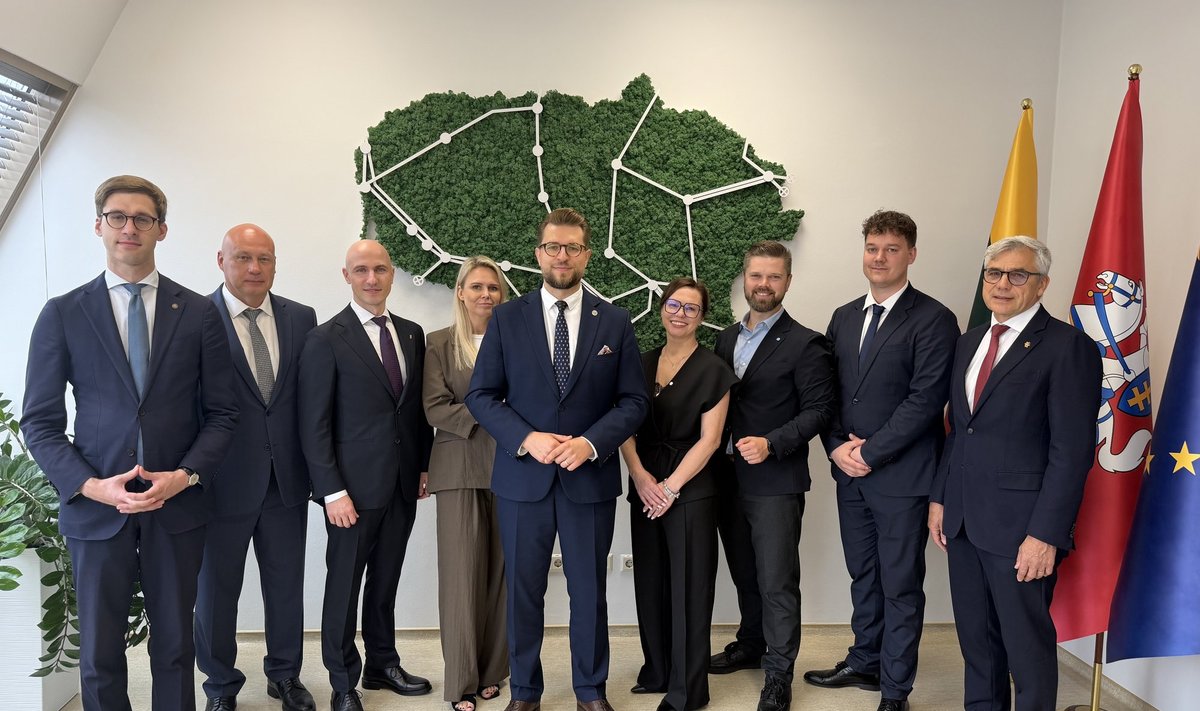
At the signing, present were: Stefano Buono, CEO of Newcleo, who emphasised that the technology under consideration permits the utilisation of recycled nuclear fuel, thus offering a more sustainable path for waste management, Linas Baužys, Director General of INPP, who stressed that while much of INPP’s current work is in decommissioning the old reactors, the plant retains significant technical and safety expertise, which could be repurposed for new reactor technology and Žygimantas Vaičiūnas, Lithuania’s Minister of Energy, expressing that although implementation is a slow process, Lithuania must “not miss the opportunity” to assess these advanced technologies.
What the Technology Offers: SMRs & Fast Reactors
The technology Newcleo proposes is a lead-cooled fast reactor (sometimes referred to under its LFR-AS-200 development) that can use spent nuclear (or used) fuel and reduce the burden of waste.
The feasibility studies under the MoU are to cover:
- Site selection and evaluation for reactor deployment.
- How to reprocess or utilise Lithuania’s inventory of spent nuclear fuel.
- Possible industrial applications beyond just electricity generation — for example hydrogen or ammonia production.
- The development of a local supply chain to support SMR deployment and ancillary services.
Strategic Context & Timing
This exploration is anchored in Lithuania’s National Energy Independence Strategy (approved in 2024), which lays out projections for rapidly increasing electricity demand — potentially more than tripling from ~24 TWh in 2030 to ~74 TWh by 2050.
Key timelines include:
- A decision on whether to proceed with SMRs is targeted for 2028.
- The first nuclear facility (presumably smaller-scale or SMR type) is envisaged to be operational by 2038, with additional capacity by 2050.
The Role of INPP & Regulatory
INPP is central not just in capacity and infrastructure but in know-how. Despite having decommissioned its two RBMK reactors by 2009 as part of EU accession conditions, INPP still retains technical, regulatory, decommissioning, and safety expertise.
A working group under the Ministry of Energy has been established, which includes INPP, safety authorities (like the State Nuclear Energy Safety Inspectorate), scientific institutions, and energy companies. Its role is to perform detailed assessments, involve public consultation, and produce reports and proposals.
Also relevant is Lithuania’s experience with radioactive waste management, including plans (or already initiated) for a deep geological repository for long-lived waste. This background gives Lithuania a stronger foundation for considering SMRs that produce or can use recycled/legacy nuclear fuel.
Challenges and Considerations
The reintroduction of nuclear power in Lithuania is laden with both strategic promise and significant hurdles. Regulatory compliance stands out as a core challenge: small modular reactors (SMRs) and advanced fast reactors must align not only with the strict nuclear frameworks of the EU and IAEA but also with Lithuania’s domestic legislation, which may need extensive reform. Financing adds another layer of complexity, as capital costs are high and extend far beyond construction to include licensing, safety infrastructure, decommissioning and long-term waste management. Public perception could prove pivotal: while recent surveys show cautious support for advanced nuclear solutions, memories of Ignalina’s closure still shape national attitudes, making transparent public dialogue essential. Equally pressing is the question of feasibility: a 2038 commissioning date appears ambitious, requiring seamless execution of environmental assessments, safety reviews, site approvals and the creation of resilient supply chains. Integrating SMRs into a grid increasingly dominated by wind and solar also presents technical and cost-competitiveness challenges.
What’s Next and What to Watch
Lithuania’s next steps will define whether nuclear regains a place in its energy strategy. A ministerial working group will be central in identifying potential sites, designing a regulatory pathway and structuring industry partnerships, notably with Newcleo. Early progress will be measured by the launch of pilot projects or demonstration reactors, which would signal the move from vision to implementation. Financing will remain a litmus test: EU-level funding mechanisms, bilateral support from partners such as the United States and France, and private capital will all need to be mobilised. Nuclear legacy management—particularly the safe handling of spent fuel and the advancement of deep geological repositories—will be another crucial marker, with advanced fast reactor designs offering a potential route to recycle and reduce waste. Ultimately, the political climate and outcomes of public consultation will determine whether nuclear energy can secure both social licence and parliamentary support. If Lithuania succeeds, it could position itself as a case study for how smaller EU member states integrate SMRs into a renewables-heavy energy mix, setting a precedent for regional energy security and decarbonisation.