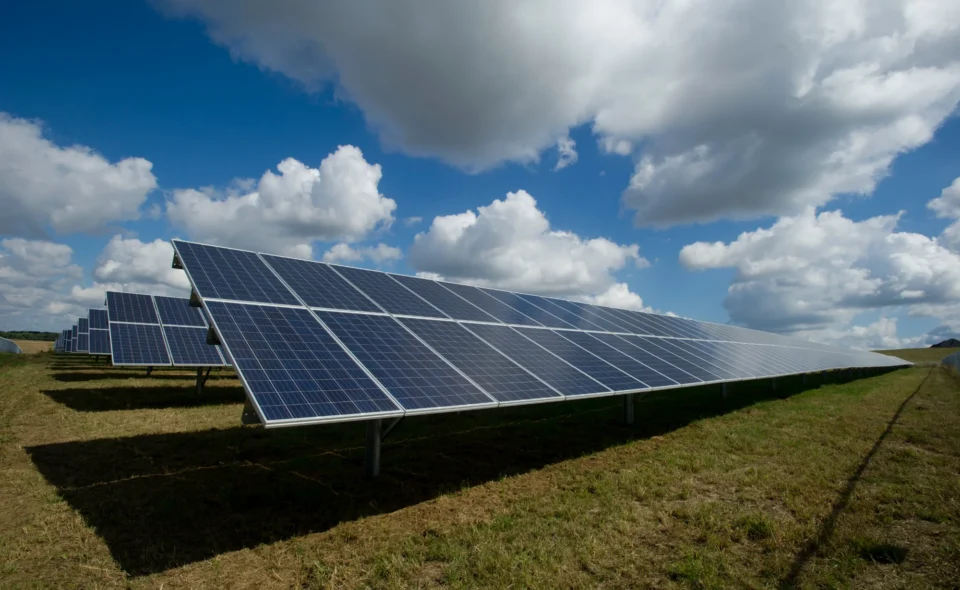
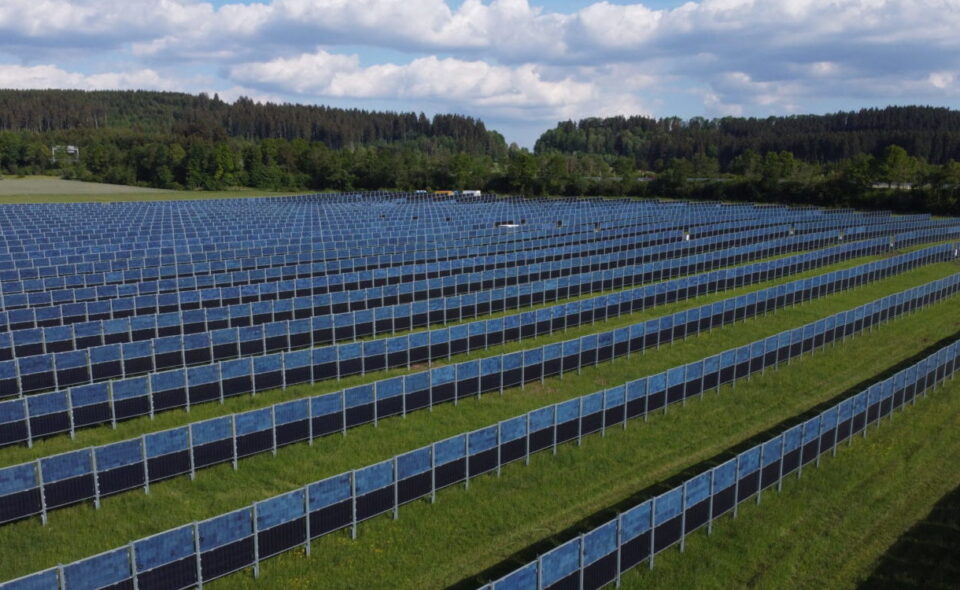
The off-grid solar-and-battery microgrid built to power Red Sea Global’s flagship tourism destination on Saudi Arabia’s west coast has reached full commercial operation, according to pv magazine, nearly five years after the engineering contract for it was signed. The completed system pairs 358MWac of solar generation with 1,225.4MWh of battery storage and 112.5MW of back-up engines, running entirely independent of Saudi Arabia’s national grid — a scale that has already earned it a Guinness World Record and coverage as the largest facility of its kind anywhere.
What’s less discussed is who actually built it, how long it took to get here, and what it says that this particular piece of the Red Sea Project has reached completion at the same time reporting suggests the resort development it exists to serve is being pared back.
A five-company chain, and one name nobody recognises
The commercial structure behind the microgrid runs through several layers. Red Sea Global — formerly The Red Sea Development Company, and wholly owned by Saudi Arabia’s Public Investment Fund — is the destination’s developer and the utilities’ eventual owner. In 2021, a consortium led by ACWA Power, alongside SPIC Huanghe Hydropower Development Company and Saudi Tabreed, won a 25-year public-private partnership to design, build, operate and hand back the destination’s entire utilities infrastructure, power included. That consortium then contracted PowerChina subsidiary SEPCOIII as EPC contractor for the power plant itself, with Huawei supplying inverters and its Smart String battery energy storage system under a contract reported at the time at roughly 1,300MWh, and Longi supplying the solar modules.
The Guinness World Records entry itself credits none of the above by name. The certified record — 1,125.18MWh, achieved in May 2025 — is registered to Shandong Tiejun Electric Power Engineering, a Chinese contractor that appears to have handled installation work on site and whose other Saudi projects (a substation at the Rabigh 3 desalination plant, among others) rarely make it into English-language coverage at all. It’s a reminder that the companies whose names end up on a press release and the companies that physically assemble a record-setting facility are often not the same ones.
Financing that outran the resorts it was meant to serve
The utilities consortium closed $1.302 billion in senior debt for the project in February 2022, drawn from seven Saudi and regional banks — Al Rajhi Bank, APICORP, Banque Saudi Fransi, Riyad Bank, Saudi British Bank, Saudi National Bank and Standard Chartered — denominated in a mix of dollars and riyal. That financing closed roughly a month after Red Sea Global’s own separate financing of $3.76 billion for the wider destination, and the company has since returned to Saudi banks for a further $3.76 billion in green financing as recently as May 2025, according to reporting on the project’s current status.
That sequence of financings has, on the evidence so far, insulated the energy infrastructure from the difficulties reported elsewhere in the destination. Multiple outlets reported in February 2026 that Red Sea Global had paused construction on Phase Two of the project — the tranche of resorts beyond the first wave already built — with company insiders citing operating costs that had come to exceed revenue, alongside softer-than-expected demand from the ultra-wealthy travellers the pricing was built around. Red Sea Global itself denied any downscaling. Independent of which account is more accurate, the publicly available numbers are stark against the destination’s own original ambition: against a target of 50 resorts across the Red Sea Project alone (and 81 combined with the neighbouring AMAALA destination) by 2030, only around ten resorts were open as of early 2026, with occupancy at some described in reporting as sparse.
An energy asset built for a scale the resort side hasn’t reached yet
None of this makes the microgrid itself less real, or less technically significant — an off-grid system supplying reliable, dispatchable power at this scale to remote, isolated islands and desalination and cooling loads is a genuine engineering achievement, whichever contractor’s name ends up on the record certificate. But it does raise a question that coverage of the “world’s largest” milestone has mostly skipped past: a 358MW, 1,225MWh microgrid was sized for a destination of up to 50 hotels and roughly 1,000 residential units running at full occupancy. Whether that capacity is efficiently used, under-used, or eventually grown into, depends entirely on how the resort side of the same project resolves the financial reassessment it appears to be going through — a question the utilities consortium’s 25-year contract term gives it a long time to find out the answer to.