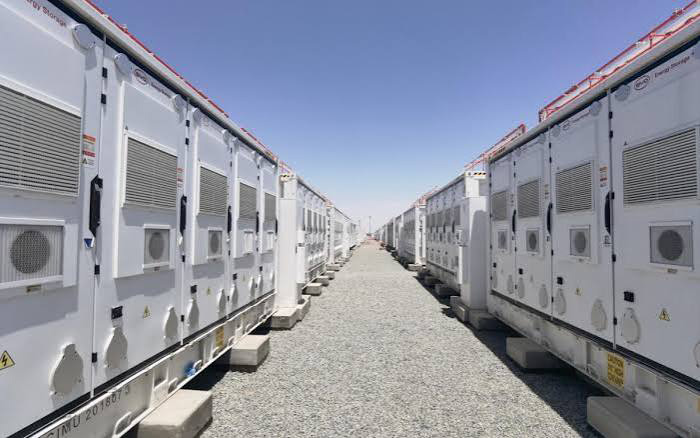
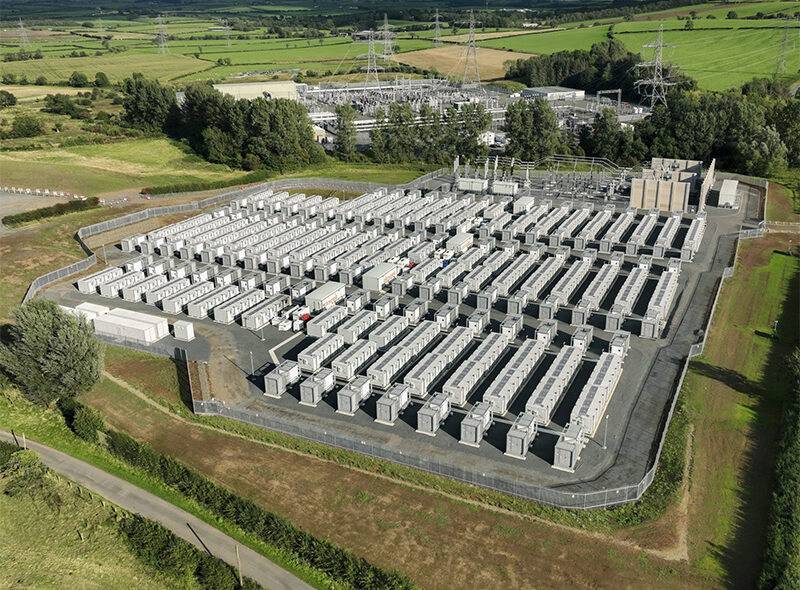
Tsirguliina is a village of a few hundred people in southern Estonia, close to the Latvian border. If its backers are right, it will have the largest battery in the Nordic and Baltic region by the end of 2027.
Taaleri Energia, the Helsinki-based renewables fund manager, announced on 23 September 2026 that its SolarWind III fund has invested in the Raudsepa battery energy storage system (BESS). The 192 MW/420 MWh project is about 50 km south of Tartu. Construction starts this month, and the plant is due to begin operating in November 2027. Taaleri owns the project with an unnamed co-investor and with KJK Fund III, which KJK Capital manages. The size of the investment has not been disclosed.
“When completed, Raudsepa will be the largest battery energy storage system in the Nordics and the Baltics,” Markus Mustakallio, investment director at KJK Capital mentioned in an interview with The Voice of Renewables.
Who is building what
Raudsepa was developed by Evecon, one of the Baltic region’s more active renewables developers, together with the French power producer Corsica Sole. The two already work together in Estonia. With the investment manager Mirova, they run the Baltic Storage Platform, which has opened two 100 MW/200 MWh batteries: Hertz 1 in Kiisa in February 2026 and Hertz 2 in Aruküla in July. This time the developers have passed the project on to financial investors instead of keeping it.
The Estonian contractor Smartecon, part of Verston Group, will build the plant on a turnkey basis. LG Energy Solution will supply the battery systems and Power Electronics will supply the inverters, which Taaleri points out are made in Europe. The project includes a new 330 kV substation to connect it to the transmission grid. “We are responsible for the completion of the entire battery park, from design to commissioning,” Magno Kure, CEO of Smartecon told The Voice of Renewables.
Why Estonia, and why now
Taaleri is clear about how the battery will make money. It will trade across several markets, earning from swings in electricity exchange prices and from selling services on reserve markets.
“This investment is the SolarWind III fund’s first energy storage system in Estonia, and it reflects our strong confidence in the market,” said Ville Rimali, investment director for energy storage at Taaleri Energia. “Strong electricity price volatility and the gradual phase-out of oil-based power generation make Estonia an attractive investment destination for energy storage systems.”
The oil-based generation he means is Estonia’s oil-shale fleet. It has provided firm capacity for decades and is now being gradually wound down. Wind and solar output is growing at the same time. Since the Baltic states left the Russian-controlled BRELL system and synchronised with continental Europe in February 2025, the region has also had to provide its own balancing reserves. Big price swings and a real need for fast balancing capacity are exactly what battery investors look for.
That also explains why the market is filling up so fast. On top of the two Hertz batteries, Enery started building a €150 million, 650 MWh storage complex across three Estonian counties in May 2026, and said it would double the country’s storage capacity. Raudsepa adds another 420 MWh. The fund managers arriving now are betting that trading revenues will hold up as more batteries compete for the same balancing services.
A Baltic habit for Taaleri
Raudsepa is part of a wider push by Taaleri into the region. “Raudsepa is Taaleri Energia’s fifth investment in the Baltics,” said João Neto, investment director at Taaleri Energia. SolarWind III, Taaleri’s sixth renewables fund, closed with €630 million of commitments, €74 million of which are co-investment commitments. It invests in onshore wind, solar and storage across the Nordics, the Baltics, Poland, south-east Europe and Spain, and has already backed a 112 MW wind project in Latvia.
The big question for Raudsepa is timing. By November 2027 Estonia will have far more battery storage than it did when Hertz 1 opened, and price spreads may well be narrower. If the oil-shale plants retire on schedule and new wind farms come online as planned, there should still be plenty of volatility to trade. If not, the region’s largest battery could end up fighting for revenue in a crowded market.