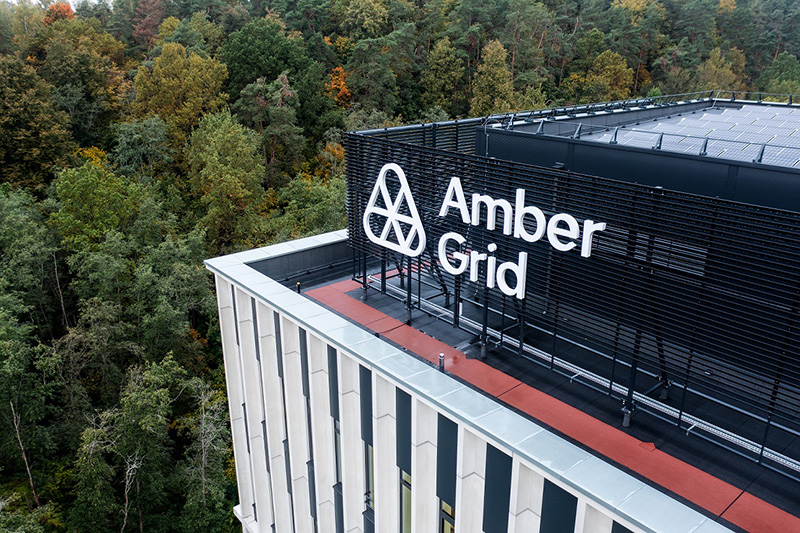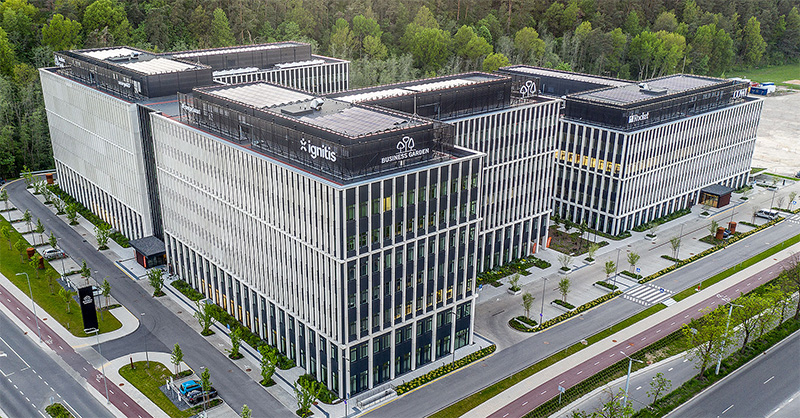
Ignitis Group, the Lithuanian energy conglomerate whose shareholders include the country’s Finance Ministry, is replacing nearly all of its senior leadership within about a year. The chief executive of its largest subsidiary, ESO, resigned this month after a storm crippled the power grid. The parent company’s own chief executive departs in February under a legal term limit. And Ignitis grupė’s five-member management board, the executive body the CEO chairs, is being replaced through a search that started in January.
ESO’s board accepted the resignation of chief executive Renaldas Radvila on September 10. His last day is September 30. Audrius Ruseckas, head of the distribution operator’s finance and administration service, becomes interim CEO on October 1 while the board searches for a permanent replacement.
A storm, then an apology
A storm hit Lithuania on August 22, cutting power to more than 268,000 customers. Parts of the network stayed disrupted for close to three weeks. Ignitis grupė, ESO’s parent, called the scale of the outages unacceptable, told ESO to radically increase its recovery speed, and opened an internal audit of the response.
Radvila said the decision to resign was not the easy option. “The decision I made was not because it was simpler,” he said, adding that his departure would not by itself restore power across thousands of kilometers of damaged lines. He said some customers had waited too long after the storm, not only for electricity but for a straight answer on when it would return, as restoration estimates kept slipping while “people’s refrigerators, water pumps and farms could not operate.” He apologized.
Radvila had said earlier he would judge his own responsibility once every household had power restored. ESO had already invested in more generators, undergrounded cable and cleared trees along lines after a comparable storm in 2024, he noted. Those measures were not enough this time.
A term limit, not a scandal
Ignitis grupė’s own chief executive, Darius Maikštėnas, is also leaving, for a reason unconnected to the storm and set months before it happened. Lithuanian law caps the head of a state-linked company at two consecutive terms. Maikštėnas joined the group in 2018 and is finishing his second five-year term, which ends February 28, 2027.
The board opened the search for his successor in June 2026, an eight-month runway it described as following international best practice for executive succession. Applications closed June 30. The next chief executive will serve five years, needs seven to ten years of senior executive experience including at least three running a large international organization, and will be paid between €21,600 and €25,000 gross a month.
A board rebuilt in the shadow of a wind farm
The change with the least public attention affects the most people: Ignitis grupė’s entire five-member management board, the executive body Maikštėnas chairs, is being replaced. That board was elected in February 2022 to a four-year term due to expire February 17, 2026. Its mandate was extended to March 25, 2026 to give recruitment firm Pedersen & Partners time to run a full search; applications closed January 5, 2026.
The search follows more than a year of political pressure over Ignitis grupė’s roughly €3 billion, 700-megawatt offshore wind project in the Baltic Sea, whose commercial start date has slipped from an original 2030 target toward a possible 2035. Then-Prime Minister Gintautas Paluckas and the Presidential Office criticized the group’s leadership over the delay in spring 2025. Then-Finance Minister Rimantas Šadžius, representing the ministry’s stake in the company, said at the time that weighing the leadership’s accountability for the project was the supervisory board’s job, not his.
What’s still unresolved
By the time Maikštėnas’s term ends, Ignitis Group will likely have a new chief executive at ESO, a new management board at the parent company and a new group chief executive, all appointed within roughly twelve months. Radvila’s exit was forced by an acute failure. Maikštėnas’s was fixed by statute years before anyone could have predicted a record storm. The board’s turnover follows a governance timetable that predates this year’s crisis, even if the wind farm dispute gave shareholders reason to want new faces in those seats.
ESO has not named a permanent successor to Radvila. Ignitis grupė has not named finalists for either the group chief executive role or the new management board.