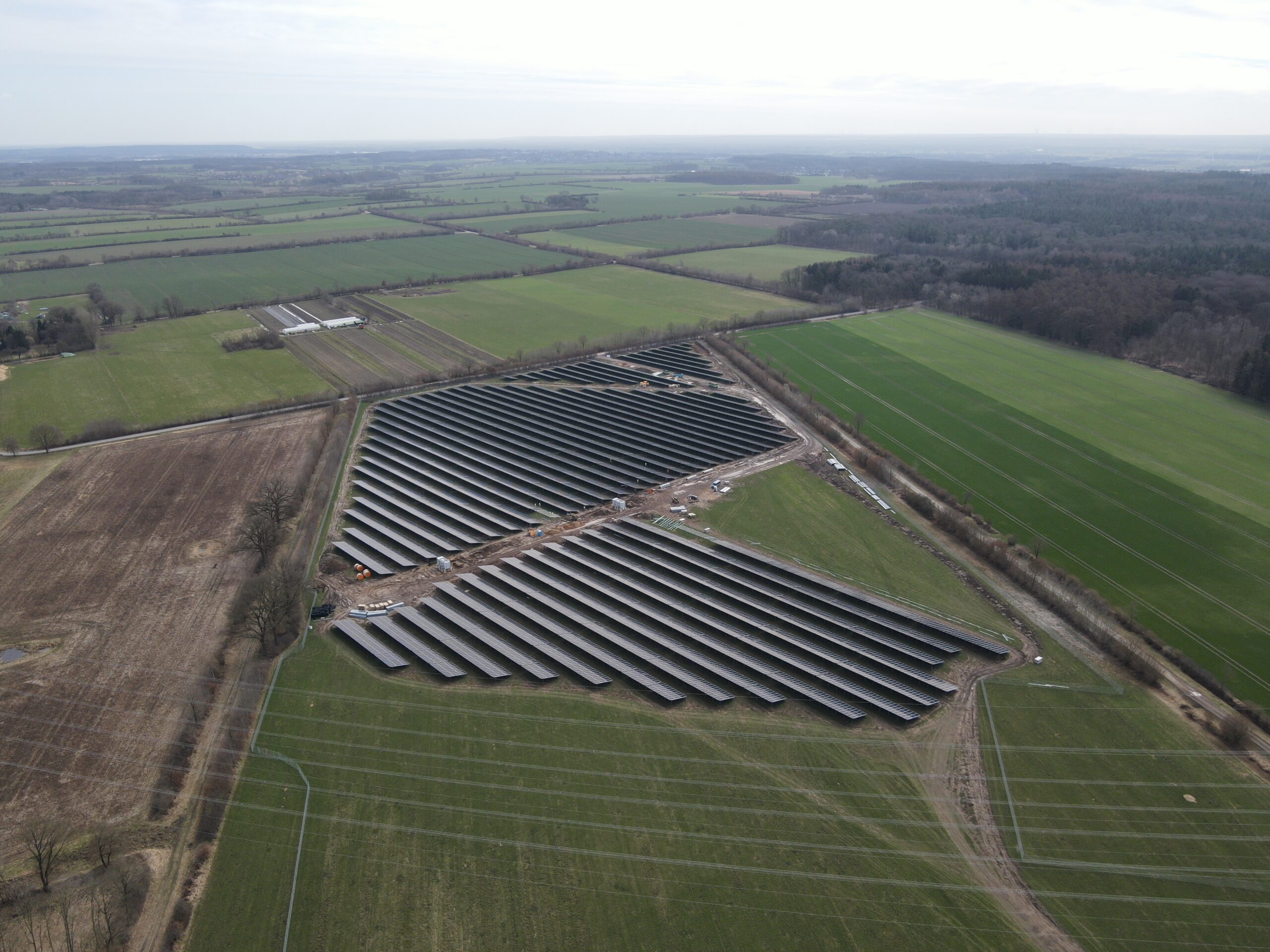


When constructing the large-scale Juliusburg/Krukow solar park in Germany, Vattenfall is cutting CO₂ emissions across the construction phase and supply chain by 67% through the use of low-emission steel from Swedish producer SSAB.
While solar power already plays a major role in climate protection in Germany, the emissions associated with building solar infrastructure have often received less attention. Vattenfall’s strategy is therefore to develop solar and wind assets using materials with the lowest possible carbon footprint, addressing emissions across the entire lifecycle rather than solely during electricity generation.
At the Juliusburg/Krukow project, low-emission steel is being used for the first time in the Krukow section of the site for the mounting structures supporting the solar modules. The steel, produced by SSAB from nearly 100% recycled scrap, significantly reduces its embedded carbon compared with conventional steel. SSAB Zero™ achieves a 67% lower CO₂ footprint than standard steel products.
“The electricity generated from this solar farm will help reduce Germany’s dependence on imported fossil fuels. But for us fossil freedom does not end with electricity generation – it starts right at the beginning of the supply chain. That is why we are pleased to take this pioneering step together with our partner SSAB, using low-emission steel for the substructures. By leading the way as a company, we support the long-term societal goal of becoming fossil free,” said Claus Wattendrup, Head of Solar & Batteries at Vattenfall.
“This project demonstrates that when clean energy generation such as solar power is combined with low-emission materials, the climate impact is reduced across the entire value chain. With SSAB Zero™, we are delivering decarbonised steel with the same performance and quality as conventional steel. Vattenfall’s decision to use it in this solar park is an important example of how ambitious customers can help scale solutions that reduce emissions and build demand for cleaner materials,” Matts Nilsson, VP & Head of Sales, SSAB Europe told The Voice of Renewables.
The Juliusburg/Krukow solar park is located in the district of Herzogtum Lauenburg in the German state of Schleswig-Holstein, close to the municipalities of Juliusburg and Krukow, from which it takes its name. With a nominal capacity of 80 MWp, it is expected to generate approximately 120 GWh of fossil-free electricity annually. The site covers around 74 hectares.
On the Krukow section of the project, Vattenfall is using low-emission steel for the photovoltaic mounting structures supplied by SSAB. Compared with conventional steel, this approach reduces CO₂ emissions across construction and the supply chain by 67%, lowering emissions from approximately 460 tonnes of CO₂ to around 153 tonnes.