



European hydrogen strategy has entered a phase where ambition is no longer the binding constraint. Execution is. Across industrial clusters, refinery operators and utilities are now confronting the less elegant question of whether early hydrogen projects can transition from demonstration-scale installations into economically coherent, system-integrated assets.
It is against this backdrop that discussions between BP and Spanish energy company Iberdrola on expanding green hydrogen production at the Castellón refinery in Spain should be read. The significance is not in the announcement itself, but in what it signals: a potential second stage in refinery-linked hydrogen deployment, where initial pilot capacity is tested against the realities of scale, power supply, and industrial demand.
The Castellón site already sits within the first wave of European refinery decarbonisation efforts, where hydrogen is not an emerging commodity but an embedded process input. Refineries are among the largest consumers of hydrogen in the industrial system, traditionally supplied through steam methane reforming and therefore tightly linked to fossil gas economics and emissions intensity. The substitution of this “grey” hydrogen with electrolytic production represents one of the most direct decarbonisation levers available to the downstream sector.
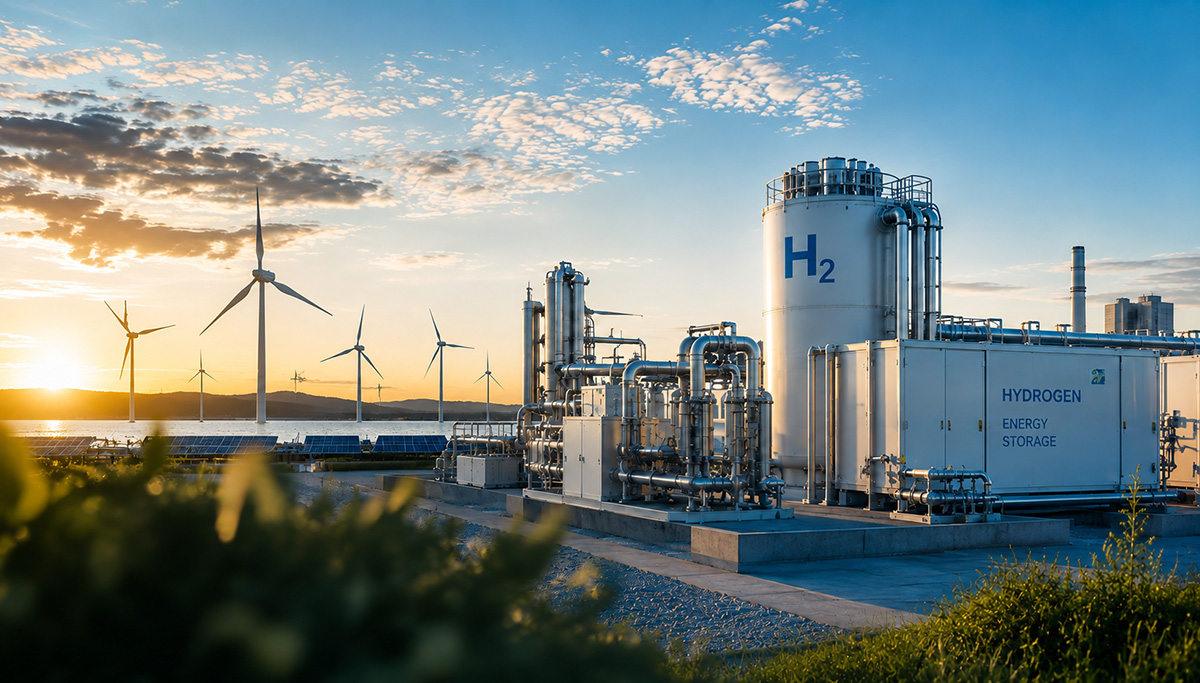
In its initial configuration, the Castellón project has been widely understood as a mid-scale electrolyser deployment—on the order of tens of megawatts, typically cited around 25 MW—integrated with renewable electricity sourcing. This structure reflects the prevailing early-stage model: localised production, limited transport complexity, and a defined industrial off-taker. In other words, a system designed for controllability rather than optimisation at scale.
The reported discussions on expansion therefore raise a different set of questions. Scaling electrolysis is not a linear extension of first-phase projects. It introduces structural constraints that are often underestimated in early policy narratives: electricity procurement at scale, grid interaction under rising renewable penetration, electrolyser utilisation rates under variable power supply, and the increasingly material cost of firming renewable output for continuous industrial demand.
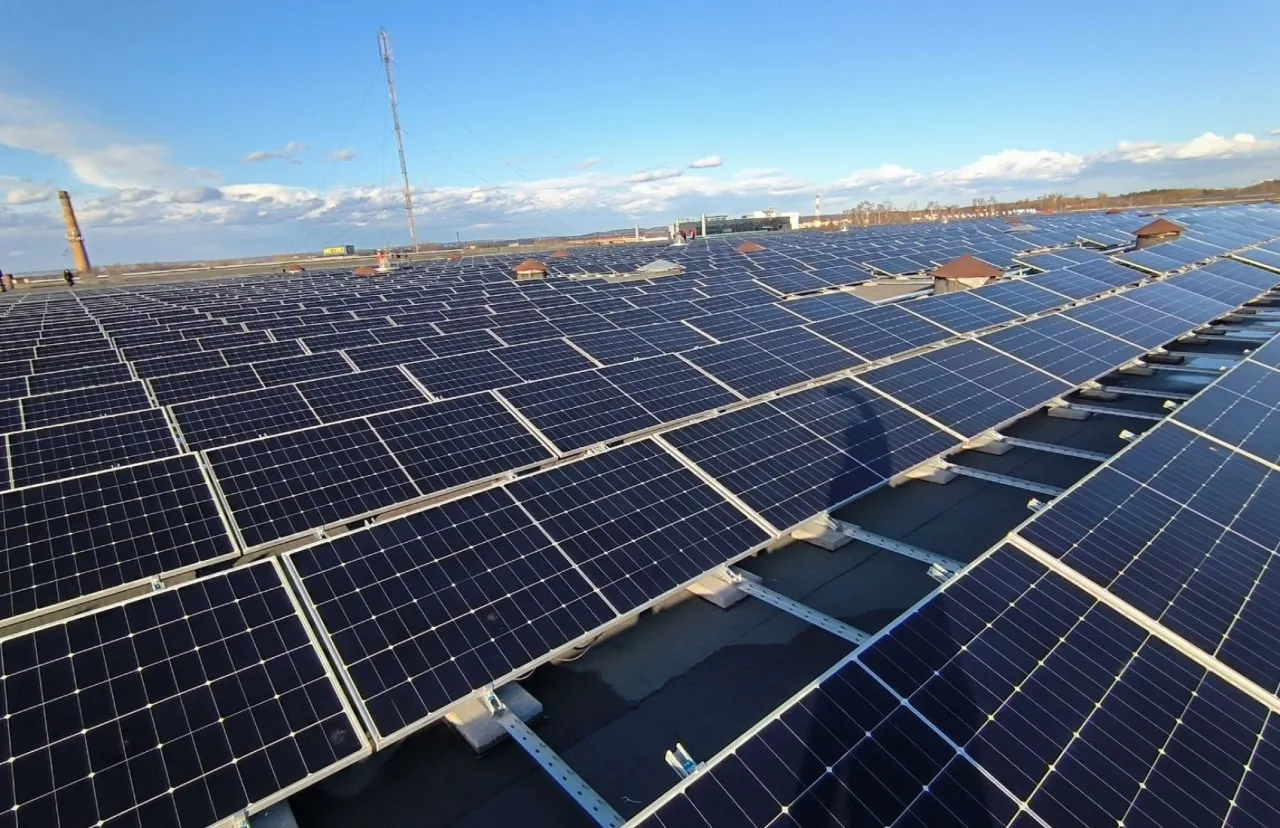
In Spain, these constraints intersect with one of Europe’s most aggressive renewable expansion profiles. The Iberian Peninsula is simultaneously a surplus renewable generation zone and a structurally constrained grid system. This combination creates both opportunity and friction. On the one hand, curtailment risk and midday solar oversupply can support low marginal-cost hydrogen production. On the other, transmission bottlenecks and regional congestion complicate the assumption that renewable electricity can simply be “allocated” to hydrogen at scale without system impacts.
From BP’s perspective, refinery-linked hydrogen represents one of the few near-term industrial decarbonisation pathways with a clearly identifiable demand sink. Unlike mobility or long-distance energy storage applications, refinery hydrogen demand is continuous, process-bound, and already internalised within operational cost structures. However, replacing grey hydrogen with green hydrogen does not remove the underlying economic sensitivity to energy input prices; it merely relocates it upstream into electricity procurement and infrastructure design.
For Iberdrola, the logic is different but complementary. As a large renewable generator and infrastructure developer, green hydrogen offers a potential route to monetise surplus generation and expand its role beyond power markets into industrial molecule supply. Yet this transition also exposes a central tension in the current hydrogen economy: whether renewable developers become energy suppliers of last resort for industrial decarbonisation, or whether hydrogen evolves into a standalone market with its own pricing and risk structure.
The Castellón expansion discussion therefore sits at the intersection of two strategic trajectories. The first is the gradual decarbonisation of European refining, where hydrogen substitution is becoming less optional as carbon costs tighten. The second is the search for scalable demand anchors that can justify large electrolyser build-out beyond pilot or subsidy-dependent phases.
But the gap between these trajectories remains significant. Current green hydrogen economics are still highly sensitive to electricity price volatility, capital cost assumptions, and utilisation factors that are often optimistic in early-stage modelling. Even in favourable renewable geographies, full-load equivalent operation of electrolysers is not guaranteed without either dedicated renewable assets, grid flexibility, or explicit subsidy structures. This raises the question of whether refinery-linked projects are genuine stepping stones to scale, or structurally constrained early deployments that risk plateauing once initial decarbonisation targets are met.
There is also a broader system-level issue that Castellón exemplifies. European hydrogen policy has, in many cases, been designed around volumetric targets rather than demand-quality alignment. Installed capacity announcements continue to outpace verified offtake commitments, creating a pipeline that is ambitious on paper but uneven in real system readiness. The risk is not that hydrogen fails to deploy, but that it deploys unevenly – concentrated in industrial clusters where policy, infrastructure, and corporate strategy happen to align, rather than where system efficiency is highest.
Within this context, refinery-based hydrogen projects occupy a particular niche. They are neither speculative nor fully mature. Instead, they function as transitional anchors: technically straightforward relative to more complex hydrogen applications, yet economically and systemically constrained by their dependence on large-scale renewable electricity integration.
Whether Castellón becomes a template for broader replication or remains a carefully bounded industrial decarbonisation case study will depend less on the electrolyser itself and more on what surrounds it: grid reinforcement, long-term renewable contracting structures, and the willingness of both industrial and utility actors to absorb the residual risk of a market that is still defining its own boundaries.
For now, the significance of the BP–Iberdrola discussions lies in their timing. They are occurring at precisely the point where hydrogen is shifting from conceptual feasibility to infrastructure reality – and where the difference between expansion and overstatement is becoming increasingly difficult to ignore.