Hungary’s Ministry of Economy and Energy opened applications on 4 September 2026 for a national wind power tender covering approximately 700 MW across nine grid-connection points in six districts, with bids due by 30 October and results expected by 13 December 2026. Minimum bid size is 14 MW, and connected projects would need to reach grid connection sometime between September 2030 and September 2032 — meaning the earliest wind farms from this round are still roughly four to six years from operation.
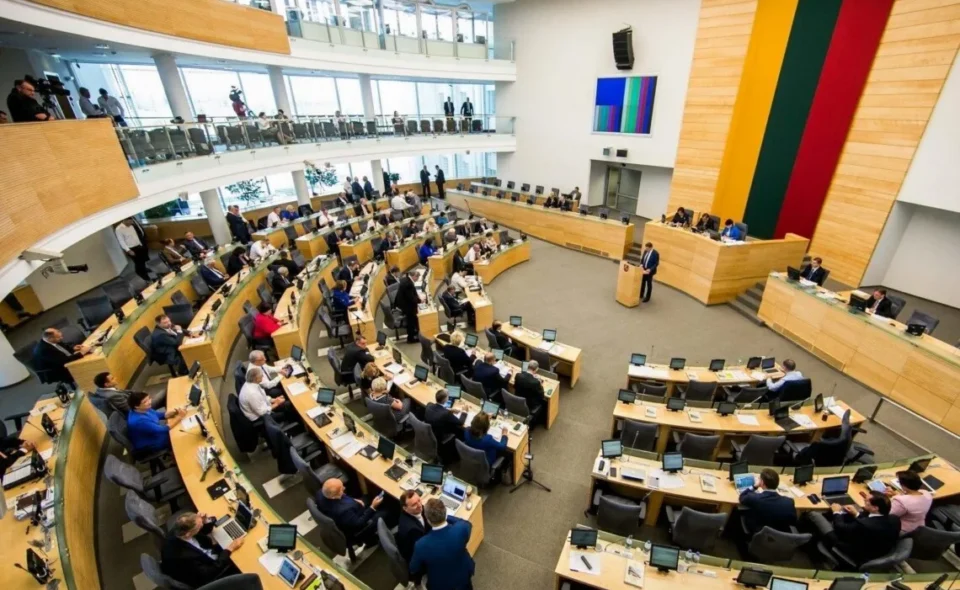
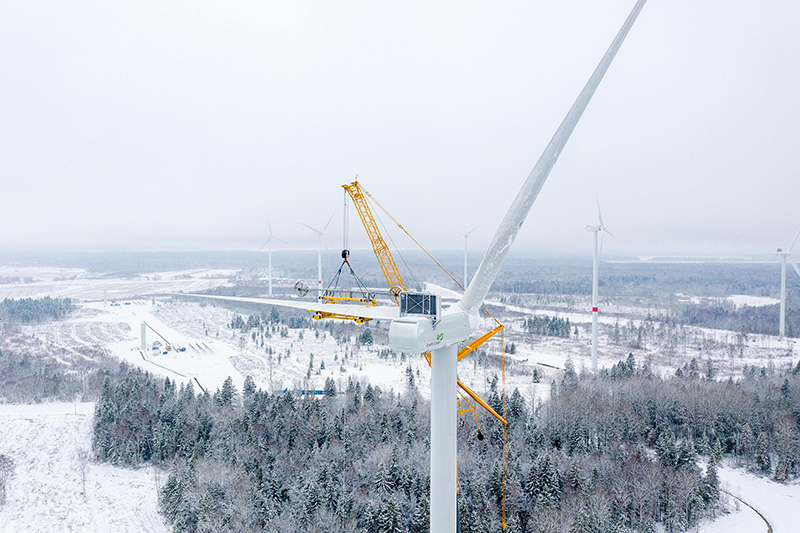
The tender is the first major policy rollout from Hungary’s new government under Prime Minister Péter Magyar, whose Tisza party won a landslide victory in the country’s April 2026 election, ending Viktor Orbán’s 16-year rule and securing a constitutional supermajority of 141 parliamentary seats. István Kapitány, Minister of Economy and Energy in the Magyar government since it took office in May 2026, has committed to opening at least 4,000 MW of new wind grid-connection capacity by 2030 — more than a tenfold increase on Hungary’s roughly 330 MW of installed wind capacity, which had not grown since 2011.
That stagnation traces back to a 12 km buffer-zone rule between turbines and residential areas, a de facto wind development freeze in a densely populated country; the outgoing government reduced that buffer to 700 metres in December 2023, but the substantive policy reform and tender rollout only followed the change in government this year.
The tender’s terms have drawn criticism from industry figures and analysts even as bidding opened. Winning developers must make a one-time payment to host municipalities of between €10,000 and €50,000 per MW — with the higher end of that range scored more favorably in the bid evaluation — plus an option for additional, ongoing annual municipal payments and a separate recurring contribution of €2–3 per MWh of generation. Developers are also required to accept a purchase option of up to 25% ownership from state-designated “renewable energy communities” if one is exercised, a mandatory provision that carries no scoring points of its own; combined with Hungary’s existing local business tax and windfall (“Robin Hood”) tax on energy companies, one prospective bidder told The Voice of Renewables that “the math doesn’t work” and described the combined financial burden as “irrationally high.” Energy analyst József Balogh separately argued the upfront municipal fee “lacks necessity” within the tender’s own framework, since it burdens investors before any project generates revenue.
Critics have also questioned the tender’s site selection and technical requirements. One prospective bidder said sites appear to have been chosen based on available grid capacity rather than wind resource quality, singling out the Ócsa connection point — a 255 MVA allocation in a densely populated area near a nature protection zone — as a location where “it’s practically unclear where so many turbines could fit.” The same critic noted the tender removed scoring credit for feasibility studies, wind measurement campaigns, and wildlife monitoring that earlier tender designs had rewarded, arguing this favors speculative or under-prepared bidders over developers with serious technical groundwork already done. Sites must be located on brownfield land and within 19 km of their assigned grid connection point.
This 700 MW round is intended as the opening tranche of a longer pipeline: Hungary’s government has outlined annual wind auctions running from 2027 through 2030 aimed at reaching a cumulative 4 GW of new capacity, backed in part by roughly €1.5 billion in EU Recovery and Resilience Facility funding earmarked for grid modernization to support the buildout. Whether the format used in this first round — upfront municipal fees, mandatory energy-community purchase options, and reduced technical scoring criteria — survives into later rounds may depend on how many credible bidders it actually attracts by the end of October.