



Part I: How the North Sea and Baltic Sea are becoming strategic energy regions – and why protecting offshore wind is becoming a national security priority
For much of the past two decades, offshore wind was defined by a straightforward objective: build more capacity, reduce costs and accelerate the transition away from fossil fuels. Governments measured progress through installed megawatts, auction prices and turbine technology improvements.
That approach reflected the priorities of an industry still proving itself.
Today, offshore wind has entered a different phase. As Europe increasingly relies on renewable electricity to replace fossil fuels, offshore wind is becoming part of the continent’s strategic infrastructure. The turbines rising across the North Sea and Baltic Sea are no longer simply symbols of the energy transition. They are becoming critical assets supporting electricity security, industrial competitiveness and national resilience.
This shift has consequences. Infrastructure that becomes essential to the functioning of modern economies also becomes infrastructure that must be protected.
The security discussion around offshore wind is therefore expanding beyond traditional operational risks such as extreme weather, equipment failure or maintenance challenges. Governments, regulators and operators are increasingly considering a broader range of threats, including cyberattacks, supply-chain vulnerabilities, maritime interference and hybrid security risks.
The central question for Europe is changing. It is no longer only about how quickly offshore wind can be built, but how securely it can be operated in an increasingly complex geopolitical environment.
Offshore wind moves into the critical infrastructure debate
The concept of critical national infrastructure has traditionally been associated with assets such as electricity transmission networks, gas pipelines, telecommunications systems, ports and other facilities whose disruption could have serious consequences for society and the economy.
Offshore wind was not always considered within this category. A wind farm at sea was primarily viewed as an energy generation project, with security discussions focused mainly on occupational safety, maritime operations and technical reliability.
The scale and importance of offshore wind are changing that perception.
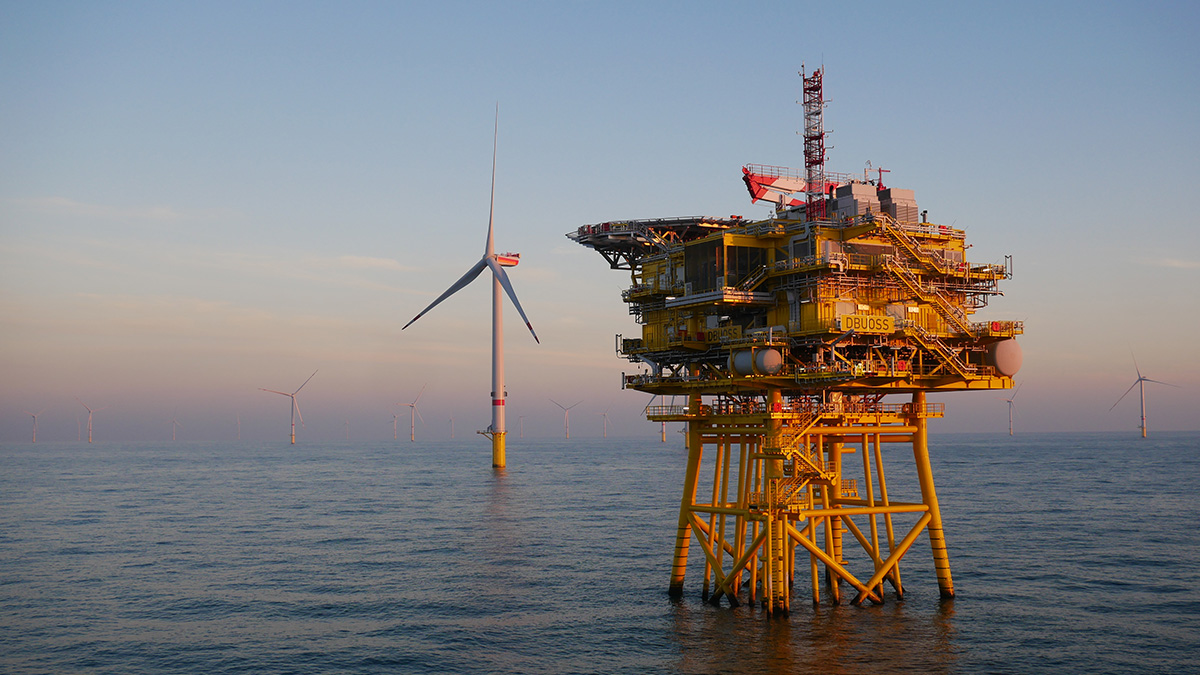
A modern offshore wind farm is a highly complex infrastructure system. Electricity generated by hundreds of turbines must be collected through inter-array cables, transformed at offshore substations and transported through export cables to the onshore grid. Behind the physical infrastructure sits a digital ecosystem of industrial control systems, remote monitoring platforms, communications networks and data-driven maintenance tools.
The result is an asset that combines energy generation, electrical infrastructure and advanced digital technology.
As Europe’s electricity system becomes increasingly dependent on renewable generation, the consequences of disruption become more significant. A prolonged outage affecting a large offshore wind cluster would not only reduce renewable electricity production; it could influence grid balancing, electricity markets and industrial consumers dependent on reliable power supplies.
This does not mean offshore wind farms are expected to face constant attacks. Rather, their growing strategic importance means they are increasingly being assessed through the same resilience framework applied to other essential infrastructure.
The North Sea becomes Europe’s offshore energy hub
The transformation is particularly visible in the North Sea, where Europe is effectively creating a new offshore energy region.
The waters between the United Kingdom, Denmark, Germany, the Netherlands and Belgium are becoming home to some of the world’s largest offshore wind projects. These countries have invested heavily in offshore development because of favourable wind conditions, established maritime industries and proximity to major electricity demand centres.
The North Sea is gradually evolving from a collection of national offshore wind projects into a more interconnected energy system.
The European Commission’s Offshore Renewable Energy Strategy identified offshore wind as a central component of Europe’s future energy system, with the ambition of reaching at least 60 GW of offshore wind capacity in the European Union by 2030 and 300 GW by 2050.
Achieving those targets will require a significant expansion of offshore infrastructure. Future projects are expected to involve greater interconnection between countries, offshore electricity hubs and hybrid projects capable of serving multiple markets.
This development brings considerable benefits. A more integrated offshore grid could improve electricity security, reduce congestion and make better use of renewable resources.
However, it also creates a more interconnected infrastructure environment where disruption in one location could potentially have wider consequences.
The same characteristics that make offshore wind attractive—its scale, connectivity and strategic importance—also make resilience increasingly important.
The Baltic Sea: where energy transition meets security
The Baltic Sea presents an even more complex picture.
While offshore wind development in the North Sea has matured over decades, the Baltic Sea is experiencing rapid growth at a time when regional security concerns have intensified.
The region contains some of Europe’s most strategically important infrastructure, including electricity connections, telecommunications cables, ports, gas infrastructure and emerging offshore renewable assets. These systems operate within a maritime environment where multiple countries, commercial operators and security interests overlap.
Russia’s invasion of Ukraine fundamentally changed Europe’s approach to energy security. The vulnerability created by dependence on imported fossil fuels became a central political issue, accelerating efforts to diversify energy systems and expand domestic renewable generation.
For countries around the Baltic Sea, offshore wind has become part of this broader energy security strategy.
Poland, Lithuania, Latvia, Estonia, Finland and Sweden are all examining the role offshore wind can play in increasing renewable electricity production and supporting industrial decarbonisation.
At the same time, the region has seen increased attention on the protection of subsea infrastructure following incidents affecting pipelines and communication cables. European governments and NATO have strengthened cooperation on monitoring and protecting critical underwater assets.
The significance of these developments is not that every offshore wind farm is considered an immediate target. Rather, they demonstrate a broader recognition: infrastructure beneath and on the sea is increasingly important, difficult to monitor continuously and potentially vulnerable to a range of disruptions.
Baltic Power: Poland’s offshore wind ambition becomes a strategic asset
Poland illustrates how offshore wind has moved beyond climate policy and into the broader discussion about energy independence.
For decades, Poland’s electricity system has relied heavily on coal. Reducing emissions while maintaining energy security has become one of the country’s largest infrastructure challenges.
Offshore wind is expected to play a major role in this transformation.
One of the most significant projects is Baltic Power, which is being developed by ORLEN and Northland Power.
With a planned capacity of approximately 1.2 GW, Baltic Power is designed to become Poland’s first commercial-scale offshore wind farm. Located in the Baltic Sea off the Polish coast, the project represents a major step in the country’s move towards a more diversified electricity system.
Its importance extends beyond the electricity it will generate.
Baltic Power represents Poland’s entry into the European offshore wind market and the development of new industrial capabilities linked to offshore construction, operations and maintenance.
It also illustrates the changing perception of offshore wind assets. A project of this scale is not only a renewable energy investment; it is infrastructure that contributes to national energy resilience.
As Poland expands its offshore wind sector, questions around cybersecurity, maritime monitoring and infrastructure protection become increasingly relevant.
Finland: offshore wind development on Europe’s northern security frontier
Finland provides another example of how offshore wind development increasingly intersects with security considerations.
The country has significant offshore wind potential, particularly in the Gulf of Bothnia, where several large-scale projects are being considered. Finland sees offshore wind as an opportunity to increase renewable electricity production, support industrial electrification and strengthen its position as a producer of clean energy.
However, offshore development in Finland takes place within a strategically sensitive region.
Finland’s accession to NATO in 2023 changed the wider security context of northern Europe. The Baltic Sea and surrounding areas have become an increased focus of attention regarding the protection of critical infrastructure and maritime awareness.
This does not prevent offshore wind development, but it does mean projects must consider a wider range of factors, including defence requirements, maritime operations and coordination with national authorities.
The Finnish government has recognised the need for stronger coordination between offshore wind development and other national interests. In 2024, Finland established a coordination group to accelerate offshore wind development while addressing issues including defence, environmental protection and maritime planning.
The Finnish example reflects a wider European trend: offshore wind is no longer developed solely as an energy project. It is becoming part of a broader national infrastructure landscape involving energy policy, industrial strategy and security planning.
A new era for offshore energy
Europe is building a new offshore energy system.
The North Sea is emerging as a major renewable power centre. The Baltic Sea is becoming a strategically important energy region. Projects such as Baltic Power demonstrate how offshore wind is increasingly connected to national energy security strategies.
But the expansion of offshore wind also introduces new responsibilities.
The industry must now consider not only how to construct turbines faster and more efficiently, but how to ensure these assets remain reliable and resilient in a more challenging security environment.
The next stage of offshore wind development will therefore not be defined only by engineering achievements or investment volumes.
It will also be defined by resilience.
The ability to protect offshore energy infrastructure – physically, digitally and operationally – will become an essential part of Europe’s clean energy future.
Part II will examine the cybersecurity challenge facing offshore wind: the vulnerability of SCADA systems, operational technology, remote access networks and increasingly complex supply chains.