



Author: Derek Michalski, Editor.
This is the first part of a three-piece article. Parts two and three will be published on consecutive days of this week.
Across Europe, hydrogen has become one of the defining technologies of the energy transition. Governments have unveiled ambitious strategies, companies have announced gigawatt-scale electrolysers, and billions of euros have been committed to accelerating deployment. Yet the reality remains uneven. While many countries are still searching for viable demand and commercially sustainable business models, Poland begins its hydrogen transition from a fundamentally different position.
Unlike most European markets, Poland does not need to create a hydrogen economy from scratch. It already has one.
For decades, the country’s refineries, fertiliser manufacturers and chemical plants have relied on hydrogen as an essential industrial feedstock. Poland is today among Europe’s largest hydrogen producers, generating close to one million tonnes annually. The overwhelming majority of this production, however, comes from natural gas and other fossil fuels, making it so-called grey hydrogen. The challenge facing Poland is therefore not to establish a hydrogen market, but to transform an existing one into a competitive, low-carbon industrial ecosystem.
This distinction is often overlooked. Hydrogen in Poland is not primarily a story of breakthrough technology or headline-grabbing electrolyser announcements. Instead, it is increasingly about industrial decarbonisation, regulatory reform, infrastructure planning and market design. The country’s success will depend less on how many electrolysers are installed than on whether producers, consumers and network operators can be connected through a functioning commercial and regulatory framework.
In this respect, Poland has quietly emerged as one of Europe’s most progressive hydrogen markets.
The adoption of amendments to the Energy Law in 2024, followed by their implementation during 2025, created the country’s first comprehensive legal framework for hydrogen transmission and formally recognised hydrogen as a regulated energy carrier. While these legislative changes attracted relatively little public attention, they represent one of the most significant milestones in the development of Poland’s future hydrogen economy.
Regulation may lack the visibility of large infrastructure projects, but without legal certainty there can be no investment. Across Europe, hydrogen developers continue to face uncertainty over network ownership, tariff methodologies, third-party access and long-term financing. By addressing these issues early, Poland has positioned itself ahead of many larger European markets that are still debating the fundamentals of hydrogen regulation.
The next major step came in June 2025, when GAZ-SYSTEM was formally designated as Poland’s hydrogen transmission system operator. The appointment marked far more than an administrative decision. It established a single organisation responsible for planning, developing and operating the future national hydrogen transmission network, bringing much-needed clarity to a sector where fragmented responsibilities have often delayed investment.
Momentum continued into 2026. In April, the European Commission issued a favourable opinion on the certification of GAZ-SYSTEM under the new European hydrogen regulatory framework, paving the way for final certification by Poland’s Energy Regulatory Office (URE). The development made Poland one of the first European countries to advance through the EU’s emerging hydrogen transmission operator certification process, demonstrating how quickly the country has aligned its regulatory framework with evolving European legislation.
For investors, these developments matter as much as the construction of electrolysers or hydrogen production plants. Infrastructure projects typically require investment horizons measured in decades. Without regulatory certainty, financing becomes significantly more difficult and project risks increase. The creation of a dedicated hydrogen transmission operator therefore sends a strong signal that Poland intends to develop hydrogen as a permanent component of its future energy system rather than as a collection of isolated demonstration projects.
As GAZ-SYSTEM President Sławomir Hinc noted following the Commission’s opinion, the certification process demonstrated Poland’s ability to work efficiently with European institutions while implementing one of the EU’s newest regulatory frameworks.
His comments also reflected a broader reality emerging across the European hydrogen sector. Increasingly, developers argue that the greatest barriers to hydrogen deployment are no longer technological. Electrolysers, storage systems and industrial applications continue to improve rapidly. Instead, attention is shifting towards regulation, permitting, financing and market design—the less visible but ultimately decisive elements that determine whether projects reach commercial operation.
This transition from technology to system planning became even more evident in early 2026, when GAZ-SYSTEM launched public consultations on Poland’s first National Ten-Year Development Plan for a Hydrogen Transmission Network covering the period from 2026 to 2035.
The significance of the plan extends well beyond pipeline construction.
For the first time, Poland is beginning to define where hydrogen demand is expected to emerge, how industrial clusters will be connected and where future transmission corridors should be developed. It also sets out the framework for integrating Poland with the wider European hydrogen market, recognising that future hydrogen flows are unlikely to stop at national borders.
This reflects a broader transformation taking place across Europe. Hydrogen is evolving from a collection of individual production projects into a continental energy system requiring cross-border coordination, harmonised regulation and shared infrastructure.
One of the most influential initiatives supporting this vision is the European Hydrogen Backbone, a long-term industry proposal that envisages tens of thousands of kilometres of dedicated hydrogen pipelines connecting production centres, industrial consumers and import terminals across Europe. Poland occupies an increasingly strategic position within these plans. Situated between the Baltic Sea and Central Europe’s industrial heartland, the country could eventually become both a major consumer and an important transit corridor for hydrogen moving between northern ports and manufacturing regions further south.
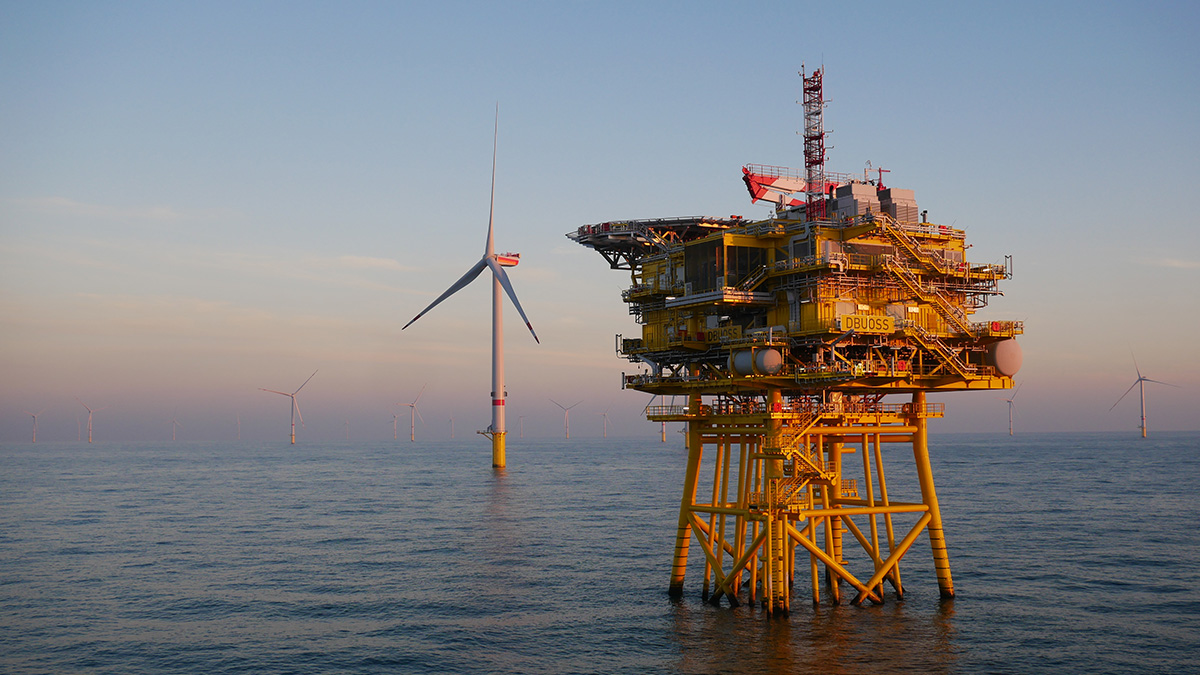
The Baltic region itself is rapidly becoming one of Europe’s most strategically important energy hubs. Alongside extensive offshore wind development, countries bordering the Baltic Sea are exploring new hydrogen production facilities, cross-border pipeline connections and import terminals for hydrogen derivatives such as ammonia and methanol. For Poland, participation in these emerging corridors offers opportunities that extend beyond domestic decarbonisation. It also strengthens the country’s role in Europe’s evolving energy security architecture.
Financing this transformation remains one of the sector’s biggest challenges, but Europe is gradually putting the necessary support mechanisms in place. The European Hydrogen Bank has emerged as one of the EU’s flagship initiatives for accelerating renewable hydrogen production by reducing investment risk and narrowing the cost gap between renewable and fossil-based hydrogen. Through competitive auctions, the scheme offers fixed premiums for renewable hydrogen producers, improving project bankability while encouraging market-driven deployment.
For Polish developers, these funding mechanisms complement domestic support programmes under the National Recovery and Resilience Plan and other European financing instruments. More importantly, they signal a shift away from one-off grants towards long-term market mechanisms designed to create a commercially sustainable hydrogen sector.
Yet funding alone will not determine the success of Poland’s hydrogen ambitions.
Equally important are the evolving regulatory requirements governing renewable hydrogen itself. Under the EU’s Renewable Energy Directive (RED III), producers seeking to supply renewable fuels of non-biological origin (RFNBOs) must comply with strict rules on electricity sourcing, additionality and greenhouse gas emissions. These requirements will shape where electrolysers are built, how they operate and the economics of future hydrogen production.
For investors, compliance with RFNBO certification is becoming just as important as the cost of the electrolyser or access to renewable electricity. Projects unable to meet these criteria risk losing access to premium markets and financial support, making regulatory compliance a central element of commercial strategy.
Taken together, these developments illustrate how Poland’s hydrogen sector is entering a new phase. The focus is no longer limited to technology demonstrations or policy announcements. Instead, attention is shifting towards the practical foundations of a functioning market: legal certainty, infrastructure planning, cross-border integration and commercially viable investment frameworks.
These may not generate the headlines associated with gigawatt-scale production targets, but they are likely to prove far more important in determining whether Poland becomes one of Europe’s leading hydrogen economies over the coming decade.
In the second part of this analysis, we examine how companies including ORLEN, Grupa Azoty, Anwil and TAURON are reshaping hydrogen production and industrial demand, and why Poland’s future may depend as much on imports and industrial decarbonisation as on domestic renewable hydrogen production.
EVENT ALERT: