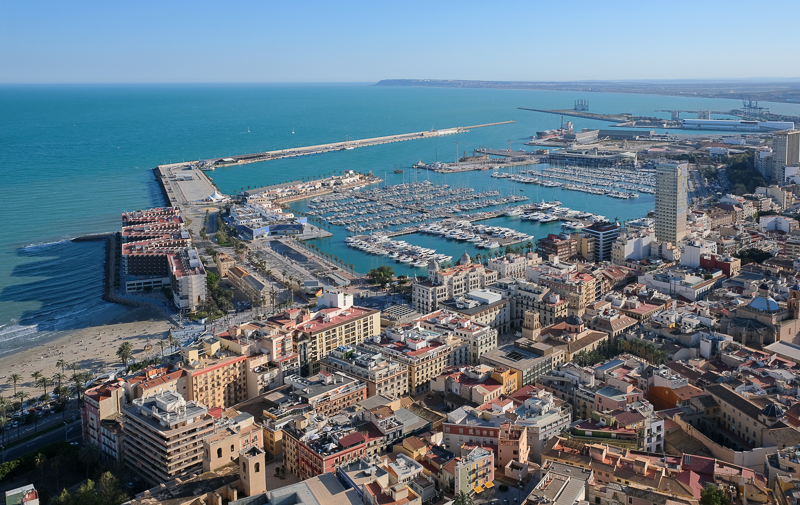
The Port of Alicante has taken a major step forward in its decarbonisation strategy with the launch of a public tender for the construction and operation of its first renewable hydrogen production and supply facility.
Approved by the Port Authority of Alicante, the project will be developed at Pier 19 as part of the PORTALI-H2 initiative, a wider programme aimed at transforming the port into a low-carbon energy hub capable of supporting the maritime sector’s transition to cleaner fuels.
The planned facility will produce, store and distribute renewable hydrogen directly within the port, creating new opportunities to decarbonise port operations, maritime transport and associated logistics activities. The project is also expected to strengthen Alicante’s position as an emerging centre for green hydrogen development in Spain’s Mediterranean region.
The tender represents the latest milestone in a broader roadmap being advanced by Port Authority President Luis Rodríguez, whose vision is to establish Alicante as a smart, sustainable and energy-efficient port aligned with European climate objectives.
Building a hydrogen ecosystem
Under the terms of the concession, the successful bidder will be granted the right to construct and operate the facility for a period of 30 years.
The Port Authority has allocated approximately 500 m² at the southern end of Pier 19 for the hydrogen plant itself, alongside more than 3,000 m² of additional space on the breakwater for renewable power generation infrastructure. Solar and wind installations developed within the port estate are expected to provide the majority of the electricity required for hydrogen production, reinforcing the port’s ambitions for greater energy self-sufficiency.
Tender documents specify an electrolyser capacity of around 1 MW, although developers will be expected to demonstrate how their proposals maximise operational efficiency while minimising environmental and visual impacts.
Interested companies must submit detailed technical, commercial and financial plans, including construction proposals, operational strategies and long-term business cases that demonstrate the viability of the project and its contribution to the port’s sustainability goals.
Hydrogen at the centre of port decarbonisation
The hydrogen facility forms a key component of Alicante’s broader Energy Transition and Efficiency Agenda, which seeks to reduce emissions across the port while improving resilience, digitalisation and energy independence.
By generating renewable hydrogen on-site, the port aims to create a clean fuel source for a range of future applications, including port machinery, service vehicles and potentially hydrogen-powered vessels as the maritime industry moves towards alternative fuels.
The project also supports Spain’s wider efforts to establish a national hydrogen economy and aligns with the objectives of the European Green Deal, which identifies renewable hydrogen as a critical technology for decarbonising hard-to-abate sectors such as shipping, heavy transport and industry.
For Alicante, the initiative is expected to deliver benefits beyond emissions reduction. Port officials view the project as a catalyst for attracting investment, accelerating innovation and creating a local ecosystem of companies involved in hydrogen production, storage and utilisation.
Part of a wider Mediterranean energy transition
The PORTALI-H2 project builds on a series of clean-energy initiatives already underway at the port, including participation in the VAHIA 2030 hydrogen cluster and other programmes focused on renewable energy deployment and industrial decarbonisation.
As ports across Europe increasingly position themselves as future energy hubs, Alicante is seeking to leverage its strategic Mediterranean location to become a testbed for hydrogen technologies and a gateway for new clean-energy value chains.
With the concession process now underway, the project marks one of the most significant renewable energy investments currently planned for the Port of Alicante and highlights the growing role that ports are expected to play in Europe’s transition towards a low-carbon economy.