Author: Derek Michalski, Editor.
The publication of Romania’s draft offshore wind concession regulations marks a decisive shift from political ambition to market implementation, providing the regulatory certainty developers and investors have been waiting for.
For more than two years, Romania’s offshore wind sector has existed largely as a strategic opportunity rather than an investable market. The adoption of Law No. 121/2024 established the legal basis for developing offshore wind in the Romanian Black Sea, but the absence of detailed implementing legislation meant project developers could not meaningfully advance investment decisions, secure financing or prepare for competitive tenders.
That is now beginning to change.
In July 2026, the Romanian Government published the draft Government Decision establishing the concession framework for offshore wind development in the Black Sea. While the document does not authorise construction or launch the first auction, it provides the practical rules that transform the Offshore Wind Law from a policy framework into an operational investment regime.
For utilities, infrastructure funds, turbine manufacturers, EPC contractors and lenders, these implementing regulations are arguably more significant than the framework legislation adopted in 2024. They establish the mechanisms through which offshore areas will be allocated, projects developed and long-term concession rights secured.
From legislation to implementation
Romania’s Offshore Wind Law was widely welcomed when it entered into force in 2024. It positioned Romania as one of the first Black Sea countries to establish a dedicated legal framework for offshore wind and reflected growing recognition of the region’s strategic renewable energy potential.
However, like many framework laws, it intentionally left the operational details to secondary legislation.
Without implementing regulations, developers lacked clarity on fundamental issues including:
- how offshore development areas would be designated;
- how concession rights would be awarded;
- the criteria for participation in competitive tenders;
- project development obligations and timelines;
- concession rights and responsibilities throughout the project lifecycle.
The publication of the draft concession framework begins to address these uncertainties and represents the first concrete step towards launching Romania’s offshore wind market.
Six development zones proposed
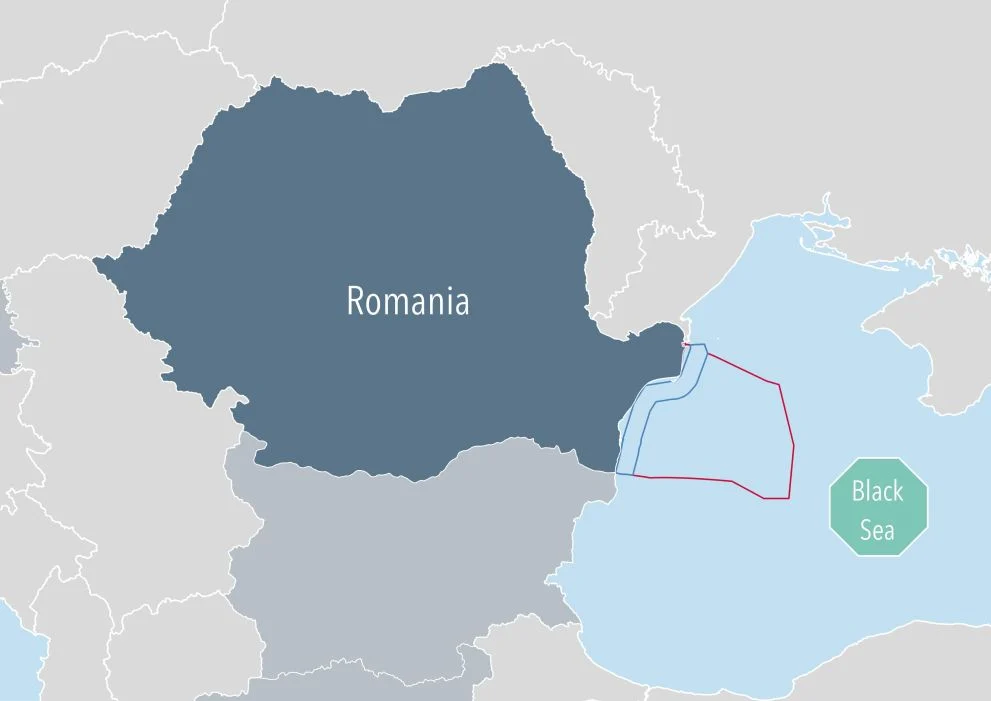
Among the most significant elements of the draft legislation is the proposal to designate six offshore development zones in Romania’s section of the Black Sea.
Together, these areas represent an estimated technical offshore wind potential of approximately 11.5 GW, covering around 4,000 km² of maritime territory.
Development is expected to be phased. The Government has identified three priority zones with approximately 3.1 GW of capacity that could support Romania’s objective of installing around 3 GW of offshore wind by 2035.
While further technical studies, environmental assessments and transmission planning will ultimately determine the pace of deployment, the identification of development areas provides investors with the first indication of where future concession opportunities are likely to emerge.
A transparent concession process
Perhaps the most important contribution of the draft legislation is the establishment of a structured concession award process.
The proposed framework defines:
- competitive tender procedures;
- developer qualification requirements;
- concession evaluation criteria;
- exploration rights;
- development obligations;
- concession duration;
- project milestones and compliance requirements.
For investors, these details matter considerably more than broad policy announcements.
Large-scale offshore wind projects require investment decisions running into billions of euros, supported by extensive technical due diligence, environmental studies, supply chain commitments and long-term financing arrangements. None of these activities can progress efficiently without confidence in the legal process governing project allocation.
By introducing a transparent concession framework, Romania significantly reduces one of the principal sources of regulatory risk.
Building confidence for capital
Offshore wind remains one of the most capital-intensive segments of the renewable energy sector.
Institutional investors, commercial lenders and infrastructure funds typically require regulatory certainty before allocating development capital. Bankability depends not only on resource quality and electricity market fundamentals but also on confidence that permitting, concession rights and project timelines are clearly defined.
The July 2026 proposals therefore represent an important signal to international investors.
Rather than introducing new policy ambitions, the Government is providing the administrative architecture required for projects to move through development, financing and ultimately construction.
As a result, Romania’s offshore wind sector is beginning to resemble an investable market rather than a long-term policy aspiration.
Geopolitics reshapes the investment case
While the concession framework significantly reduces regulatory uncertainty, investors evaluating Romania’s offshore wind opportunities are doing so in a geopolitical environment that has fundamentally changed since the adoption of the Offshore Wind Law.
Russia’s invasion of Ukraine has transformed offshore wind from a climate-driven infrastructure investment into a strategic component of European energy security.
For Romania, whose Black Sea coastline lies close to a region directly affected by the conflict, offshore wind is increasingly viewed not only as a source of clean electricity but also as critical national infrastructure capable of strengthening energy independence and reducing exposure to external energy shocks.
The strategic importance of domestic electricity generation has increased significantly since Europe experienced the consequences of excessive dependence on Russian fossil fuels. As the European Union continues to diversify its energy system, renewable electricity generation has become a key element of long-term resilience.
Romania’s offshore wind programme therefore benefits from two parallel drivers: the transition towards a low-carbon electricity system and the growing need for secure, domestically produced energy.
Licensing framework already taking shape
The concession regulations build upon earlier work undertaken by the National Energy Regulatory Authority (ANRE).
Order No. 6/2025 introduced licensing procedures for offshore wind generation facilities, establishing the framework for development permits, generation licences and technical authorisations.
At the same time, Romania has expanded the responsibilities of its offshore regulatory institutions beyond traditional offshore oil and gas activities to include offshore renewable energy development.
Together, these measures are gradually creating the institutional ecosystem required to manage a modern offshore wind industry.
The Black Sea becomes a strategic energy basin
Romania’s offshore wind ambitions cannot be viewed in isolation.
The country is simultaneously pursuing one of the most significant energy transitions in Central and Eastern Europe through the expansion of renewable generation, battery energy storage, electricity grid modernisation and the implementation of Contracts for Difference (CfD) support mechanisms.
The Black Sea is increasingly emerging as a strategic energy basin capable of supporting multiple industries simultaneously.
Alongside existing offshore natural gas developments, future offshore wind projects could provide clean electricity for domestic consumption, regional exports and eventually renewable hydrogen production.
Combined with Romania’s expanding interconnection capacity and growing role within South-East Europe’s electricity market, offshore wind has the potential to strengthen both national energy security and regional market integration.
However, the geopolitical environment also creates new requirements for offshore infrastructure.
Russia’s attacks on Ukraine’s energy system have demonstrated that electricity generation assets, transmission networks and critical infrastructure can become strategic targets during periods of conflict.
Future Black Sea offshore wind developments will therefore need to incorporate enhanced approaches to:
- physical security;
- maritime surveillance;
- protection of offshore substations and export cables;
- cybersecurity;
- supply chain resilience.
For developers and lenders, these issues are becoming part of normal project risk assessment alongside wind resource quality, grid connection, permitting and financing structures.
A more complex but more strategic investment opportunity
The war in Ukraine has increased the complexity of developing infrastructure in the Black Sea, but it has also strengthened the strategic rationale for doing so.
Compared with more mature offshore wind markets such as the North Sea, Romanian projects will face additional considerations related to regional security, insurance requirements and infrastructure protection.
However, Romania also benefits from several strategic advantages:
- NATO membership and increased regional security cooperation;
- strong offshore wind resources;
- proximity to major electricity markets;
- access to EU energy transition funding;
- the potential to become a regional renewable energy hub.
For investors, the question is therefore not only whether Romania can develop offshore wind, but whether it can establish the conditions required to make these projects commercially and strategically valuable over the long term.
The next milestones
The publication of the draft concession regulations is not the final stage of the process.
The Government will now complete public consultation before adopting the final regulations and formally designating offshore concession areas. This will be followed by the preparation of tender documentation and the launch of Romania’s first offshore wind concession auctions.
Developers will then progress through site investigations, environmental permitting, detailed engineering, financing and construction before the country’s first commercial offshore wind projects are expected to enter operation during the early 2030s.
A market moving beyond ambition
Romania’s offshore wind sector has reached an important inflection point.
The Offshore Wind Law established political intent. The draft concession regulations begin to establish market reality.
For developers, investors and the wider supply chain, the significance of the July 2026 proposals lies not simply in another piece of legislation, but in the emergence of a regulatory framework capable of supporting competitive auctions, attracting capital and enabling projects to progress from concept to construction.
At the same time, the strategic context has evolved considerably.
Since Russia’s invasion of Ukraine, offshore wind has become more than a decarbonisation initiative. It is increasingly viewed as strategic infrastructure supporting energy security, industrial competitiveness and the resilience of Europe’s electricity system.
While the conflict has introduced additional geopolitical and financing considerations, it has also reinforced the importance of developing domestic renewable energy resources in the Black Sea.
Romania’s offshore wind potential has long been recognised. The publication of the concession framework suggests that the country is now taking the practical steps required to transform that potential into investable infrastructure.
If implemented effectively, Romania could emerge not only as the leading offshore wind market in the Black Sea region, but also as an important contributor to Europe’s evolving energy security architecture.
EVENT ALERT:
Wind Mission Romania conference, the only wind-energy dedicated event in Romania, will take place in 2027. Contact us for more information.