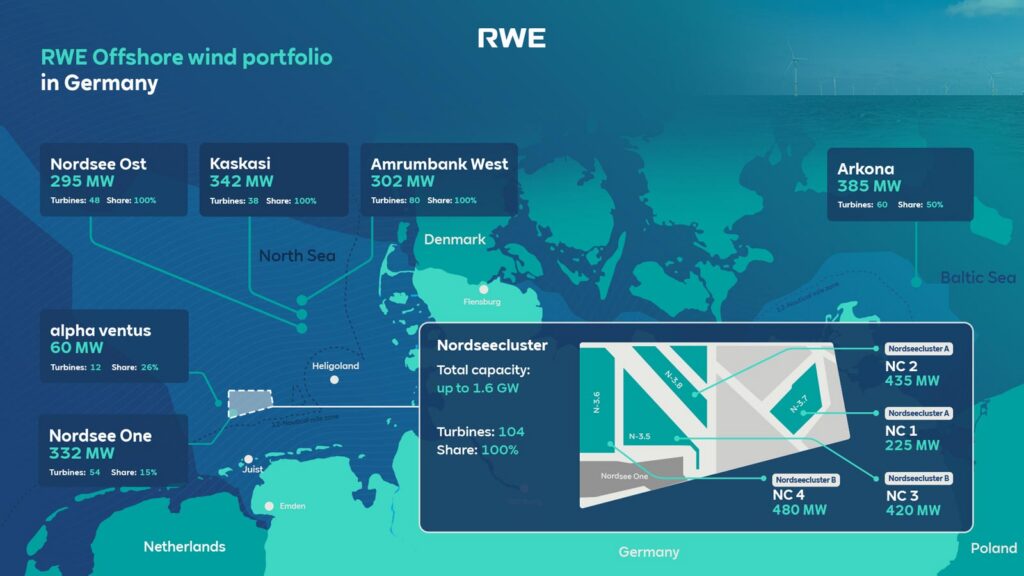
RWE has exported electricity to Germany’s grid for the first time from its Nordseecluster offshore wind project in the North Sea, marking a construction milestone for the 1.6GW development as turbine installation gathers pace.
The first power export comes only weeks after the installation of the project’s first turbine. Testing and commissioning are continuing as additional turbines are installed.
Located around 50km north of the island of Juist, Nordseecluster is being developed in two phases. The first phase, Nordseecluster A, will comprise 44 Vestas V236-15.0MW turbines with a combined capacity of 660MW and is scheduled to enter full commercial operation in early 2027.
Electricity generated by the turbines will be collected at two offshore substations before being transmitted via TenneT’s DolWin6 grid connection system. From the substations, power will be routed to TenneT’s offshore converter platform and then transported to the mainland through high-voltage direct current (HVDC) transmission infrastructure. Two offshore substations are required because Nordseecluster A has two separate grid connection points.
The project’s second phase, Nordseecluster B, will add a further 900MW through the installation of 60 Vestas V236-15.0MW turbines. Foundation installation is scheduled to begin in 2027, followed by turbine installation in 2028, with commercial operations expected to start in early 2029. Manufacturing of several major components is already under way.
Once complete, Nordseecluster will comprise 104 turbines with a combined installed capacity of 1.56GW, generating an estimated 6.5TWh of electricity annually. The output is expected to be sufficient to meet the annual electricity demand of approximately 1.6 million German households, although RWE intends to use much of the generation to supply industrial customers through long-term renewable power agreements. Amazon has signed a power purchase agreement covering 110MW of capacity from Nordseecluster B.
The project is based on monopile foundations supplied by Dajin Heavy Industry, while the transition pieces are being manufactured by Steelwind Nordenham. Seaway7 has been contracted to transport and install the monopiles and transition pieces, with Jan De Nul responsible for installing the inter-array cables linking the turbines to the offshore substations.
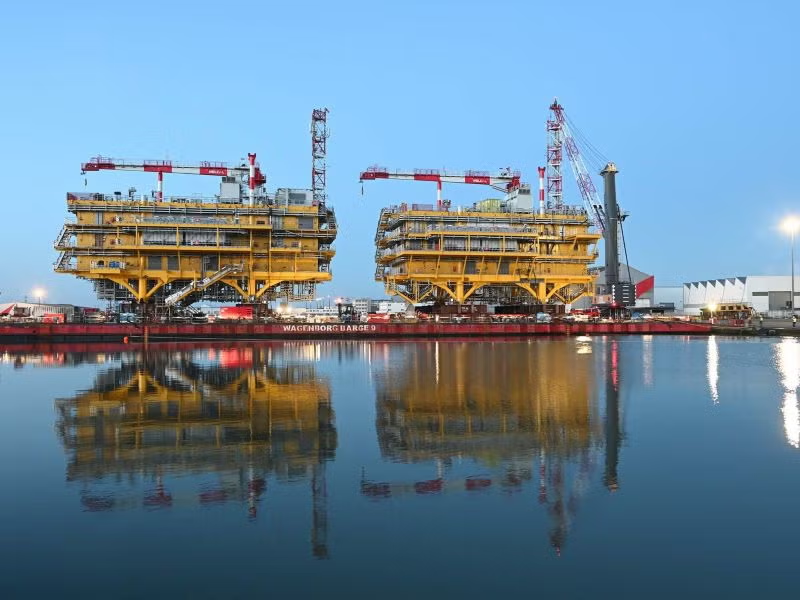
The two offshore substations are being supplied by Aker Solutions under an engineering, procurement, construction and installation (EPCI) contract. Hitachi Energy is providing the high-voltage equipment for the substations, while TenneT is developing the DolWin6 offshore converter platform and associated grid connection infrastructure.
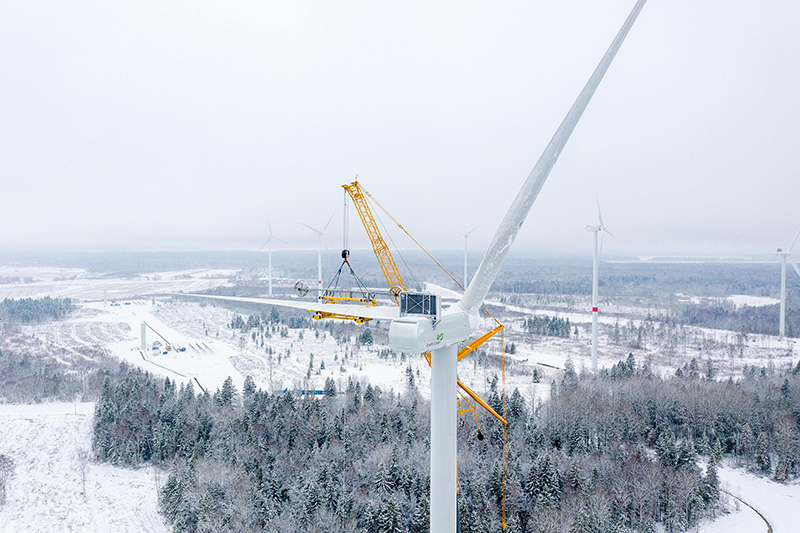
The V236-15.0MW turbines, among the largest currently being deployed commercially, feature rotor diameters of 236 metres and blades measuring 115.5 metres in length. The turbines are being installed using Cadeler’s wind turbine installation vessel Wind Peak.
Nordseecluster is jointly owned by RWE, which holds a 51% stake and is responsible for construction and long-term operation of the project, and Norges Bank Investment Management, which owns the remaining 49%. The development is one of Germany’s largest offshore wind projects currently under construction and forms part of the country’s wider expansion of offshore renewable energy capacity in the North Sea.