


By Derek Michalski, Editor, The Voice of Renewables
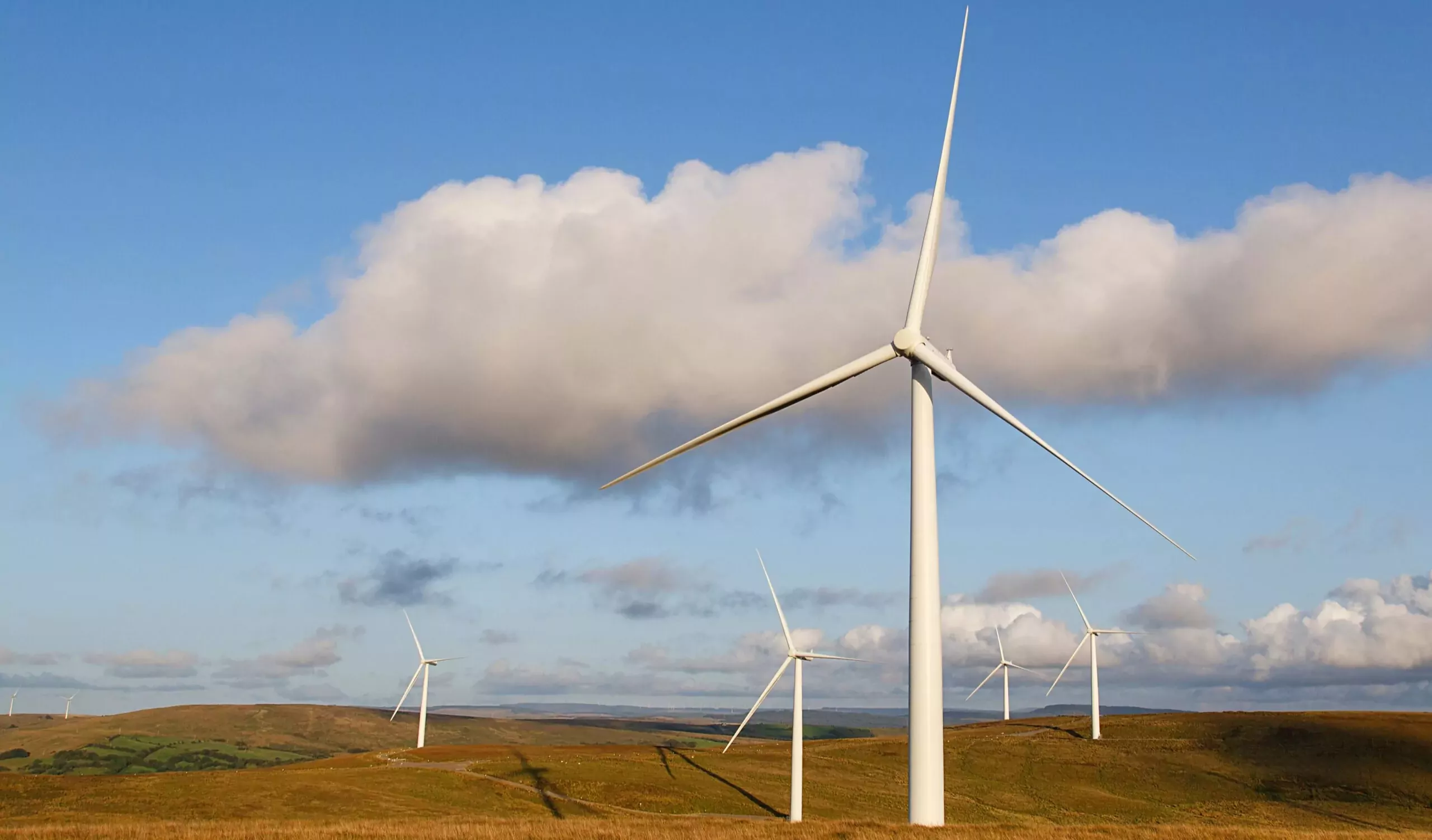
Whitelaw Brae Wind Farm, developed by Thrive Renewables, is located in the Scottish Borders near Tweedsmuir and is now moving through a key stage of construction as it transitions from civil works into full turbine installation. The 14-turbine, utility-scale onshore wind project is emerging as a significant contributor to the UK’s clean energy pipeline, with a design capacity of around 57 MW and a projected annual output sufficient to power approximately 45,000 average UK homes.
Construction activity intensifies on site
The project is currently in a highly active build phase, with turbine delivery logistics now underway and installation preparation well advanced. Around 70 people are working on site each day, coordinating the unloading and staging of major turbine components as they arrive from Glasgow port and are transported to the site in the Southern Uplands.
Key components, including blades, tower sections and nacelles, are currently being delivered to site, ready for the next stage of construction to commence. Each of the 14 turbines comprises nine major components: three 57-metre blades, three tower sections ranging between 14 and 27 metres, a hub, a nacelle and a drivetrain. In total, 126 major components are being transported from Glasgow port to the site near Tweedsmuir in the Scottish Borders.
The concrete bases for all turbines have already been completed, providing the foundations for the tower sections, blades and mechanical assemblies that will now be erected in sequence as installation progresses.
Engineering and assembly programme
With foundations complete, Whitelaw Brae is entering the vertical build phase. The delivery sequence of blades, nacelles and tower sections reflects the tightly choreographed logistics required for modern onshore wind construction, where precision timing and coordinated heavy-lift operations are essential.
Once on site, components will be assembled using large cranes in a carefully sequenced installation programme designed to optimise safety, efficiency and weather windows in a challenging upland environment.
Energy output and system contribution
Once operational, Whitelaw Brae Wind Farm will make a meaningful contribution to the UK’s clean energy supply, supporting both energy security and decarbonisation objectives through domestically generated renewable power.
The project is expected to:
- generate enough electricity to power around 45,000 UK homes
- deliver annual carbon emissions reductions of over 66,000 tonnes
In the context of the UK energy transition, the scheme strengthens Scotland’s role as a key hub for onshore wind generation feeding into the wider national grid.
Community and environmental commitments
Beyond electricity generation, the project is designed to deliver wider environmental and community benefits.
The developer is committed to planting tens of thousands of native trees, including species such as birch and willow, contributing to long-term habitat enhancement and landscape restoration.
New walking routes are also planned across the site, forming part of the proposed River Tweed Trail, improving local access to the landscape and integrating the wind farm into the surrounding environment.
Whitelaw Brae will also provide a community benefit fund of £285,000 per year to support local projects and initiatives. In addition, there is a commitment to offering local residents the opportunity to take a financial stake in the project, strengthening community participation in the region’s renewable energy transition.
Strategic significance
Whitelaw Brae reflects the continued scaling of Scotland’s onshore wind sector into a mature infrastructure asset class. Developed by Thrive Renewables, the project combines industrial-scale construction logistics, grid-connected renewable generation and structured community benefit mechanisms.
As the UK accelerates its transition towards domestically produced clean electricity, Whitelaw Brae illustrates how onshore wind is increasingly positioned not only as a generation asset, but as part of a broader system linking energy security, local development and long-term decarbonisation strategy.