This article is a part of MDVR’s 500 words series.
Author: Derek Michalski, Editor.
The transition to a power system dominated by renewable generation is creating a growing need for long-duration electricity storage. While lithium-ion batteries have become the dominant technology for short-duration applications, technologies capable of storing electricity for four hours or more are increasingly important for managing variability from wind and solar generation. Among the leading electrochemical options is the Vanadium Redox Flow Battery (VRFB).
The modern all-vanadium flow battery was developed in the 1980s by Professor Maria Skyllas-Kazacos and her team at the University of New South Wales. Unlike lithium-ion batteries, where energy is stored within solid electrodes, VRFBs store energy in two tanks of liquid vanadium electrolyte. The electrolyte is pumped through an electrochemical stack during charging and discharging, allowing the power rating and energy capacity of the system to be scaled independently.
This separation is the defining advantage of flow batteries. Increasing discharge duration requires additional electrolyte storage rather than additional battery cells, making VRFBs particularly suited to grid-scale applications where long operating periods are more important than high energy density.
VRFBs are regarded as one of the leading electrochemical technologies for Long Duration Energy Storage (LDES). Their key advantages are operational life, safety and cycling capability. Commercial systems are typically designed for more than 20 years of operation and over 15,000 charge-discharge cycles. Because they use an aqueous electrolyte, they do not present the thermal runaway risks associated with lithium-ion batteries. The vanadium electrolyte is also reusable, offering potential lifecycle advantages.
The main challenge is cost. VRFBs generally have lower energy density and higher upfront costs than lithium-ion batteries, making them less suitable for mobile applications and space-constrained sites. Their value proposition is instead in applications where durability, safety and repeated cycling justify the larger physical footprint.
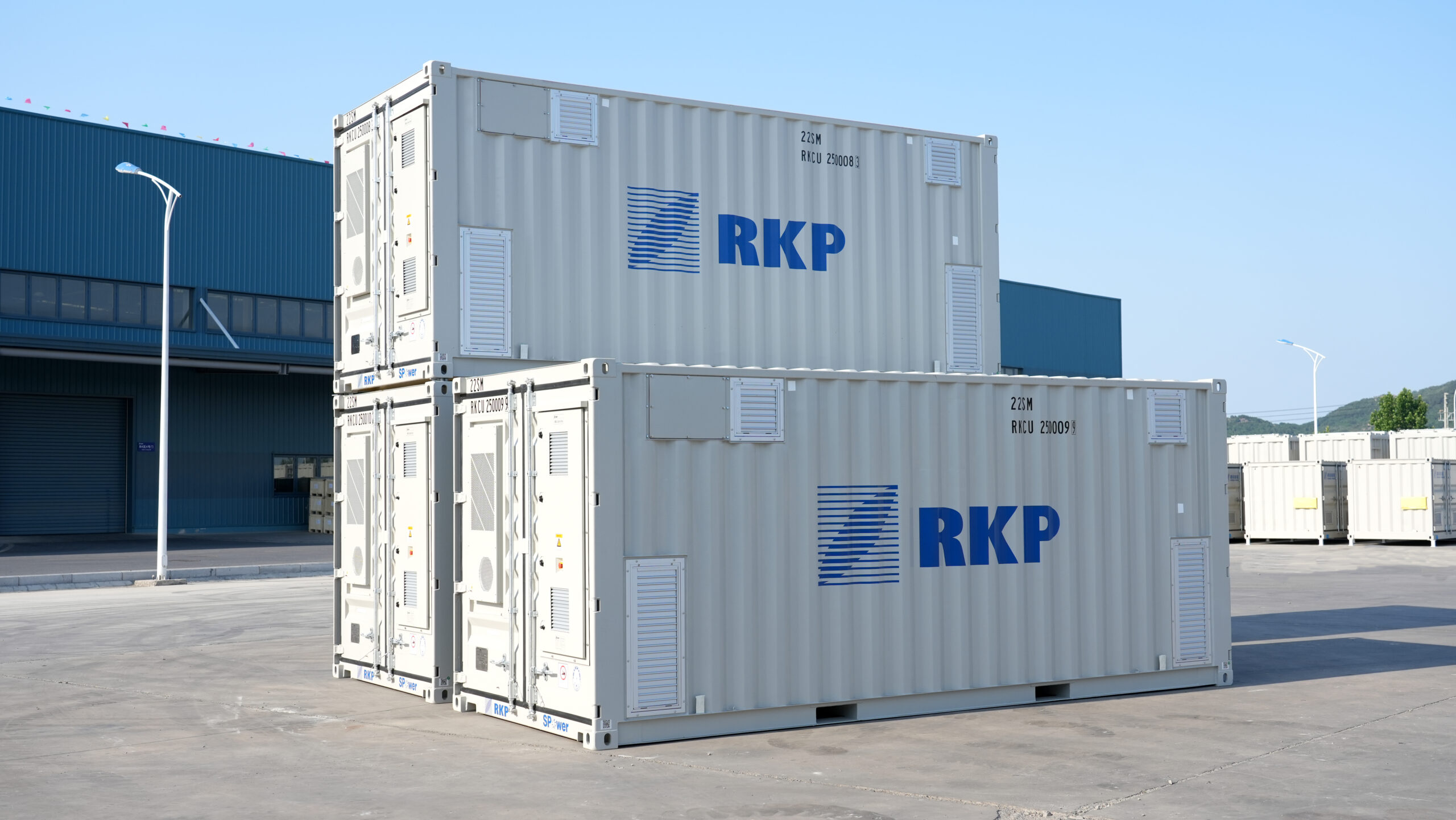
China has become the global leader in commercial deployment. Rongke Power has delivered some of the world’s largest VRFB projects, including the Dalian Flow Battery Energy Storage Peak-shaving Power Station (100 MW/400 MWh) and the Xinhua Ushi Energy Storage Station in Xinjiang (175 MW/700 MWh). These installations demonstrate the technology’s ability to provide multi-hour grid services at utility scale.
The technology is also gaining recognition in the UK. In June 2026, Ofgem published its minded-to decisions for the first window of the Long Duration Electricity Storage (LDES) Cap and Floor regime, provisionally selecting projects across several technologies. Among those selected was Frontier Legacy, a 520 MWh project incorporating Invinity Energy Systems’ vanadium flow battery technology alongside zinc-halide batteries.
VRFBs are unlikely to replace lithium-ion batteries across the energy storage market. Instead, their role is complementary: providing long-duration, high-cycle storage where safety, longevity and predictable performance are critical. As renewable penetration increases and grids require more flexibility, the vanadium flow battery is moving from specialist demonstration projects towards a recognised role in future electricity systems.